

























































A six-foot papier-mâché raccoon clutching a giant yellow flower will roll through downtown Port Townsend this weekend, one of several homemade, human-powered machines built to cross pavement, water, sand and mud in the Great Port Townsend Bay Kinetic Sculpture Race. The free, two-day event runs Saturday and Sunday, with racers piloting handmade sculptures over an 8-mile course that tests both engineering and nerve.
The race, now in its 43rd year, has long prided itself on favoring art and absurdity over speed, according to The Seattle Times. This year's lineup includes 16 competing machines, and organizers describe the whole affair as all-terrain, human-powered art engineered to race over road, water, mud and sand, according to ptkineticrace.org. The 2026 theme, Flora and Fauna, is already visible in some of the builds rolling toward Water Street.
Among this year's entrants is Team Trash Panda, formed by Lisa Doray, a 55-year-old art enrichment specialist who left the race committee this year and said her mission was simply to get back into the race itself. Her team is building that six-foot raccoon and bought 15 yards of faux fur for the sculpture and matching costumes. Doray has history with the spectacle, too — she recalled once seeing a man dressed as a ballerina ride a giant human-powered sculpture through town, a memory that captures the event's spirit of not taking itself too seriously.
From a Ferndale Side Street to a Worldwide Movement
Kinetic sculpture racing traces back to Ferndale, California, where the first race rolled down Main Street on Mother's Day in 1969 with about a dozen entries, per ptkineticrace.org. Hobart Brown, who built human-powered machines with Jack Mays, famously transformed his son Justin's tricycle into the five-wheeled Pentacycle that helped launch the tradition. Justin Hobart Brown has traveled to Port Townsend with his father and said adults have fun so that children will want to grow older — a line that sums up the race's multigenerational appeal.
What began as a three-block street race in Ferndale eventually expanded into water, mud and other terrain. The Humboldt County event grew into the 42-mile Kinetic Grand Championship and inspired independent races across the country, as reported by Northstate Public Radio. That Humboldt race, sponsored by the nonprofit Kinetic Universe, now spans more than 40 miles over land, sand, water and mud across three days. Port Townsend's race, first held in 1983, ranks as the third-oldest on the kinetic racing circuit, according to ptkineticrace.org.
Veteran Racers and the Push for New Blood
Aragorn Deane, a 55-year-old longtime racer, has completed all segments of the course at least three times and once won the race's Mediocrity Award, given to whoever finishes exactly in the middle of the pack. His machine is built from marine-grade aluminum and Honda XR250 dirt bike parts. Deane said the race needs new participants to keep going, a concern that organizers are actively trying to address.
That recruitment push falls partly to Eliza Neeley, a 26-year-old race board member who joined one year after moving to Port Townsend and now focuses on marketing and outreach. Neeley has expanded the race's social media presence and online registration system. She and her partner are building Buzzkill, a Venus flytrap-inspired machine assembled from scavenged bike parts without any welding, and she said people do not need to be professional welders or have thousands of dollars to participate — even though building a kinetic sculpture can require tools, workspace, welding skills and, often, a few thousand dollars.
Awards for Everything but Winning
True to the race's ethos of favoring pageantry over trophies, the event hands out 31 awards covering categories well beyond first place. The Rrrrrrrr!!! Award recognizes the best use of reused, recycled and reworked parts, while the Bribe-a-licious Award goes to the team with the best bribe for judges — racers sometimes hand out pins, necklaces and other trinkets to judges and the volunteer Kinetic Kops who patrol the course, according to ptkineticrace.org's race page.
Those Kinetic Kops, known locally as K-Kops, cite contestants for rule infractions throughout the weekend, and every vehicle is required to carry at least one stuffed Teddy Bear at all times, per The Port Townsend Leader. Racers also must pass a sobriety test before taking to the course. The weekend's broader program includes an art contest, a parade, the Rose Hip Kween Ball and a maker's fair, the Leader reports.
How the Weekend Unfolds
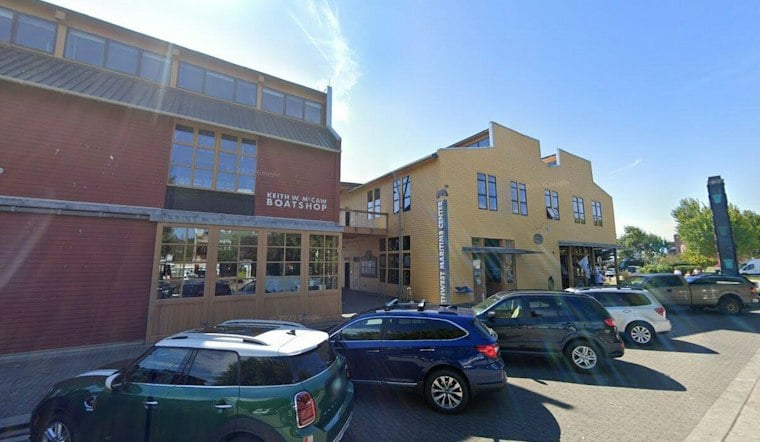
Opening ceremonies begin at 11 a.m. Saturday, followed by a sculpture parade through downtown Port Townsend starting at noon. Racing gets underway that afternoon, with teams leaving Water Street at roughly 2:20 p.m. and entering the bay around 2:30 p.m. for a water segment staged at the boat dock in front of the Northwest Maritime Center, according to ptkineticrace.org. Teams are timed individually, and once the water crossing wraps up, the crowd votes for its favorite sculpture.
Racers return Sunday for the land course, part of the 8-mile course that winds through the sand pit at Fort Worden and the mud flats at the Jefferson County Fairgrounds, before awards wrap up the weekend. The entire event is free to attend and centers on the Northwest Maritime Center at 431 Water St. in Port Townsend.


