

























































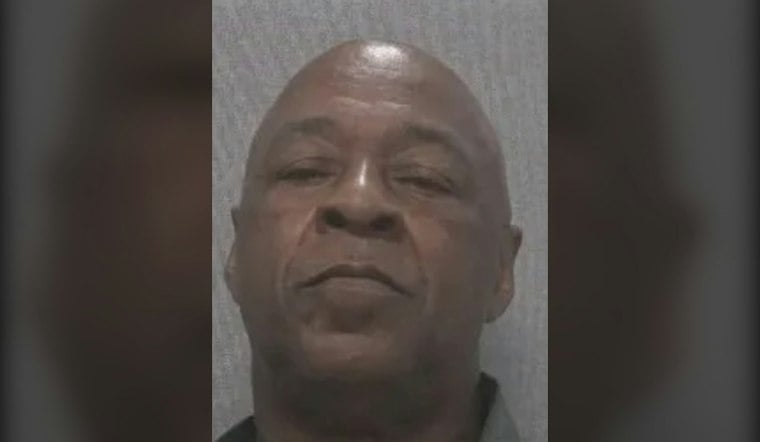
A Portsmouth man accused of running a street-level fentanyl and cocaine operation out of his home had his felony drug and firearms charges deemed nolle prosequi this week, a legal move that dismisses the case for now without closing the door on future prosecution. Walter Freeman Jr., 64, saw the charges dropped during a preliminary hearing in Portsmouth General District Court on Friday, October 2, according to online court records.
The dismissal comes nearly six months after Portsmouth's Special Investigations and Fugitive Apprehension units wrapped up a narcotics investigation that led to Freeman's arrest. As reported by WAVY.com, detectives began looking into Freeman after receiving tips from the community and personally observing narcotics transactions, which led them to secure three separate search warrants covering his residence, his person, and his vehicle in the 2500 block of Oakleaf Place on April 16.
When officers executed those warrants, they recovered six ounces of crack cocaine and one ounce of fentanyl that had already been processed into 159 individual capsules packaged for street sales, per the same account. Investigators also found two firearms, ammunition, an unknown amount of cash, and tools used for weighing and packaging narcotics for sale. Because Freeman is a convicted felon, he is legally prohibited from owning firearms, and detectives charged him not only with possession with intent to distribute fentanyl and cocaine but also with multiple counts tied to illegal firearm and ammunition possession by a convicted felon.
What Nolle Prosequi Actually Means
A nolle prosequi disposition is not an acquittal, and it does not mean the case is over for good. Under Virginia Code § 19.2-265.3, entering such a disposition requires a motion by the Commonwealth showing good cause and approval from the court, and it drops the current charges without prejudice — language that allows prosecutors to re-indict or refile the same charges later, according to Abrenio Law.
In Virginia, felony cases that start in General District Court are often routed this way as a procedural step rather than a dead end. Commonwealth's Attorneys routinely seek a nolle prosequi at the preliminary hearing stage specifically to transfer a case directly to a Circuit Court grand jury for indictment, or to hand it off to federal prosecutors, according to Virginia Criminal Laws. Court records reviewed by WAVY.com show the charges against Freeman were dismissed this way on Friday, October 2, and it remains unclear whether the Commonwealth's Attorney's Office intends to re-indict him in Circuit Court or whether the case could be adopted by federal prosecutors — WAVY.com's 10 On Your Side reported it had contacted the Portsmouth Commonwealth's Attorney's Office for more details.
Steep Penalties Still on the Table
If Freeman is eventually re-indicted or federally charged, the underlying allegations carry significant statutory weight. A first-offense conviction for possession with intent to distribute Schedule I or II controlled substances like fentanyl and cocaine carries a penalty of five to 40 years in prison and fines up to $500,000 under Virginia Code § 18.2-248, according to Virginia Rules. Separately, possessing a firearm as a convicted felon is a Class 6 felony under Virginia Code § 18.2-308.2, carrying a mandatory minimum of five years if the prior conviction was violent, or two years if the prior non-violent conviction occurred within the past decade, per the Law Office of Paul C. Galanides, P.C.
Prosecutors in cases like this often rely on the legal doctrine of constructive possession, which allows guilt to be established for drugs or firearms found on shared property if evidence shows a defendant knew the items were present and exercised control over the residence or vehicle where they were seized, according to Goff Voltin, PLLC.
A Regional Fentanyl Crisis
The case lands against the backdrop of a fentanyl crisis that has hit Portsmouth harder than almost anywhere else in Hampton Roads. A 2025 study by Old Dominion University found Portsmouth had the highest opioid overdose death rate, at 40.4 per 100,000 residents, and the highest fentanyl-related death rate, at 78.3 per 100,000, among six major localities in the Greater Hampton Roads region. The Portsmouth Health Department has traced synthetic opioids, led by fentanyl, becoming the city's primary driver of fatal overdoses back to around 2013, with mortality rates surging further during the COVID-19 pandemic.
There are signs of statewide improvement, even as local numbers stay grim. Preliminary 2025 data from the Virginia Department of Health showed 1,197 drug overdose deaths statewide, a 23 percent decrease from 2024, which itself followed a 37 percent decline recorded between 2023 and 2024.
Federal authorities have also handled at least one Portsmouth drug and gun case. Hoodline previously reported that a Portsmouth dealer was sentenced to 10 years in federal prison earlier this month after local police found cocaine and guns in his home. Whether Freeman's case follows a similar path remains to be seen.





