

























































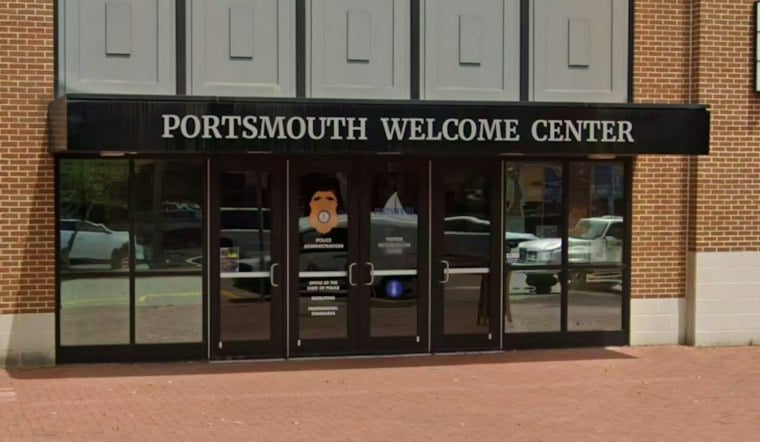
Portsmouth police say automated license plate readers helped detectives crack open a $40,000 larceny case involving materials meant for the United States Navy, leading to one arrest while two more suspects remain wanted. The Portsmouth Police Department's Criminal Investigations Bureau used the technology to trace stolen property back to where it had been resold; license plate readers were used on October 8.
Cameras Trace Stolen Navy Materials to Buyers
According to WAVY.com, detectives used license plate recognition technology to identify locations tied to the crime and pinpoint where the stolen Navy-bound materials had been sold. That same technology then assisted investigators in locating, recovering, and returning the materials, which were valued at roughly $40,000.
Police say 58-year-old Teresa Diane Barham has been arrested and charged with larceny with intent to sell. Two other suspects, 61-year-old Denton Allen Everton and 25-year-old Loren Torreo Butts, face more serious exposure: both have been charged with grand larceny and larceny with intent to sell, and detectives are now asking the public for help locating them, per the station's report.
What the Charges Actually Carry
Virginia law treats larceny with intent to sell as its own distinct felony, separate from standard grand larceny, allowing prosecutors to file both charges for the same incident when stolen goods are worth $1,000 or more, according to Virginia Law. Under that statute, larceny with intent to sell is an unclassed felony carrying a prison sentence of two to 20 years, and the theft of multiple units of the same item can serve as prima facie evidence of intent.
Grand larceny itself, under a separate section of Virginia Law, applies to property worth $1,000 or more and carries penalties ranging from one to 20 years in a state correctional facility, or up to a year in jail and a $2,500 fine at a court's discretion. Police have not released additional details about how the materials were taken or exactly what they consisted of, and the investigation remains active.
A Lead Detective Defends the Technology
A lead detective on the case said license plate readers are valuable investigative tools for identifying suspects, recovering stolen property, and holding offenders accountable, per WAVY.com. The detective added that the department remains committed to proactive strategies meant to enhance public safety, protect property, and bring those responsible for criminal activity to justice.
That defense of the technology echoes comments from Portsmouth Police Chief Steven Jenkins, who discussed safeguards for the city's camera system at an August town hall, according to Citizen Portal.
Portsmouth's Camera Network Grows as Neighbors Pull Back
Portsmouth's investment in the technology has only expanded. The department installed 60 fixed Flock Safety cameras in 2023 alongside Axon Fleet mobile units, and that network has grown to more than 130 documented camera locations across the city's 33.3 square miles by late 2026, per the Atlas of Surveillance.
That buildout stands in contrast to a broader statewide retreat. Other Virginia jurisdictions, including Henrico and Arlington counties, moved to terminate or dismantle their own Flock Safety contracts in September and October over privacy and surveillance concerns, according to WHRO. A separate statute that took effect in July already requires agencies to purge passive ALPR data after 21 days unless it is tied to an active criminal investigation.
Police say they currently have no additional details to release about the case. Anyone with information is asked to submit an anonymous tip by calling 1-888-LOCK-U-UP, using the P3 Tips app, or visiting P3Tips.com.




