

























































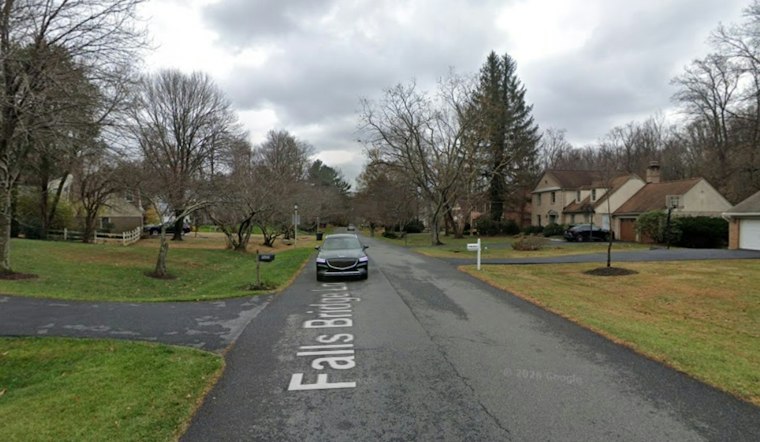
A worker performing waterproofing next to a single-family home in Potomac, Maryland was buried up to his armpits Tuesday afternoon when the surrounding dirt suddenly gave way, trapping him in a trench as coworkers scrambled to keep him from being pulled further under. The collapse happened around 3:20 p.m. in the 9600 block of Falls Bridge Lane, setting off a massive emergency response that would eventually draw more than 65 rescue personnel to the quiet residential street.
According to Daily Voice, coworkers on scene called 911 immediately and began manually clearing dirt away from the trapped man's chest before emergency crews even arrived, a step that likely prevented the kind of traumatic asphyxiation that can occur within minutes of a cave-in. Montgomery County Fire and Rescue Service conducted the technical rescue operation, with footage of the effort shared by county fire spokesperson Pete Piringer, per DC News Now, which reported the worker was trapped roughly 13 feet underground.
A Multi-Agency Response Takes Shape
The scale of the response underscored just how dangerous trench rescues can be. Technical rescue teams from both Montgomery County and Fairfax County Fire and Rescue responded, alongside the University of Maryland Shock Trauma Go Team and two Maryland State Police helicopters, the station's report notes. The Go Team is a specialized unit that deploys physician-led trauma specialists via state police aviation directly to complex rescue sites, allowing doctors to begin advanced care before a victim is even freed from the ground.
Extracting someone from a dirt collapse is not simply a matter of digging them out. Loose soil can shift again at any moment, and rescuers typically must stabilize the surrounding earth with shoring before attempting to free a trapped worker, a process that can take hours even with dozens of personnel on scene.
Not the First Trench Emergency in the County This Year
Tuesday's incident echoes a similar rescue in March, when Montgomery County Fire and Rescue Service responded to a trench collapse on Kentbury Drive in Bethesda, where two construction workers were pulled from a 10-to-12-foot trench at a residential site, according to Fox 5 DC. Both workers in that case were expected to survive.
The hazards extend beyond Montgomery County. In February 2025, two construction workers died in Catonsville, Maryland, after an 8-by-30-foot foundation wall collapsed into a 6-to-8-foot repair trench during home foundation work, a case that prompted an investigation by Maryland Occupational Safety and Health, as reported by 7News DC.
Why Trenches Turn Deadly So Fast
Federal safety standards under OSHA regulation 29 CFR 1926.652, enforced in Maryland by the state's occupational safety office, require protective shoring, sloping, or shielding systems for any excavation five feet deep or greater unless it is cut into solid rock, according to guidance from Vanguard EHS. Residential waterproofing and foundation work frequently requires digging narrow trenches tight against a home's walls, where space constraints can make proper sloping or shoring difficult to install.
The physics behind why these collapses turn fatal so quickly are stark. The Occupational Safety and Health Administration notes that a single cubic yard of dirt weighs approximately 3,000 pounds, roughly the weight of a compact car, meaning a cave-in can exert crushing pressure on a trapped worker within seconds. Caught-in and between hazards, which include trench collapses, consistently rank among the construction industry's leading causes of fatal workplace injuries, according to data cited by SmartQHSE.
There is some evidence that stepped-up enforcement has made a difference nationally. Preliminary federal reporting for fiscal year 2024 showed that worker deaths from trench collapses dropped nearly 70 percent following expanded enforcement and safety campaigns, per the Occupational Safety and Health Administration. Still, Tuesday's collapse in Potomac shows that residential excavation can pose risks.





