

























































The dispute in Prince William County centers on whether federal election monitors may enter polling places and what they can do if county officials refuse access. Registrar Eric Olsen says the county will not admit U.S. Department of Justice monitors on Election Day, citing the timing of the request and a lack of evidence that the county was failing to meet civil-rights requirements. The DOJ says it will monitor anyway, from outside if it is denied entry.
Olsen Cites Timing and Lack of Evidence in Refusal
In an October 26 email, Olsen told the DOJ he would not authorize additional observers inside county polling places for this election. Virginia code gives general registrars authority to approve or reject requests for neutral observers. As detailed by Prince William Times, Olsen relied on that authority and argued that the request came too late. He also said the DOJ had not provided evidence the county was failing to comply with civil-rights requirements, according to vpap.org.
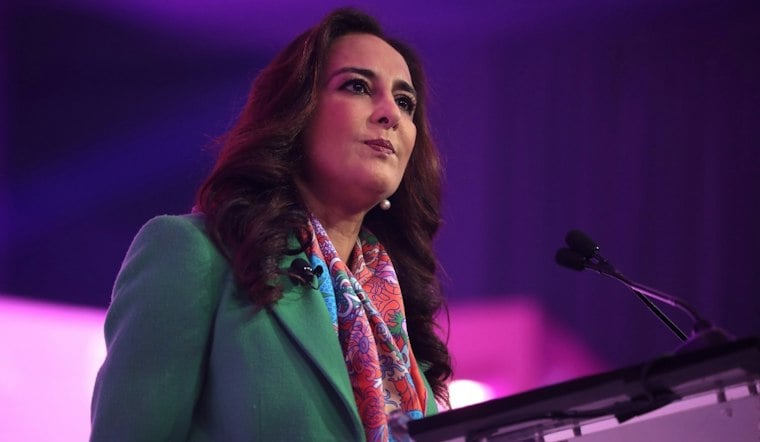
Olsen also questioned whether the DOJ could adequately staff its stated plan to send 1,000 monitors nationwide, raising concerns about whether observers would have appropriate training, temperament and expertise. The Justice Department has called the effort its largest monitoring deployment. Assistant Attorney General for the Civil Rights Division Harmeet K. Dhillon said the department planned to send 1,000 observers nationwide, according to NPR, which reported that the DOJ had begun notifying counties it intended to monitor.
DOJ Says It Will Watch From Outside Regardless
The DOJ told Olsen that it would monitor regardless of whether the county allowed its observers inside, and would do so from outside if turned away, according to Olsen. He said the department had also sent notices about planned monitors to Fairfax County, Virginia Beach and Charlottesville. The registrars in Manassas and Manassas Park, by contrast, said they had received no such request. The DOJ maintains that state or local approval is not required for its monitoring, that observers receive training for their assigned jurisdictions and must follow state and local polling rules. The agency also says advance notice is not required, although it almost always informs relevant officials.
Federal Observers and DOJ Monitoring Are Distinct
The DOJ distinguishes federal observers authorized under a Voting Rights Act court order from monitoring by Civil Rights Division attorneys and staff. Under Section 3(a) of the act, federal observers may be present when a court order authorizes them; the DOJ describes its attorneys and staff as conducting a separate form of election monitoring, including in jurisdictions not eligible for federal-observer assignments, according to the Justice Department’s Civil Rights Division.
The deployment figures describe different periods and are not a count of the same effort: the DOJ reported that it had deployed more than 75 monitors across five states and more than 200 polling locations during the primary season, according to a Justice Department update. That primary-season tally does not confirm the announced plan to send 1,000 officials for the general election.
If monitors are turned away, they must remain outside a 40-foot boundary measured from each polling place’s exterior entrance, the same area where members of the public, campaigners and media may gather. Olsen questioned how observers outside that boundary could assess language assistance—a concern relevant to the DOJ’s stated reason for selecting Prince William County.
County Points to August Primary and Language Access Programs
This is not the first time Prince William County has dealt with DOJ monitoring. The county was monitored by Justice Department officials during the August 2026 primary and received no reports of problems from that oversight, according to the same Prince William Times report. The county has been monitored by the DOJ three times in five years, and Olsen said he never received a report identifying a lack of compliance with the law. Virginia's broader experience lines up with that account: Virginia Department of Elections Commissioner Steven Koski said DOJ monitors had been present in Fairfax and Prince William counties during the 2026 primary election as well, with no major issues reported, as reported by Cardinal News.
Olsen says Prince William County meets the Voting Rights Act’s minority-language requirements. The county provides Spanish-language ballots, forms, signs and live assistance at more than half of its 103 polling places; tablets at other precincts offer a language app for Spanish and many other languages. During the August monitoring, DOJ officials recommended that precinct translators wear identifying buttons so voters could find them more easily. The county adopted the practice, Olsen said, but he described it as a best-practice suggestion rather than a finding of legal noncompliance. The DOJ first notified the county in June that it would monitor the August 4 primary and requested information about the language-assistance program. Olsen confirmed in July that the county had received the letter and was preparing a response, according to Potomac Local.
Registrar Cites Safety Concerns and Oversight Already in Place
Olsen also cited safety concerns, saying Dhillon’s public statements amounted to vague threats that could unsettle volunteer election officers. He declined a separate request from the NAACP and Advancement Project to observe the following week’s election. Olsen said refusing federal observers did not mean the county had something to hide: He described the elections office as transparent and pointed to its election-administration awards. He said he wanted voters to cast ballots without worrying about federal officials’ presence and argued that such observers can have a chilling effect. Olsen also pointed to oversight by the electoral board, county board of supervisors and state Department of Elections, and said elections are fundamentally local and state matters.
Other Counties Nationwide Are Drawing Similar Lines
DOJ monitoring has included jurisdictions selected for language-assistance needs and places with limited election-observation data, USA Today reports. The department sent monitors to 64 jurisdictions across 24 states in 2022, including to help provide Spanish-language translations. This year’s announced effort is roughly 1,000 officials at polling places nationwide.
Comparable jurisdictions elsewhere have imposed their own restrictions rather than granting monitors full access. Hennepin and Ramsey counties in Minnesota denied the DOJ's request to place observers inside polling places during a primary, with monitors instead required to stand outside 100-foot boundaries, according to news3lv.com. Federal monitors also will not enter polling places in Colorado's Adams County this election, per Colorado Politics. In North Carolina, where the DOJ plans to send monitors to Alamance, Wake and Mecklenburg counties, officials say monitors may observe polling-place setup and voters outside polling places but are not permitted inside the voting enclosure while voting is underway, according to The News & Observer. Similar denials have come from Washington County, Arkansas; Lake and Marion counties in Indiana; Louisville, Kentucky; and Laramie County, Wyoming.





