

























































Homeowners in 11 counties or county equivalents across the country paid less than $250 a year in property taxes in 2023, according to newly released data, even as the average countywide bill nationwide climbed to $1,889. The figures, drawn from Census Bureau records and published in March, highlight a striking gap between the lowest and highest property tax burdens in America at a moment when seven states are putting property tax policy directly in front of voters this fall.
Where the Lowest Bills and Rates Turn Up
According to the Tax Foundation, the 11 counties with median property tax bills below $250 a year include areas in Alaska and Louisiana, while the five counties with the lowest effective tax burdens all carry rates below 0.18%, spanning Alaska, Alabama, Louisiana and Hawaii. Effective rates measure the average residential property taxes actually paid as a percentage of a home's value, a distinction the Tax Foundation says matters because low rates don't automatically mean low dollar bills if home values in an area are high. Property taxes, the group notes, accounted for 28.9% of total state and local tax collections in fiscal year 2023 and a full 70.0% of local tax collections that same year.
Those numbers echo state-level patterns reported by realtor.com in the New York Post, which found South Carolina, Arizona, Utah, Alabama and Hawaii carrying the lowest statewide effective property tax rates, all under 0.5%. Hawaii's effective rate sits at 0.29%, the lowest in the nation, with South Carolina at 0.49%, Arizona and Utah both at 0.48%, and Alabama at 0.37%. The Post's report, citing the Tax Foundation, notes that rates fell year-over-year in four of those five lowest states, with Alabama the lone exception.
Why Low Rates Don't Tell the Whole Story
Property tax rates themselves are typically set locally — by cities, counties, school boards, fire departments and utility commissions — even though the broader legal framework is usually established at the state level, the Tax Foundation explains. That means a low statewide rate can still mask wide variation within a state. Virginia illustrates the point starkly: the Post reports that Buchanan County has a median property tax bill of about $404, while Falls Church City's median bill tops $10,000, even though Virginia's overall effective rate stands at 0.78%.
Urban cores tend to carry higher property tax burdens than rural areas, largely because home values run higher there, the Tax Foundation's county-level data show. Honolulu County, for instance, has a median annual property tax bill of $2,553 despite Hawaii's low statewide rate. Janelle Fritts, who authored the Tax Foundation's analysis, has said effective tax burdens are best compared by dividing median tax paid by median owner-occupied housing value, since a higher assessment can produce a higher bill even where the tax rate itself is falling. Those dollars fund core local services, including schools, police and fire departments, according to the group's report.
The States With the Heaviest Burdens
At the opposite end of the spectrum, New Jersey carries the nation's highest effective property tax rate at 1.88%, tied for second-highest with Illinois, per the Post's reporting. Connecticut and Vermont both sit at 1.54%, New Hampshire is close behind at 1.50%, and Texas ranks seventh nationally at 1.40%. Those higher-tax states contrast sharply with the sub-0.5% club, underscoring how much geography shapes a homeowner's annual bill.
Low Taxes, Rising Prices in the Sun Belt
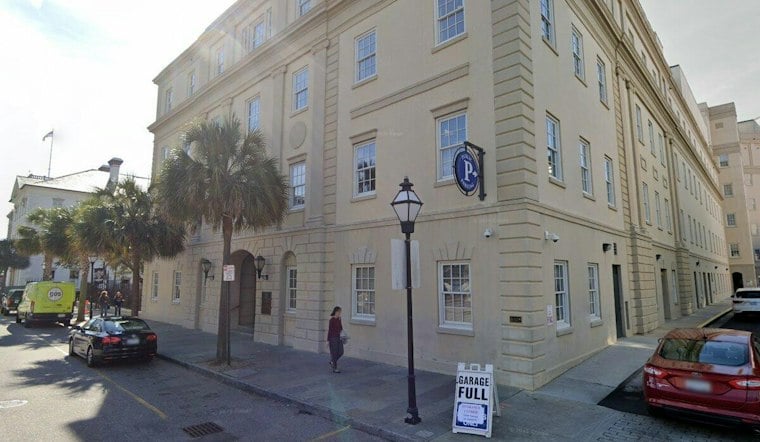
The gap is reshaping migration patterns in some of the lowest-tax states. In South Carolina, which ranks 46th nationally for its effective property tax rate, Charleston County real estate agent and Maison Real Estate cofounder Leslie Turner told realtor.com that buyers often cite lower property taxes than what they paid in New York, Connecticut and California as a reason for relocating. South Carolina uses a two-tier system that taxes primary residences at a lower rate than second homes or investment properties — Turner estimated a $1 million primary residence in downtown Charleston would incur about $4,584 in annual property taxes, compared with roughly $16,246 for a $1 million second home or investment property in the same area. Some South Carolina counties have seen property values climb 80% to 90% over the past six years, even as Charleston County's sales tax runs around 9%.
Justin Winter, a South Carolina broker with Forbes Global Properties, said low property tax rates drive buyer interest and sales, and that those sales in turn push prices higher — with Illinois sending the greatest number of transplants to the state, according to Winter. A similar story is playing out in Arizona, where the 0.48% effective property tax rate and a flat 2.5% individual income tax rate are drawing buyers from California, Washington, Oregon and Chicago, per the Post's reporting. Shawna Warner, founding partner at Retsy Forbes Global Properties, is cited alongside Winter in discussing the appeal of low-tax states. Washington state's looming 9.9% tax on income over $1 million a year, set to take effect in January 2028, adds another incentive for some high earners weighing a move, according to the same report.
Rising Home Prices Complicate the Picture
Nationally, the median US home sales price reached $410,700 in the second quarter of 2026, according to the Federal Reserve Bank of St. Louis — an increase of nearly 30% since the second quarter of 2020. Rising home values can push up property tax bills even in states with falling rates, since the bill is ultimately tied to assessed property value rather than the rate alone. A separate analysis from the Washington Examiner notes that the median sales price of a new home has risen 149% since the first quarter of 2000, and cites a study by economists at New York University and Baruch College finding that lower property taxes can discourage older homeowners from selling, which in turn limits housing access for younger families.
Ballot Measures Could Reshape the Map
The debate over property tax policy is also playing out at the ballot box. Voters in seven states will decide, or have already decided, 13 statewide ballot measures tied to property tax policy in 2026, according to Ballotpedia. Twelve of those measures are set for the November 3 ballot in Florida, Georgia, Louisiana, North Carolina, Oklahoma, Tennessee and Wyoming. The Post's report similarly notes that property tax relief bills will appear on ballots in Florida, Louisiana, North Carolina, Oklahoma, Tennessee and Wyoming this November. With home values still climbing in many markets, those votes could determine whether the lowest-tax counties and states keep their edge — or whether rising assessments eventually catch up with them anyway.


