

























































A 41-year-old Prospect Park man has been arraigned on 32 charges after Chester County police say he used artificial intelligence to generate child sexual abuse material and secretly filmed women in public. Robert J. Mayberry was charged with producing AI-generated child pornography, and investigators say the case began months before his arrest drew public attention this week.
According to Delco Times, Mayberry's charges include child sexual abuse material, photographing or filming a sex act involving a child on a computer, communication with a minor for sexual abuse, invasion of privacy involving someone's intimate parts, and criminal use of a communication facility. West Goshen police said they first received information in June about AI-generated content depicting the sexual abuse of a minor, and that tip set the investigation in motion.
District Judge Anthony diFrancesca arraigned Mayberry and set his bail at 10% of $75,000, which he posted, the outlet reported. Accounts differ on exactly when Mayberry was taken into custody: Delco Times reported he turned himself in on Tuesday, October 20, while NBC Philadelphia reported he was arrested on October 21 and posted bail.
How Investigators Say the Case Unfolded
The investigation traces back to June 18, when a woman reported seeing AI-generated child pornography videos and upskirt photos on Mayberry's cellphone, according to NBC Philadelphia's reporting. From there, the station's report says investigators spent weeks digging through his devices, searching them between June 26 and August 14 and turning up hundreds of videos and photos — a mix of AI-generated and non-AI-generated child sexual abuse material, along with more than 150 upskirt videos.
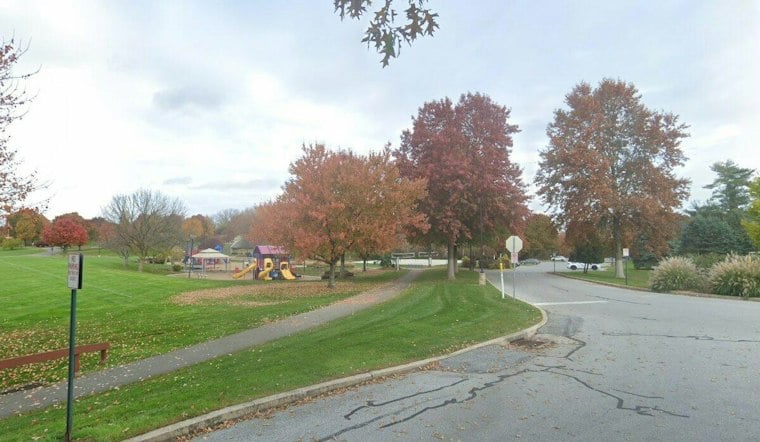
Police allege Mayberry used the AI app Grok to turn a photo of a teenage girl taken at West Goshen Community Park into child pornography, per the same account. West Goshen police said the monthslong investigation ultimately led to the charges filed against him. A preliminary hearing in the case is scheduled for October 30, according to Delaware Valley News.
A Pennsylvania Law Built for the AI Era
Pennsylvania has a specific statute addressing this kind of material. Under state law, as outlined by the Pennsylvania General Assembly, artificially generated child sexual abuse material is defined as a depiction that appears to show a child under 18 engaging in a prohibited sexual act that did not occur in reality but was substantially produced through technical means, including artificial intelligence or photo-editing software. The law also makes it a crime to intentionally view or knowingly possess or control such material, whether it is real or AI-generated.
Pennsylvania updated these provisions through Act 125, a 2024 amendment that revised rules around dissemination and possession of child sexual abuse material and added language targeting certain artificial-intelligence developers, according to the state legislature's records. Mayberry's case is not the only recent Pennsylvania prosecution built around the new framework. In York County, 22-year-old Luke A. Teipel was charged with 33 felony counts of possessing child sexual abuse material, including AI-generated images, with officials saying he had more than two dozen files of such material and bail set at $25,000 unsecured, according to Fox 29.
A Nationwide Surge in Reports
The Mayberry case lands amid a documented spike in AI-related child exploitation reports nationally. The National Center for Missing & Exploited Children says generative-AI-related child sexual exploitation reports to its CyberTipline soared from 6,835 in the first half of 2024 to 440,419 in the first half of 2025, according to missingkids.org. Online enticement reports jumped over the same period from 292,951 to 518,720, the organization said.
NCMEC has identified more than 275 direct victims of generative-AI child sexual abuse material in 2024 and 2025 combined, and its staff had categorized more than 158,000 AI-generated images and videos submitted through CyberTipline reports between January 2023 and December 2025, the organization reported. NCMEC says it began tracking generative-AI-related reports in January 2023 and has seen a steady rise since.
No further details about Mayberry's case were available as of this week's reporting.




