

























































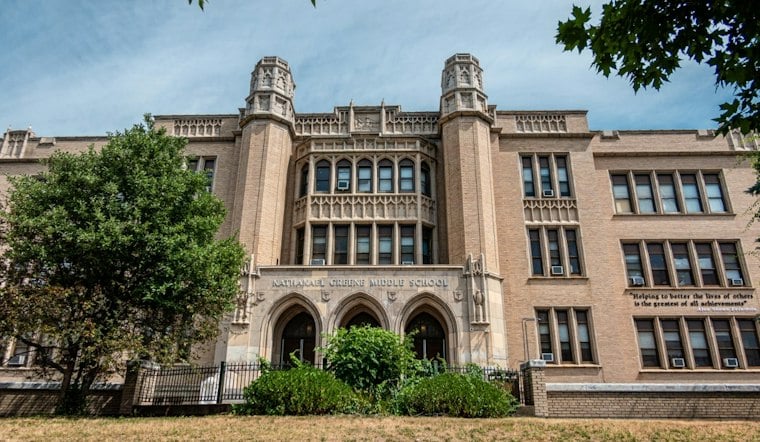
At Nathanael Greene Middle School in Providence, students arrive each morning and lock their devices into a pouch they won't open again until the final bell rings.
First in Rhode Island to Lock Up Phones
Nathanael Greene became the first school in Rhode Island to adopt Yondr pouches, the locking cases that keep roughly 1,000 students' phones out of reach from the first bell to the last, according to turnto10.com. Students stash their phones in the pouch upon arrival and don't get them back until dismissal. What began as a pilot became permanent in fall 2023, the station reports. Students with medical conditions that require phone access during the day are issued a separate bag with a Velcro closure instead of the locking pouch.
Principal William Reilly says the numbers back up what students like Carlos are describing. He told the outlet that discipline referrals have dropped and test scores have climbed since the policy took hold, and that reading performance rose by 1.5 years year over year. Attendance at the school, he said, is now among the highest in the Providence district.
Other Providence Schools Followed Suit — But Not High Schools
Other Providence middle schools have since adopted similar pouch policies after watching Nathanael Greene's rollout, per the same report. The citywide approach has not extended to high schools, which were not included in the expansion at the time of that reporting. Providence Public School District policy applies daily teacher collection and return to elementary students in grades PK–5, while students in grades 6–12 follow school procedures for storing devices that must be off and away during instructional time; the district has said personal-device use during instructional time is barred under state law, according to providenceschools.org.
That state law is the backdrop driving schools statewide to act. Rhode Island's new rule, which took effect August 1, 2026, requires public schools to restrict student access to personal electronic devices during the school day, with certain exceptions, and required local districts to file their device policies with the Rhode Island Department of Education by that date. As The Boston Globe notes, the law reflects a broader national push to limit phone use during the school day. Providence's experience is one data point in that push.
What National Research Says About Phone Bans
Nathanael Greene isn't the only Rhode Island school locking phones away. The Bristol-Warren school district began using Yondr pouches at the end of 2024, with Barrington following in 2025, and East Providence has budgeted $71,764 from a Project Aware grant to buy pouches for its middle and high school students, according to eastbayri.com.
Research on these bans nationally paints a more complicated picture than one school's early results. A large study examining data from roughly 4,600 schools, led by researchers at Stanford, Duke, Michigan and Pennsylvania, found teachers reported fewer classroom distractions once phones were locked away, but turned up little evidence that bans quickly improve academics or behavior, NBC News reported. In schools with bell-to-bell bans, the share of students reporting personal phone use in class fell from 61% to 13%, but suspension rates rose about 16% in the first year before the effect faded, and standardized test-score effects stayed close to zero through the first three years.
A separate study out of Florida found that enforcing cellphone bans significantly increased student suspensions in the short term, particularly among Black students, before discipline began declining after the first year, according to nber.org. That same research found significant test-score gains in year two, which researchers linked to a drop in unexcused absences, with effects more pronounced in middle and high schools where smartphone ownership is higher.
Teens Report Rules Loosening Over the Year
Survey data from Brookings suggests enforcement can soften as a school year wears on. Among a nationally representative sample of teens, reported phone use during core classes rose from 28% in October 2025 to 42% by May 2026, according to brookings.edu.
For now, Nathanael Greene's early numbers offer one positive data point, even if national data urges some caution about how long those gains might last.





