

























































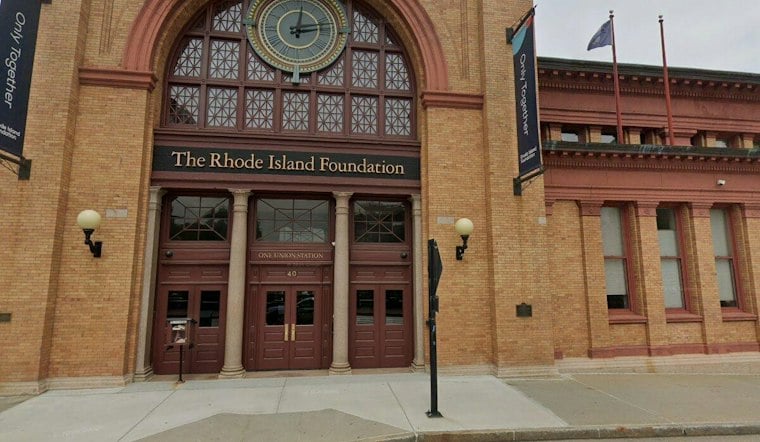
A new resiliency center has opened on the main floor of Providence's historic Union Station, offering free, ongoing trauma support to anyone touched by last December's mass shooting at Brown University or the February shooting at Pawtucket's Dennis M. Lynch Arena. The Ever Hope Center, run by Family Service of Rhode Island, opened its doors on Oct. 14 with a small staff and a mission that organizers describe as filling a long-term gap once the initial crisis response fades.
A Federally Backed Hub Built From Months of Planning
The center is a federally supported resiliency center, according to the Brown Daily Herald, and had been in development for months before its opening. As Rhode Island Current reports, the center grew directly out of months of work by Family Service of Rhode Island following the two shootings, as staff worked to identify what longer-term support survivors would need. The outlet notes the center is funded primarily through a $2 million grant from the U.S. Justice Department's Antiterrorism and Emergency Assistance Program, along with an additional $200,000 allocation through the federal Victims of Crime Act.
Rhode Island Current reports that federal funding can currently be used only for people impacted by either the Brown or Pawtucket shootings. Per the Herald, Ever Hope's stated aim is to provide resources and healing for communities affected by both the Brown and Pawtucket mass shootings.
What Services Are Available
The center currently runs on a three-person team, according to the Herald, led by executive director Rachel Caruso alongside an administrative specialist and a training and outreach coordinator. The same reporting describes Ever Hope's staff as trauma-trained and experienced working with crime survivors, per Caruso, and says the center provides victim navigation and support. Rhode Island Current separately reports the center currently has three trauma-trained social service professionals, including Caruso herself, as well as a victim navigator and a training and outreach specialist, with plans to hire an additional victim navigator and a clinician.
According to the Boston Globe, services offered will include mental health counseling, assistance applying for victim compensation funds, opportunities to join support groups, and a place to do yoga or meditate. The Globe's report notes the center will serve anyone affected — from direct survivors of the shootings, to family members of the victims, to community members traumatized by the events — entirely for free. Per the Herald, visitors can decide for themselves how they engage with the center's resources, and staff are establishing partnerships to offer trauma-informed yoga, art therapy, music therapy and equine therapy.
How the Response Began
The center's roots trace back to the immediate aftermath of both shootings. Rhode Island Current reports that Family Service of Rhode Island counselors arrived at the Pawtucket police station within an hour of the Feb. 16 shooting and continued meeting with players and coaches over the next 10 days. At Brown, the Herald reports that Caruso and other trauma-trained social service professionals assisted law enforcement's response to the Dec. 13 shooting, with the Providence Police Department and Family Service of Rhode Island providing co-response teams on campus that day.
In the weeks that followed, per the Herald, Family Service of Rhode Island participated in the Brown Ever True initiative, and the organization along with other agencies offered psychological services to students and training for faculty in January. Carl Austin Miller Grondin said in an email to the Herald that healing takes time, compassion and sustained community commitment to support those affected.
How a Resiliency Center Is Supposed to Work
Alyssa Rheingold described a resiliency center as a centralized hub facilitating long-term recovery after mass violence, according to the Herald, which reports that such centers serve people affected by mass violence — including victims, survivors, family members and first responders — per Rheingold. She also said resiliency center programming is guided by victims' and survivors' needs and preferences, and the Herald notes that individual resiliency centers control the specific services they provide, which is why offerings can vary from one site to the next.
Nicole Nugent, per the Herald, said recovery from mass violence varies by person and may follow an unpredictable time frame, and that traumatic experiences generate an adaptive biological response that may involve fight, flight or freeze. The Herald also reports that the National Mass Violence Center connects resiliency center directors nationwide to share lessons, and Caruso said the national organization has supported resiliency centers and their directors. The National Mass Violence Center was itself established in October 2017 in partnership with the U.S. Department of Justice's Office for Victims of Crime.
Other Communities Have Walked This Path Before
Ever Hope joins a small but growing network of similar centers across the country. The Boston Globe reports that there are currently about two dozen resiliency centers open in the United States, and that a similar center opened in Boston a year after the 2013 Boston Marathon bombing, with another opening in Lewiston, Maine, after its 2023 mass shooting.
In Lewiston, the Sun Journal reported that city councilors directed staff to work with the Maine Resiliency Center to determine the ongoing needs of victims, families and survivors of the Oct. 25, 2023 shooting. That center, operated by Community Concepts and guided by a victim and survivor advisory committee, opened 19 days after the shooting — described as the second-fastest resiliency center opening in the United States — and offers walk-in hours at its Sabattus Street location in Lewiston. The Maine center has also offered to conduct its own needs assessment of survivors, compiled into a summary report that protects respondents' information, the same outlet reported.





