

























































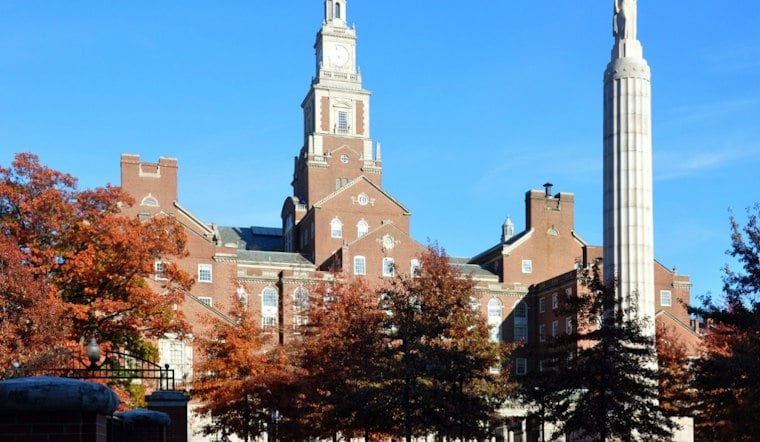
The Rhode Island Supreme Court heard arguments this week over whether the Providence City Council should ever have been blocked from fighting a 30-year tax deal that benefits one of the city's most prominent developers. At stake is an arrangement covering 10 downtown buildings owned or controlled by Arnold “Buff” Chace's Cornish Associates, a deal the council says was struck without its input and now costs the city millions of dollars a year.
The dispute centers on a 2021 consent order that settled a lawsuit between Chace and the administration of former Providence Mayor Jorge Elorza, extending special tax treatment to the properties for three decades, according to The Boston Globe. Under the state's so-called 8-Law, developers who build income-restricted housing pay 8 percent of their annual rental income as a tax bill instead of the standard commercial property-tax rate, per the same report. The 2021 deal requires that 25 percent of units in the affected buildings go to tenants earning no more than 100 percent of the area median income.
The City Council has raised objections to the agreement's authorization and legality, as well as to how broadly it was applied. The Globe's earlier reporting found that the 8 percent treatment was applied to all 10 properties entirely, including their commercial tenants, rather than being limited to the residential portions containing the income-restricted units. The council also says the 30-year agreement replaced tax stabilization agreements that were set to expire after 20 years, effectively tacking on three more decades of reduced tax bills.
A Fight Over Numbers, and Over Who Gets a Say
Dollar estimates of what the deal is worth have varied depending on the source. The Globe reported the tax breaks are estimated to be worth $42 million to Chace's properties, while Providence Business News cited an estimate that the consent order could net the developer $42.5 million over the next 30 years. City auditors have likewise produced differing figures for the revenue loss: the Globe reported an internal estimate of at least $18 million in lost tax savings, while WPRI reported that internal auditor Gina Costa pegged the potential loss at $18.8 million. Either way, the numbers are substantial for a city budget, and Providence Business News reported the city is projected to forgo $1.4 million from the 10 properties in the current fiscal year alone, with annual losses expected to climb by 2.5 percent after that.
The council did not stay quiet about any of this. Members voted 13-1 in 2023 to pursue legal action aimed at overturning the agreement their predecessors never approved, according to Providence Business News. A Rhode Island Superior Court judge subsequently ruled that the council could intervene in the underlying lawsuit, a decision that both Chace and Mayor Brett Smiley's administration separately appealed, the Globe reported.
What the Supreme Court Will — and Won't — Decide
That appeal is what brought the case before the Rhode Island Supreme Court, which agreed to take it up and consider whether the City Council should have been allowed to intervene in the first place. Notably, the justices are not being asked to interpret the substance of the 8-Law itself or settle whether the tax treatment was properly applied — only whether the council has legal standing to challenge it, per the Globe's reporting.
The case appeared on the court's oral argument calendar as Harrisburg Associates, LLC et al. v. The City of Providence et al., according to the Rhode Island Supreme Court. As The Providence Journal reports, the city has accused the developer of using the affordable housing law to the city's disadvantage, framing the fight as one over whether a law meant to encourage low-income housing was stretched to cover commercial space that was never supposed to qualify.
A Broader Push to Rework the Tax Structure
The clash comes as the City Council has separately been working on legislation addressing the same tax mechanism. Under a 2026 proposal known as the BUILD Act, the council says it would use the tax stabilization agreement structure to provide limited stabilization during the gap period before the 8 percent tax treatment kicks in, according to the Providence City Council. It's a sign that officials are looking beyond the Chace dispute to how similar deals get structured going forward.
For now, the immediate question in front of the state's highest court remains narrow: whether the council was wrongly shut out of a legal fight over a tax arrangement affecting its own city's revenue. A ruling on that procedural question would determine whether the broader dispute over the Cornish Associates properties even continues in the courts.


