

























































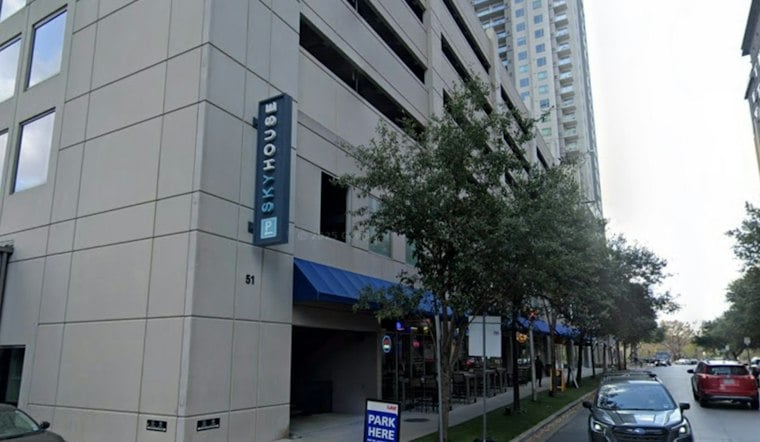
Residents of the 23-story SkyHouse Austin tower on Rainey Street have spent months climbing dozens of flights of stairs after elevator outages left the building with little to no working lift access. Tenants say two of the building's three elevators were down for months, and the remaining one eventually failed too, leaving some upper-floor residents waiting up to 20 minutes for a ride or giving up and taking the stairs instead.
Major Oswald, who lives on the 22nd floor, told KEYE / CBS Austin that he wants to leave SkyHouse because of the elevator situation. Oswald has a sprained ankle and breathing problems, and he said taking the stairs has been hot, tiring, and exhausting — adding that some neighbors using crutches simply cannot manage the climb. He has since moved out of his apartment and is staying at a friend's house.
Other tenants described the same daily grind. Aditya Tumuluri said residents depend on the elevators and that the outages affect many people's day-to-day mobility, even as he said he otherwise enjoys the building, its community, residents, and staff. Thomas Hughes said the outages have been a major issue for tenants, noting that some older residents live on upper floors and may struggle to reach their homes when the elevators are down.
A Building-Wide Scramble for Stairs and Patience
SkyHouse Austin, built in 2013 at 51 Rainey Street, holds 320 residential units across its 23 stories — a scale that means any building-wide lift failure hits a large number of upper-floor tenants who face real physical exertion using stairwells, according to a guide from Taco Street Locating. Rents at the property range from $1,745 to over $4,000 a month, and the same source notes that the recurring outages across 2025 and 2026 have dragged down resident satisfaction scores on rental rating platforms even as manager Simpson Property Group undertook interior unit renovations this year.
Management emailed residents on September 24 saying replacement elevator parts had been ordered and could take six to eight weeks to arrive, per the station's reporting. In the meantime, one resident, Raja Sampathi, made stickers to encourage neighbors, distributing them near the elevator reading “This too shall pass, Sky House.”
What Texas Law Says Landlords Must Do
Leah Downey-Gallatin, special project director with the Austin Tenants Council, said landlords generally have a legal duty to repair conditions affecting tenant safety or health, including an inability to access a unit. She said tenants may be able to terminate a lease without penalty under certain circumstances, and that some may request an early lease release as a disability accommodation. She also recommended that renters document problems with photos, videos, and records of repair communications.
Under Texas Property Code § 92.052, landlords have a statutory obligation to make a diligent effort to repair conditions that materially affect the physical health or safety of an ordinary tenant, with state law establishing a rebuttable presumption that seven days is a reasonable repair window, provided landlords received proper written notice while rent stays current, according to Texas Law Help. If a landlord fails to fix a health or safety hazard after proper notice, Texas Property Code § 92.056 allows tenants to terminate their lease without penalty, obtain a pro-rata rent refund, or seek court-ordered civil penalties of one month's rent plus $500, per FindLaw.
Separately, under Texas Health and Safety Code Chapter 754, it is the building owner — not a repair contractor — who bears legal responsibility for maintaining elevator equipment and securing annual Certificates of Compliance from state-registered inspectors, according to the Texas Department of Licensing and Regulation. The agency can impose civil penalties of $1,000 to $5,000 per unit for violations, fine owners up to $1,000 a day for running equipment without valid permits, and issue stop-use orders on hazardous elevators, per RiseTech Elevator. Renters can also file administrative complaints through TDLR's online portal to trigger state investigations and corrective repair orders, as Click2Houston has reported.
Disability Access Concerns Add Another Layer
Residents also voiced concern for neighbors with disabilities who cannot use the stairs at all. Rachel Cohen-Miller, a supervising attorney with Disability Rights Texas, said elevator outages are a common problem across the state that her organization encounters consistently. She said disability accommodations can include requiring repairs or granting a lease release without extra charges, and that a person with a disability who needs an elevator to use and enjoy their housing may formally request such an accommodation.
Federal law backs that up: under the Fair Housing Act, residential buildings with elevators built after March 13, 1991, must maintain accessible routes, and landlords are obligated to offer reasonable accommodations — including fee-free lease releases or temporary relocation — when broken elevators cut off access for residents with disabilities, according to Elevator Uptime.
SkyHouse did not directly answer questions about why the elevators weren't repaired sooner or whether it would offer compensation or lease releases, per the station's reporting. The property did say that two elevators went out after an August kitchen fire and that a separate service issue took out the third, and it reported that two elevators are now operating while work continues on the last one. Oswald, for his part, said he simply wants permission to leave the building.
A City With a History of Elevator Crackdowns
Austin has moved aggressively against chronic elevator neglect before. In 2018, Austin Code Compliance placed the senior-housing property Arbors at Creekside on its repeat-offender list after 92 elevator safety violations, a saga that ended with the city buying out the facility for $1.25 million in 2021 using bond funds for capital repairs, according to KVUE. No comparable city intervention has been reported at SkyHouse Austin.





