

























































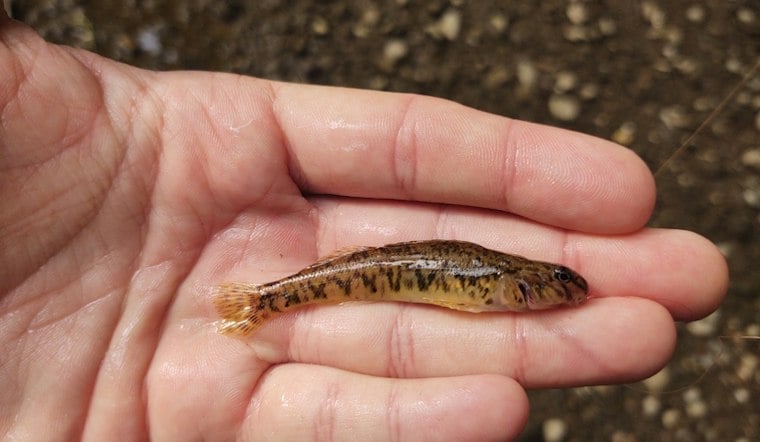
Six small, striped fish pulled from the Lower Rouge River near Ford Field Park in Dearborn are being treated as a milestone a century in the making. The fish, known as greenside darters, hadn't been documented in that stretch of river since 1924 and vanished from the entire Rouge River watershed by 1941, according to volunteers who found them during one of the last fish surveys of 2026.
Friends of the Rouge, the nonprofit that organizes the annual volunteer surveys, made the catch during a September 17 outing that covered sites in Wayne and Dearborn, as reported by FOX 2 Detroit. Lauren Eaton of Friends of the Rouge said the group was “beyond thrilled” by the discovery, and told the station the restoration effort behind it took decades and millions of dollars. Some of the six darters appeared to be adults, Eaton said, which the group believes points to a likely breeding population already established in the river.
A Fish That Doesn't Tolerate Pollution
Greenside darters are not a flashy catch — they run 3 to 5 inches long — but their presence means something specific about water quality. The species needs clear, oxygen-rich water moving swiftly over rocky riffles to survive, and Michigan's Department of Natural Resources has described it as one of the fish species least tolerant of pollutants, according to a statement reported by Bridge Michigan. Friends of the Rouge believes the darters may have originated in the Detroit River and swum upstream to reestablish themselves in the Rouge.
The find came during the group's broader annual monitoring work, which uses a seine net to measure fish abundance and diversity across dozens of locations on the river every year, with roughly 20 sites surveyed each summer. The September 17 survey recorded 21 fish species total, according to FOX 2 Detroit, breaking the group's previous single-site diversity record of 19 species. That 21-species count still falls well short of the 55 native fish species state records show once lived in the Rouge watershed before 20th-century industrialization reshaped it.
From a River That Caught Fire to a State Water Trail
It's hard to overstate how far the Rouge has come. The river famously caught fire in October 1969 due to heavy industrial oil pollution, a disaster that helped push the federal government toward the Clean Water Act and led the U.S. Environmental Protection Agency to designate the Rouge a Great Lakes Area of Concern in 1987. The watershed, which stretches from Troy and Canton down to the Detroit River, spent much of the 20th century absorbing industrial waste and urban runoff that wiped out sensitive species like the greenside darter.
Recovery has come through a patchwork of targeted projects. The Alliance of Rouge Communities completed a fish passageway at the historic Henry Ford Estate Dam in Dearborn, with Wayne County managing construction as a co-partner, letting migratory fish bypass the historic barrier. The U.S. Environmental Protection Agency also reports that federal, state, and local agencies have completed nine separate habitat restoration projects across the Rouge River Area of Concern, totaling $12.7 million and restoring more than 200 acres of aquatic and wetland habitat, including dredging at Nankin Lake and wetland creation in Lola Valley Park.
That progress earned state recognition in 2026: Michigan's Department of Natural Resources designated the Lower Rouge River a Pure Michigan Water Trail.
Barriers That Still Stand in the Way
Full recovery is far from finished. Invasive species are also pushing back against the recovery: a 2024 Friends of the Rouge monitoring report published by Oakland County found that round gobies have spread across lower branch sites, where they compete for habitat and displace native benthic species like Johnny darters.
Still, the appearance of six greenside darters near Ford Field Park stands as a rare, measurable sign that the work is taking hold. The rouge river watershed was reshaped by a century of industrialization and pollution, and its comeback has leaned on hundreds of millions of dollars in combined funding and regulations stemming from the Clean Water Act. For a river once known for catching fire, a handful of pollution-sensitive fish quietly repopulating a Dearborn stream is the kind of evidence biologists have been waiting generations to see.


