

























































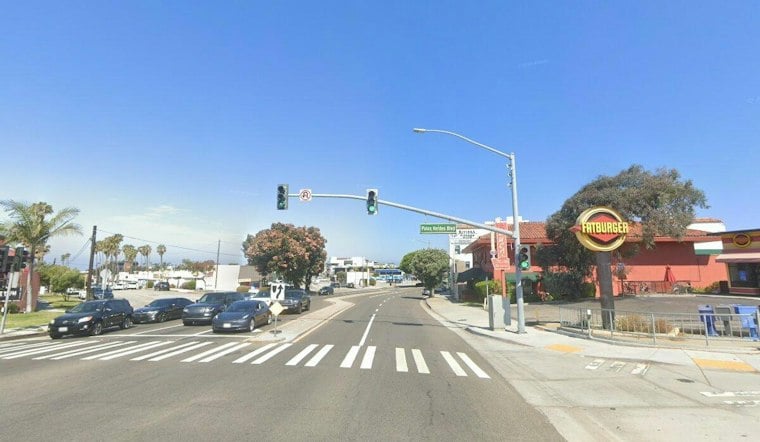
Cyclists riding Palos Verdes Boulevard through Redondo Beach now have a continuous 0.6-mile bikeway, including nearly four-tenths of a mile shielded by concrete curbs rather than the flimsy plastic posts common elsewhere in Los Angeles County. The city reconfigured the corridor by narrowing existing car lanes and adding bike lanes, curbs, signage and green pavement markings through intersections where cars and bikes cross paths.
The protected segment, officially called the Palos Verdes Blvd. Protected Bike Lane Project, runs from Pacific Coast Highway to Irena Avenue, according to Streetsblog Los Angeles. The outlet reports the city installed nearly a half-mile of new concrete curb-protected lanes along the boulevard, closing a gap that previously left riders exposed to traffic. At the intersection with Prospect Avenue, the project added painted curb extensions, hard plastic speed bumps and green pavement as extra safety measures, per the same report.
Contractor and Construction Timeline
The city of Redondo Beach contracted American Asphalt South to build the project, according to a notice posted on the City of Redondo Beach website. That notice describes the work as striping and signing improvements paired with the installation of concrete barriers to protect bicycle lanes between Pacific Coast Highway and South Irena Avenue. Construction was scheduled to begin July 27, 2026, with completion expected in fall 2026, subject to weather or other delays, the city said.
Through traffic was to be maintained at all times during construction, though the city warned of intermittent delays and periodic temporary lane closures while crews worked. The project is part of a broader local effort: Streetsblog notes that fewer than a dozen Los Angeles County cities have installed similar curb-protected bikeway infrastructure, putting Redondo Beach among a small group of early adopters in the region.
Momentum Building Across the City
The Palos Verdes Boulevard project follows the opening of the North Redondo Beach Bikeway extension, which connected the path from Felton Lane to Inglewood Avenue, as reported by the Daily Breeze. That stretch runs parallel to Rockerfeller Lane a few blocks south of Artesia Boulevard. City officials have said future plans include extending the bikeway south to Grant and Inglewood avenues and building a mobility hub for cyclists, with a longer-term goal of connecting Redondo Beach's bike path system to El Camino College.
Streetsblog reports the city is planning a further extension of the North Redondo Beach Bikeway along Inglewood Avenue to a new, small triangular park at the intersection of Inglewood, Grant and Ripley avenues. Separately, Redondo Beach is partnering with Lawndale, Torrance and Los Angeles County on a Metro-funded Redondo Beach Boulevard Active Transportation Corridor spanning 3.3 miles, according to the same report.
More Protected Lanes on the Drawing Board
City staff have also outlined plans for protected bike lanes on Diamond Street near Redondo Union High School, along with buffered lanes as part of a two-block repaving project on Grant Avenue, according to Citizen Portal. Staff acknowledged trade-offs involving parking and lane reductions that come with those kinds of projects, the outlet reported.
The North Redondo Beach Bikeway extension fits into a larger regional vision pushed by the South Bay Bicycle Coalition, which is seeking a more than 200-mile network of bike paths spanning El Segundo, Gardena, Hermosa Beach, Lawndale, Manhattan Beach, Redondo Beach and Torrance, per the Daily Breeze. Redondo Beach's curb-protected approach also stands out against the backdrop of citywide infrastructure debates in Los Angeles, where officials have leaned on plastic K71 bollards for most of the city's 90.7 miles of protected bike lanes — bollards that, according to Hoodline, require replacement on average every seven months. Los Angeles has piloted sturdier modular concrete barriers on 3rd Street downtown and on Imperial Highway near Dockweiler Beach, and began converting Crystal Springs Drive in Griffith Park to a curbside protected lane using Jersey barriers, rubberized curbs and bollards in March, according to Hoodline's reporting. Still, citywide bikeway mileage barely grew last fiscal year, with Los Angeles adding 7.5 lane-miles of new bikeways while removing 5.3 miles of existing ones, a net increase of just 2.2 miles.





