

























































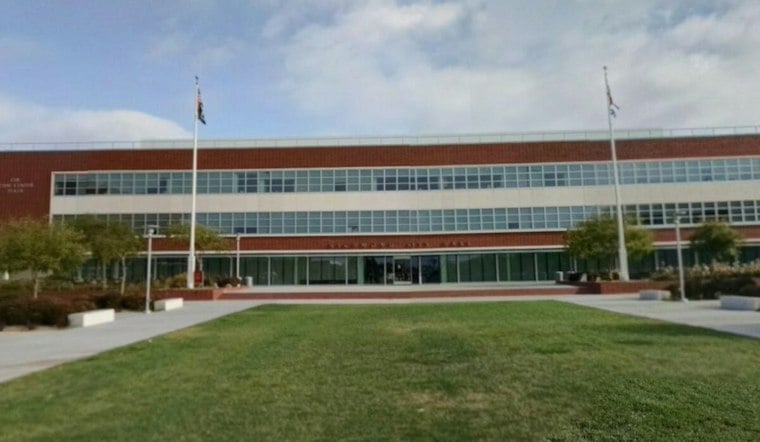
Richmond's City Council voted unanimously Tuesday to stretch its temporary ban on new data centers from 45 days to roughly two years, even though the city has no data centers at all and, as of mid-September, no pending applications for one. The council tacked an additional 22 months and 15 days onto the original moratorium it approved in September, giving city planners far more runway to study an industry that hasn't actually arrived in Richmond yet.
The extension follows the council's initial 6-1 vote on September 15, when six of seven councilmembers approved Urgency Ordinance No. 13-26 N.S., a 45-day pause on issuing or approving any permits or land-use entitlements for data centers in the city, according to the City of Richmond. Councilmember Jamelia Brown abstained from that first vote, saying she wanted facts to compare and contrast before making an informed decision, per reporting from Contra Costa News. City staff told the council at the time that there were no pending data-center applications in Richmond, the outlet reported.
As detailed by The Mercury News, the council held its extension vote this past Tuesday and approved the nearly two-year ban unanimously. Richmond still has no data centers and has received no applications for one, the outlet reported, making the extended moratorium a preemptive move rather than a response to any specific project on the table.
Why Richmond Is Acting Before Anything Is Built
City councilmember Claudia Jimenez argued the issue isn't hypothetical, pointing to how data centers have affected other communities, per the same report. Richmond residents and advocacy groups reportedly urged the council to regulate data centers before any facility could be proposed, according to the outlet's account of the meeting.
Opponents raised a familiar list of worries tied to the industry: water use for cooling, pressure on the electrical grid, rising power rates, possible pollution from diesel backup generators, and constant low-level noise, the Mercury News reported. Those concerns carry particular weight in Richmond, where residents already live near the Chevron Richmond refinery, industrial manufacturing plants and freeways, according to the outlet.
Shauna Lazero, identified by the Mercury News as co-legal director of Communities for a Better Environment, said her organization and the broader community strongly support Richmond's moratorium and its community-engagement approach. The California Energy Commission notes that most data centers rely primarily on the electric grid but typically require on-site backup generation, most commonly diesel-powered generators — a detail that maps directly onto the air-quality and noise concerns raised in Richmond, per the California Energy Commission.
What City Staff Are Doing During the Pause
Under a staff amendment described by Contra Costa News, Richmond can keep accepting and processing data-center applications during the moratorium — it just cannot approve them or issue related permits. The city says on its official moratorium page that it is using the time to study data centers and engage the public in setting reasonable regulations meant to protect public health, safety and welfare.
Richmond planning manager Avery Stark said staff have already begun studying data centers and interviewing stakeholders, according to the Mercury News. Stark and city staff have interviewed PG&E and the East Bay Municipal Utility District as part of that process, the outlet reported, and Stark said staff need to weigh the pros and cons before determining how data centers might fit into the city. City officials intend to study data centers' potential impacts on community health and surrounding communities, and staff plan to hold public hearings and develop land-use policies for data centers going forward, per the same report.
Richmond Joins a Wave of Bay Area Bans
Richmond is far from alone. Bay Area communities have increasingly adopted temporary data-center bans even as companies pursue projects in places like Pittsburg and Gilroy, the Mercury News noted. Pittsburg councilmembers are currently weighing their own 45-day moratorium covering future facilities, including later phases of the Pittsburg Technology Park, according to the East Bay Times. Gilroy's City Council, meanwhile, unanimously extended its own temporary ban on new data-center projects for more than 10 months, pushing that moratorium's expiration to September 3, 2027, as reported by San José Spotlight, with officials there developing standards on electricity demand, water use, generator emissions, noise and traffic.
Oakland's City Council unanimously approved its own 45-day moratorium on new data-center approvals earlier this month, and San Francisco's Board of Supervisors likewise passed a 45-day urgency ordinance that took effect immediately, according to Local News Matters. Santa Clara is advancing stricter water and air-pollution rules for the industry, and Los Angeles County postponed a vote on a permanent ban on large-scale hyperscale facilities after an overwhelming volume of public feedback, per CalMatters. The outlet counted at least 26 resolutions, moratoriums or bans on data-center development passed or proposed statewide since June.
The statewide pushback tracks with mounting environmental figures. California data centers nearly doubled their electricity use and carbon emissions between 2019 and 2023 while on-site water consumption more than doubled over the same period, CalMatters reported separately, and statewide demand could climb as high as 25 terawatt-hours by 2028. California already ranks third nationally in data-center presence, though CalMatters has cited differing counts — 366 facilities operational, under construction or planned in one report, and 321 sites listed by DataCenterMap in another. For now, Richmond's own tally remains unchanged: zero.


