

























































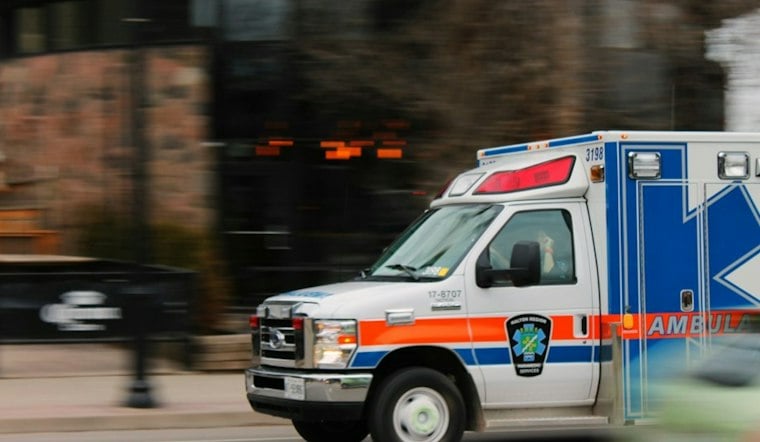
Richmond Heights Fire Department crews once took four 911 calls at the same time in a single day — and one of them was simply a request for help getting a patient down the stairs, not a medical emergency. That real-world strain is why city officials introduced a program called Crosswalk Health to the Richmond Heights City Council, with the idea of diverting low-acuity calls to a nurse instead of an ambulance.
Fire Chief Marc Neumann introduced Crosswalk Health to council, according to Cleveland.com, telling members that some residents rely on 911 as their primary access to health care even when their problem is not an emergency. Neumann said the fire department regularly gets calls for help with tasks like assisting elderly residents down the stairs or getting rides to doctor appointments — needs that do not require an ambulance but still pull a unit out of service. He also said people sometimes call 911 simply because they do not know whom else to call.
Those calls add up. Neumann said the department receives simultaneous 911 calls roughly 30 percent of the time, which can force neighboring fire departments to step in to cover Richmond Heights. On October 26, the department fielded four such calls at once, with one of them being the non-emergency request for help getting someone down the stairs. Neumann said a lower-priority call could often wait five or 10 minutes without real harm, but under the current system there is no good way to triage that wait.
How the Nurse-Diversion System Would Work
Under the plan being considered, 911 calls would still be routed first to Chagrin Valley Dispatch, which dispatches safety forces for 41 area communities including Richmond Heights. Dispatchers there would categorize incoming calls, and those judged low-acuity would be transferred to Crosswalk Health, which would connect the caller by phone with a registered nurse for an interview. Neumann said the program connects callers to a licensed nurse who guides them toward appropriate care, while true emergencies still receive an immediate ambulance response.
If the nurse determines during that call that the situation is actually more urgent than first thought, the case gets sent back to the 911 system. According to Crosswalk Health, the company's model is built to intervene during 911 calls and on-scene to coordinate care, connecting patients to primary care, urgent care, federally qualified health centers and behavioral-health providers, along with transportation support and follow-up coordination — services the company says are intended to reduce unnecessary ambulance transport and emergency-department spending. Richmond Heights' version would route callers to many of those same options, including primary care, urgent care, behavioral health and other community resources.
Richmond Heights' Existing Community Paramedic Already in Place
Richmond Heights is not starting from scratch. The city already has a community paramedic, RHFD firefighter Nicole Sovizral, who visits residents in their homes to provide proactive, non-emergency health care and support. Under the proposed Crosswalk Health partnership, every caller who goes through the nurse line would also receive follow-up from Sovizral, layering the new phone-based triage onto the in-home program already serving residents.
Richmond Heights, Lakewood and Kent are the only communities in northeast Ohio with a community paramedic, Cleveland.com reports, and that existing infrastructure is part of why city officials believe Richmond Heights is positioned to adopt Crosswalk Health. The city's community paramedic program, launched by University Hospitals and the city, had council pass a resolution authorizing the mayor to sign a memorandum of understanding with the hospital system, with UH providing medical oversight, clinical protocols, ongoing quality review and a medical director. A UH grant funds the paramedic position through 2028. Neumann said the community paramedic program overall seeks to reduce repeat 911 calls from residents who need help but not emergency services, a goal that mirrors national trends; the hospital system described the broader effort as being about EMS prevention, thwarting incidents before they happen.
What City Leaders Are Saying
Richmond Heights Mayor Kim Thomas told council that the community paramedic already provides in-home services, wellness support and follow-up care meant to catch health concerns before they turn into emergencies, and she framed Crosswalk Health as a natural next step. Thomas said the nurse-line program would connect eligible callers to a registered nurse along with services like care coordination, transportation and follow-up appointments. She emphasized that the goal is to expand access to appropriate care rather than reduce services, and that reducing avoidable ambulance transports and emergency-department visits would help preserve emergency responders for life-threatening situations. She also said the program could particularly help seniors and other vulnerable residents who lack transportation or struggle to navigate the health care system.
Thomas noted that a Crosswalk Health partnership could open up future reimbursement opportunities to help sustain the community paramedic program once the current UH grant expires in 2028, potentially reducing the city's reliance on grants and local tax dollars going forward. She urged council members to research the program further before any vote at a coming meeting. Laura Frost, a University Hospitals representative, attended the council meeting where Crosswalk Health was discussed, and UH would remain a partner in the arrangement if Richmond Heights moves forward. The city's timeline calls for the Crosswalk Health partnership to begin in early 2027, with neighboring Euclid — which does not have its own community paramedic — also planning to adopt the program that year.
How Other Cities Have Fared With Similar Programs
Richmond Heights would be joining a growing list of communities experimenting with nurse-based 911 diversion. Indianapolis was the first city to test the underlying Crosswalk system, in June 2025, followed by Lawrence and then Terre Haute, according to EMS1. In Indianapolis, roughly 60 percent of incoming calls during the program's first nine months did not require an ambulance at all. In Terre Haute, Crosswalk Health found about 20 percent of the roughly 15,000 annual runs — some 2,800 calls — were applicable to the diversion process, with dispatchers trained to separate true emergencies from less urgent concerns through a series of yes-or-no questions.
Columbus’s Crosswalk Health Nurse Health Care Navigation Line went live on July 24, 2026, for a soft launch, before city leaders publicly announced the option in late August; during the soft launch, 131 callers were diverted to the nurse line, with more than half having their medical needs addressed without an ambulance transport to an emergency room, according to WOSU. The pattern shows up elsewhere in the mobile-integrated-healthcare field too: Sacramento Fire's Community Health Program has reported that about 70 percent of patients identified as appropriate for field-based intervention were treated in place rather than transported, per data cited by ImageTrend. Nationally, nearly 60 percent of EMS responses are classified as low acuity, according to ImageTrend's 2026 EMS Insights Report, a volume that can leave ambulance units unavailable for genuine emergencies and complicate resource allocation for departments like Richmond Heights'.





