

























































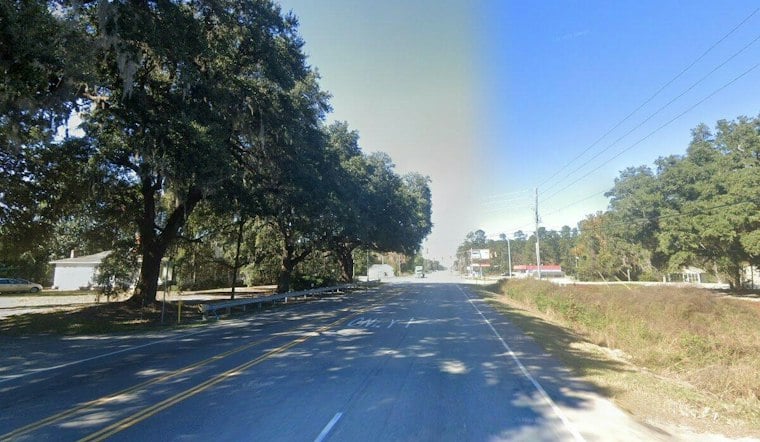
New homeowners moving into Ridgeville could soon pay a dedicated yearly fee starting at $750 to help cover $34.36 million in road improvements, under a proposed Residential Improvement District that would stretch across roughly 1,533 acres in and around the town. Dorchester County Council was scheduled to consider a resolution outlining the district and take up the first reading of an ordinance to establish it, according to a report dated Monday.
That report, from ABC News 4, says council was set to weigh the proposal and the ordinance's first reading, while a separate Live 5 News report states the county has approved an improvement district for Ridgeville's growth. The two accounts differ on where exactly the process stands, and official county records confirming a final vote were not available at publication. What is clear is the scale of what's being proposed: a district covering about 1,533 acres in Ridgeville and the surrounding unincorporated area, built to fund improvements at seven intersections and a realignment of Campbell Thickett Road from Highway 78, per the station's reporting.
How the Assessments Would Work
Under the plan described by ABC News 4, assessments on properties inside the district would start at $750 per year per equivalent unit in 2027, then climb 2% annually after that. Developers and property owners hoping to be included would first have to agree to those assessments through a petition before the district could be formally established, the station reports. The idea is that construction on the road work would wrap up within 10 years, though the financing obligations tied to it could stretch as long as 25 years.
Timing-wise, some of the actual improvements might not break ground right away. The same report notes that certain projects could get underway in 2028 or 2029, once engineering, permitting and financing are sorted out.
A Four-Year Push to Shift Who Pays
This isn't a new idea for Ridgeville. The station's earlier coverage found that town leaders had been working for roughly four years to create a Residential Improvement District, with the explicit goal of shifting infrastructure costs away from existing taxpayers and onto new residents and developers moving into growth-area developments. Dorchester County Council put money behind that groundwork more than a year ago, approving over $97,000 in General Funds for a traffic study examining intersections along S.C. Highway 27 and U.S. Highway 78, including the Campbell Thickett Road intersections. County and town leaders planned at the time to reimburse that study's cost using the improvement district's own funds once it was up and running.
A separate account from Citizen Portal describes testimony pointing to a local need for tools that can fund off-site transportation improvements in Ridgeville, and notes that a $13,250,000 federal DOT grant has already been leveraged for transportation work in the area — money that exists alongside, not in place of, the proposed district's assessments.
Why Ridgeville Is Under Pressure
The push for a dedicated funding mechanism tracks with how fast the area has been changing. The Post and Courier has reported that Dorchester County has added more than 60,000 residents since 2000 and is projected to top 200,000 by 2030, with Ridgeville drawing increased residential real estate interest alongside job growth from major employers including Walmart and Volvo Cars. The newspaper's reporting describes new interchanges and exits opening along Interstate 26 to handle the added traffic, and new housing developments rising outside Ridgeville to meet manufacturing-driven demand along that corridor.
Some of that growth is already locked in. The Walmart Import Distribution Center at the Ridgeville Industrial Campus is a 3 million-square-foot facility expected to employ 1,300 people, according to the Post and Courier. Nearby, the Varn Tract is planned for as many as 1,400 single-family homes plus 120,000 square feet of commercial space, while the Appleby Tract is slated for up to 1,200 homes, commercial space and a five-acre town park — all development that would add cars to roads the proposed district is meant to upgrade.
Open Questions on Final Approval
What remains unsettled is the exact legal and procedural status of the district itself. South Carolina Code addresses the creation of an improvement district through ordinance and filing, but the publicly available text does not spell out every petition, notice or appeal requirement that would apply here. And with one report describing the district as already approved and another describing it as still pending a resolution and first ordinance reading as of Monday, residents and developers alike are left waiting on the county's official record to settle which version reflects where things actually stand.





