

























































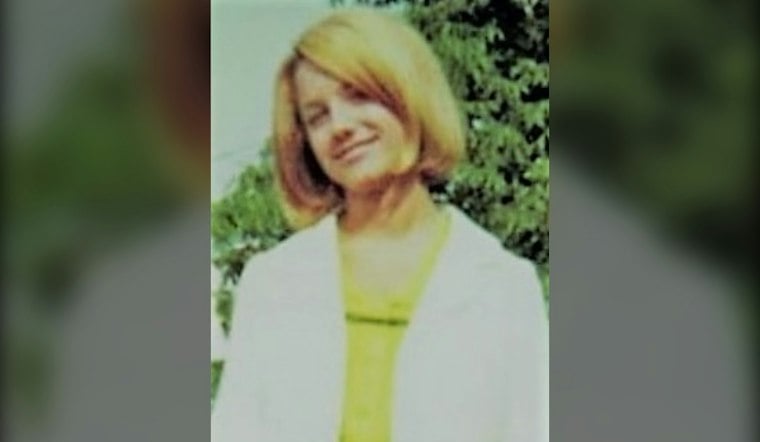
Cheri Jo Bates was an 18-year-old Riverside City College student when she walked to the campus library one night in 1966 to pick up some books, never to return home. She was found stabbed to death on Oct. 31, 1966, in an alley between Terracina Drive and Fairfax Avenue, her car mysteriously disabled about 100 yards away. Nearly 60 years later, the case remains unsolved, and one of her old friends refuses to let it fade.
Ken Welty, a retired Los Angeles Police Department homicide lieutenant who was friends with Bates and attended Ramona High School with her a year earlier, is mounting a campaign to generate leads in hopes of finally identifying her killer, according to The Press-Enterprise. Welty said Bates signed his yearbook at the end of their sophomore year, and he helped establish a $100,000 reward for information leading to an arrest and conviction in the case. He has said he did not investigate Bates' killing himself and had no inside information about it, but he has spent years trying to keep the case alive.
Bates was found by a janitor at 6:32 a.m. on Oct. 31, 1966, according to the same report. A witness reported seeing two people in the alley after midnight, one of them carrying a flashlight, Welty said; he also believes Bates appeared to walk willingly with someone away from her disabled car. Her boyfriend at the time was cleared because he was out of town when she died.
A Brother's Decades-Long Search for Answers
Michael Bates, Cheri Jo's 79-year-old brother and a fellow Ramona High graduate who now lives in La Jolla, has helped Welty gather information for 30 years, as reported by The Press-Enterprise. The two men met in person for the first time this month. Michael said his sister moved with their family from Nebraska in 1958 and had hoped to become an airline stewardess; he noted she would have turned 78 this year and remembered her as a cheerleader with many friends.
Michael Bates learned of his sister's death while watching the film Walk, Don't Run at Naval Air Station Jacksonville, and he was granted five days of leave afterward, according to the Press-Enterprise report. He served in the Navy until 1970. Welty, for his part, heard about Bates' death while attending Ventura College.
Investigators recovered a range of physical evidence, including skin and hair scraped from underneath Bates' fingernails; palm prints and fingerprints were found on her car, while footprints and a man's Timex watch were found at the crime scene, according to pressenterprise.com. A 1982 police report identified a suspect, but that person's name has never been disclosed, and authorities never made an arrest or filed charges, according to abc7.com. Investigators later attempted to compare DNA from the crime scene with the suspect's DNA, but no arrest followed; a hair-fiber comparison from the scene also didn't match the suspect, though police noted the sample might not have belonged to the killer, per pressenterprise.com. That unnamed individual remains the primary suspect and focus of the investigation, according to the Riverside Police Department's cold case website.
Letters, Hoaxes and the Zodiac Theory
About a month after the murder, a typed letter titled “The Confession” was sent to The Daily Enterprise containing crime-scene details that had not been publicly released, the Press-Enterprise reported. Six months after Bates died, Riverside police and a news organization received a handwritten note reading, “Bates had to die. There will be more,” which appeared to assert responsibility tied to the Zodiac Killer — the uncaught figure authorities have said killed five people in the San Francisco Bay Area from 1968 to 1969. Internet sleuths have long theorized that the Zodiac Killer was responsible for Bates' death.
But the letter's author later recanted, according to the Riverside Police Department's cold case webpage, admitting to writing the handwritten letters, apologizing, and calling them a sick joke. The author stated he was not the Zodiac killer or Bates' killer and was only seeking attention. Riverside police have strongly disagreed with any link to the Zodiac Killer, per pressenterprise.com, and detectives believe Bates likely knew her assailant rather than being a random victim of a roaming serial killer. Detectives also believe the Zodiac Killer was not responsible for Bates' killing.
The theory resurfaced publicly in 2021 when an independent group called the Case Breakers claimed Gary Francis Poste, who died in 2018, was the self-titled Zodiac Killer and responsible for Bates' murder, according to sbsun.com. Riverside police said at the time that detectives had not uncovered any evidence that the Zodiac Killer was responsible for Bates' death, and kcbd.com reported that investigators continued working the case without connecting it to the Zodiac.
New Technology Revives Hope for a Break
Riverside Police Chief Larry Gonzalez said detectives are currently testing DNA and fingerprint evidence using the newest technology available, according to his remarks to KABC/7. The Riverside Police Department declined to discuss the case further with The Press-Enterprise this month. Reward offers over the years have varied in description — the Press-Enterprise reported Welty helped establish a $100,000 reward for information leading to an arrest and conviction, while Fox News reported in August that the department offered a $50,000 reward for information leading to the killer's arrest or conviction.
For Welty and Michael Bates, the push for answers has outlasted most of the people who originally worked the case. Their first in-person meeting this month, after three decades of exchanging information from a distance, underscores just how long this search has stretched — and how much they still want it resolved while memory and new forensic tools can still make a difference.





