

























































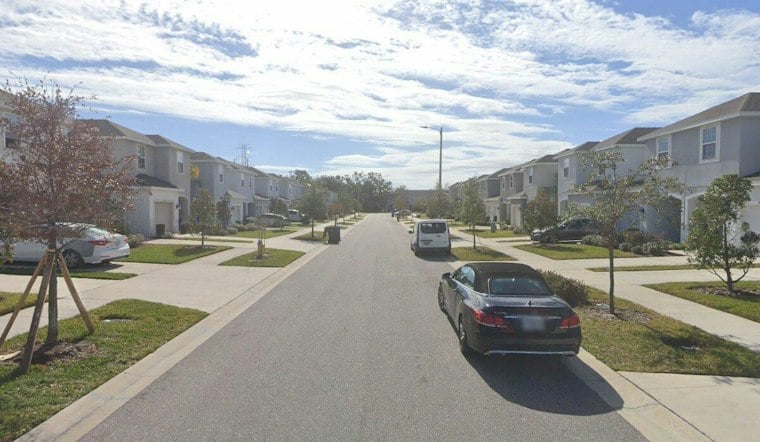
A 5-year-old boy with autism drowned Saturday morning in a retention pond just steps from his Riverview home, after his parents called 911 to report him missing and deputies found him in the water roughly 20 minutes later. Hillsborough County Sheriff's Office deputies arrived at the 7200 block of Grand Elm Drive at 9:11 a.m., about 11 minutes after the call around 9 a.m., and located the boy in the pond at 9:20 a.m.
The child's parents told police he was autistic and had wandered from their home before deputies could reach the neighborhood, according to the Hillsborough County Sheriff's Office. Deputies began searching the neighborhood immediately upon arrival, deploying a K-9 unit through a subdivision that sits near multiple bodies of water, as first reported by WFLA. A deputy pulled the boy from the retention pond and performed CPR until Hillsborough County Fire Rescue arrived and rushed him to AdventHealth, where he was pronounced dead.
Sheriff Chad Chronister addressed the loss directly, saying losing a child is a pain no family should ever know, while commending deputies for their quick response and efforts to save the boy's life, per the station's report. The sheriff's office says the investigation remains active.
A Pattern Alerts Can't Outrun
The Riverview tragedy mirrors a death two months earlier in Carrollwood, where another 5-year-old nonverbal autistic boy wandered from his home and drowned in an apartment complex retention pond after pushing out a screened patio door while his family slept, according to WUSF. That incident triggered a 140-officer emergency deployment, as Hoodline previously reported. In both cases, deputies located the missing children in retention ponds before Florida's statewide Spectrum Alert could even be broadcast, WTSP reports.
Florida launched the Spectrum Alert system on July 1, sending targeted text and email notifications when a child with autism is reported missing and in danger, under legislation passed in 2025, according to the Florida Department of Law Enforcement. But the system relies on administrative verification steps that, as WTSP notes, often take longer than the brief window before a wandering child reaches open water.
A National Crisis Converging on Florida's Water
The danger autistic children face around water is not confined to Hillsborough County. Accidental drowning accounts for 91% of deaths among children with autism under 14 following a wandering incident, and roughly seven autistic children die nationwide each month after leaving safe environments, according to the National Autism Association. Research from Columbia University's Mailman School of Public Health, cited by StepSafe, found that children with autism are 160 times more likely to die from drowning than children in the general pediatric population, pointing to a sensory attraction to water paired with lower hazard perception.
Florida set a grim state record in 2025 with 120 child drowning fatalities, and health officials reported the state was pacing for another possible record after more than 74 child drownings in the first seven months of 2026, per WLRN. Unintentional drowning remains the leading cause of death for Florida children ages 1 to 4, and the same outlet reports that roughly 1 in 6 child drowning deaths in the state involves a child diagnosed with or suspected of having autism. A study published in the journal Pediatrics, referenced by the National Autism Association, found that about 49% of children with autism attempt to wander from a safe environment after age 4, a rate nearly four times higher than their neurotypical siblings, and that more than a third of those children cannot communicate basic identification details if found.
Local Numbers Keep Climbing
The Riverview drowning adds to a troubling local tally. In April, Sheriff Chronister disclosed that 17 children under age 5 had been involved in drowning incidents across Hillsborough County since 2025, resulting in five fatalities, Hoodline reported at the time. The sheriff's SafetyNet program offers locator bracelets intended to help families reunite with children more quickly, while retention ponds can pose a danger to children who wander.





