

























































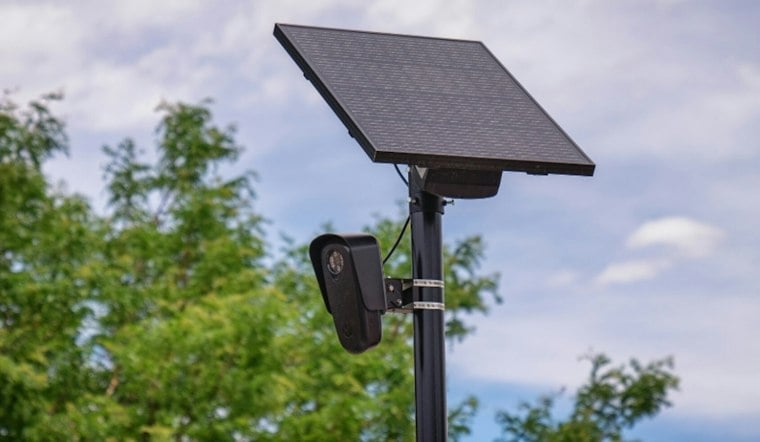
Rochester has hit the brakes on its police department's license plate camera program, announcing a 30-day pause after residents packed a select board meeting with worries about privacy, data sharing and government oversight. The pause affects the Flock cameras used by the Rochester Police Department, which uses artificial intelligence to scan license plates and send real-time alerts to officers.
The Town of Rochester announced the 30-day pause on the police department's Flock cameras, according to Boston 25 News. Rochester Police Chief Michael A. Assad Jr. wrote in a Facebook post Monday that residents expressed serious concerns about the cameras during a recent select board meeting, including questions about privacy and whether the information collected could be sold. During the pause, the police department said it will review how Flock camera information is stored and shared.
Police Say the Cameras Have Saved Lives
Even as it pauses the program, the department maintains the cameras have been valuable for solving investigations. Chief Assad's statement, as relayed by the station's report, described the technology as assisting with serious investigations, locating people in danger, identifying suspects and vehicles, and recovering stolen property. Police said Flock cameras have helped Rochester officers save lives and provide critical information when every second matters.
Flock's broader track record backs up some of those claims. The company said its technology detected more than 1,000 missing people and 20,000 stolen cars nationwide in July alone, according to wgbh.org. The same outlet reported that Flock cameras and license plate reader data helped law enforcement agents locate the shooter after the December 2025 shooting at Brown University.
Rochester Joins a Growing List of Massachusetts Towns
Rochester is far from alone. Massachusetts municipalities have been ending, suspending or declining to renew their Flock Safety contracts at a notable pace, though the exact scale depends on who is counting. The ACLU of Massachusetts said 25 municipalities canceled Flock Safety contracts or discontinued pilot programs over an 18-month stretch, as reported by nbcboston.com. Weeks later, the ACLU put the figure at more than 30 Bay State municipalities rejecting continued use of the cameras, according to the Boston Herald. The Boston Globe offered yet another tally, reporting that roughly 40 Massachusetts communities had paused or stopped using Flock over the past year.
Whatever the precise number, the trend has been swift. Cities were terminating contracts with Flock and other automatic license plate reader companies at a rate of more than three per day in August, according to the ACLU. Public opposition across the state has been fueled by concerns about surveillance, data privacy, government oversight and alleged misuse of license plate reader systems.
Other Towns Take Different Paths
Nearby communities have handled the same debate in varied ways. New Bedford temporarily stopped using its 20 Flock cameras until officials establish sufficient safeguards, per the Boston Globe's reporting. Boston chose not to continue its Flock pilot program after it concluded in 2025, following a security lapse that exposed data, according to a Boston 25 News map tracking the statewide pullback.
Elsewhere, the Lowell City Council voted 6-5 to suspend the city's Flock cameras indefinitely while reviewing the technology and its data-auditing processes, Boston.com reported. Methuen went further, ending its use of Flock cameras entirely and halting plans to install additional ones, with existing cameras to be covered pending removal. Not every town is retreating, however: North Attleboro kept its seven-camera system running under a $21,000 annual contract while freezing any new camera installations, according to the Lowell Sun. At least seven Massachusetts communities, including Wilmington, Boylston, Waltham, Stoughton, Barre, Barnstable and Acushnet, took action in September alone to end local Flock use, the Boston Herald reported.
For now, Rochester's review is just beginning, with police examining how camera data is stored and shared before deciding the program's fate.





