

























































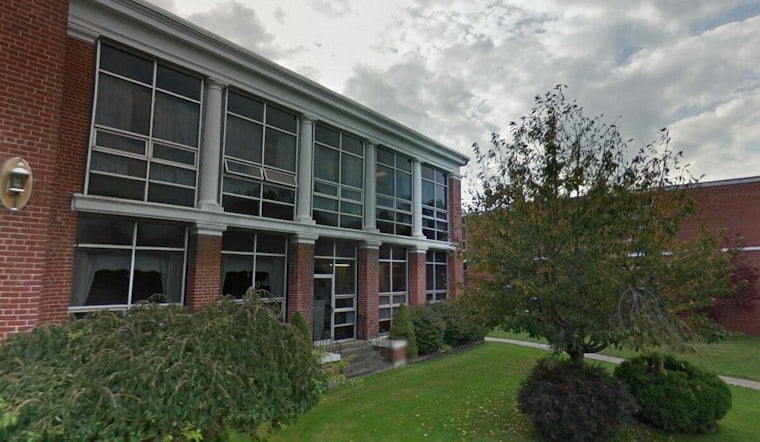
Waterview Heights Rehabilitation and Nursing Center in Rochester has closed its doors for good, with all 168 residents transferred out after New York regulators determined conditions inside had become dangerous. Most of those displaced stayed in the Rochester area, though others were sent as far as Buffalo, Niagara Falls and Syracuse, and some returned home. The shutdown is now fueling fresh alarm among local health leaders about whether the region has enough long-term care beds left to absorb another closure like it.
“All 168 residents have been transferred out of Waterview Heights, according to Lifespan President and CEO Ann Marie Cook, and the center is now closed,” according to 13WHAM. Cook said “Most of the individuals did stay in our community. Some went to Buffalo, Niagara Falls and Syracuse. Some went home.” Lifespan, the Rochester-based aging services nonprofit Cook leads, helped many former residents find new placements, according to reporting from Spectrum News, which noted that many of those displaced were Medicaid recipients with complex physical and mental health needs.
What Led to the Shutdown
The New York State Department of Health ordered Waterview Heights to close in August after inspectors found conditions so severe they put residents at risk, per WHEC. The state's original deadline for the facility to shut down was September 24, but that date was pushed back multiple times because some residents still hadn't found new placements, the station reported. Cook said the facility had years to fix its deficiencies before the Centers for Medicare & Medicaid Services finally stepped in. “It was really CMS (Centers for Medicare & Medicaid Services) at a federal level to say ‘We're not going to pay for this level of care anymore,’” Cook said, per the same 13WHAM account, while the state health department oversaw the actual closure process.
Cook also said residents had reported inappropriate or absent care, including missed medications, and that some described wearing multiple incontinence garments because help using the bathroom simply wasn't available. With the closure complete, Waterview Heights now has no workers and no residents left inside, Cook said.
Where Residents Landed
More than 50 former Waterview Heights residents were moved to Lilac Manor Rehabilitation and Nursing Center, a facility rated one star by the Centers for Medicare and Medicaid Services, according to a separate WHEC investigation. Only nine nursing homes across Monroe County agreed to accept Waterview Heights residents at all, underscoring how few openings exist locally even for a displacement of this scale.
Cook warned that another closure on this scale could leave New York unable to provide adequate care, because the region simply doesn't have enough beds to absorb it, per Spectrum News. She said a couple hundred people are likely already sitting in area hospitals waiting for nursing home placements to open up, a bottleneck she said touches hospital care for patients of all ages — and she noted the state hasn't even reached flu season yet, when demand for beds typically climbs further.
A Statewide Pattern of Closures
The Waterview Heights closure is not an isolated event. Twenty-four nursing homes have closed across New York since 2020, eliminating more than 3,000 licensed beds, according to the New York Times. The number of CMS-certified nursing facilities nationwide fell by more than 900 between 2015 and 2025, the paper reported. ArchCare's eight New York facilities had 269 fewer usable beds than they did just 18 months earlier — a decline of nearly 12 percent that has already created waiting lists, the Times found. In the South Bronx, the San Vicente de Paúl Nursing Home hasn't admitted a new patient since December 2024 and has cut its capacity from 120 beds to 53, while ArchCare's Ferncliff Nursing Home in Dutchess County has contracted from 309 available beds to 196.
Spectrum News reported that Rochester's hospital bed crunch isn't new, either: local nursing homes have been unable to staff all of their available beds for more than a year, a problem Strong Memorial Hospital's leadership flagged back in 2024, when some patients medically cleared for discharge were kept hospitalized simply because no nursing home bed was open to receive them.
Funding, Staffing and a Growing Population
Stephen Hanse, president and CEO of the New York State Health Facilities Association, said the state's skilled nursing facilities have seen their workforce significantly depleted since the COVID-19 pandemic. He said building a brand-new nursing home in New York today is extremely difficult, if not outright impossible, pointing to underlying financial pressure: roughly 75 percent of New York nursing home residents rely on Medicaid, yet the state underfunds that care by about $100 per resident per day, according to Spectrum News.
State law requires 3.5 hours of nursing care per resident per day, with facilities risking a $2,000-per-day fine for falling short — but Hanse said that mandate doesn't count physical, occupational, recreational or respiratory therapists toward the total, pushing some homes to take beds offline just to meet the staffing formula. Industry group Skilled Nursing News has reported that looming federal health care funding cuts could worsen staffing shortages and speed up nursing home closures statewide, pointing to recent Western New York losses including the Weinberg Campus and Eastern Niagara Hospital shutdowns and downsizing at Kaleida Health facilities.
Hanse said his association is working with state lawmakers on investments meant to improve nursing-home workforce recruitment and retention, and noted that Governor Kathy Hochul is making investments in nursing homes as part of that effort. The stakes are rising: New York's aging baby boomers are turning 80 in 2026, a milestone the Times notes has researchers nationally sounding alarms, since demand for skilled nursing care climbs sharply once people cross that age threshold. New York's over-65 population is growing in every county, Spectrum News reported, a demographic reality that Cook and Hanse both say the state's shrinking bed supply is increasingly unprepared to meet.


