

























































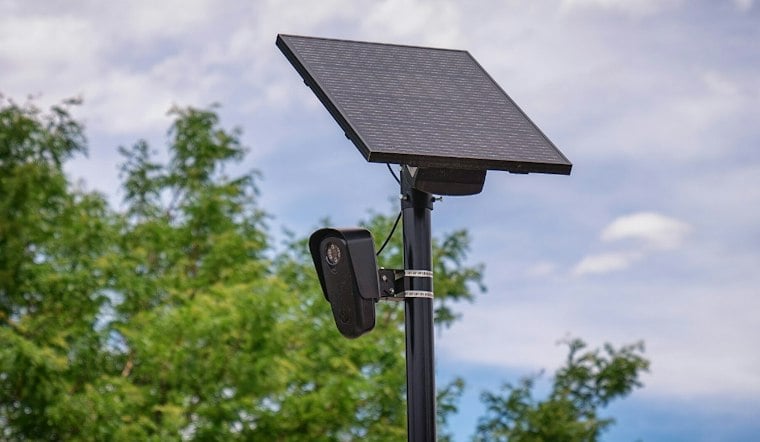
A Romulus resident's review of city paperwork turned up a startling gap: a Flock Safety camera contract that a public agenda capped at $47,500 somehow became a $270,000 deal just one day later. The Romulus City Council took up the question at a special meeting Monday and voted 4-3 against launching a formal inquiry into how the contract was approved, leaving the mismatch officially unresolved even as the mayor calls it a simple clerical error.
A Resident's Paper Trail Raises Red Flags
Resident James Lee told the council he began digging into city meeting minutes and agendas after noticing more Flock Safety cameras going up around Romulus earlier this year, according to FOX 2 Detroit. What he found, he said, was that the Romulus Tax Increment Finance Authority Board approved a contract on April 8 with a publicly posted agenda limit of $47,500, only for an executed agreement the very next day to lock in payments of $90,000 annually over three years, totaling $270,000. Lee said the original contract with Flock was for $47,500 but alleges that the next day it was at $90,000, FOX 2 Detroit reported.
Lee's account of the two documents was echoed in reporting from Citizen Portal, which cited the same figures: a public TIFA agenda presented a Flock expenditure not to exceed $47,500, while the contract executed the following day showed $90,000 per year for three years, or $270,000 total, per the outlet's review of the records. Lee raised concern about that discrepancy directly with the council and questioned why the development board, rather than the city itself, ended up holding a long-term contract of that size.
Mayor Blames a Typo, Promises a Review
Romulus Mayor Robert McCraight attributed the gap between the two figures to a clerical typo in the board agenda, telling FOX 2 Detroit that the contract is for $90,000 a year, which brings it to $270,000. McCraight said he plans to have the city's legal team review the contract thoroughly and conduct an internal audit of how the approval process unfolded. He added that his administration aims to operate transparently and wants to verify the process was handled correctly.
McCraight also said the TIFA district needs more surveillance and noted that the TIFA board can help finance some of the Flock cameras and part of the contract, even though the cameras were originally funded through the city's public safety budget. The mayor said he is still determining exactly how many cameras are currently active in Romulus, estimating the number at 24 operational units, with 36 additional cameras recently approved but not yet fully installed.
Council Splits on Whether to Dig Deeper
Lee argued that contracts touching public surveillance and policing warrant review, telling the council that such agreements should have oversight from democratically elected leaders rather than an appointed development board. Councilwoman Kathleen Abdo agreed there are legitimate questions about both the contract discrepancy and who has access to the camera data, pressing for answers on data access during the special meeting. Despite those concerns, the council voted 4-3 against opening a formal inquiry into how the TIFA Board approved the contract.
Romulus Police Chief Robert Pfannes did not immediately respond to a request for comment from Local 4, which first reported on the dispute. Flock Safety cameras are installed throughout the TIFA district of Romulus, where the authority helps cover costs that originated in the city's public safety budget before shifting to the development board's funding stream.
Part of a Statewide Reckoning Over Flock Cameras
Romulus is not alone in grappling with the costs and oversight of automated license plate readers. At least 125 Michigan county or municipal law enforcement agencies now contract with Flock Safety, according to Bridge Michigan, which reports that privacy advocates and residents statewide worry the technology infringes on citizens' privacy rights through artificial intelligence and data sharing that crosses local boundaries. Legislation addressing retention and use of license plate reader data is pending in both chambers of the Michigan Legislature, the outlet notes.
That scrutiny has already prompted other Michigan cities to walk away from their Flock deals. Lansing's City Council approved a resolution in August asking its police department to sever all Flock contracts and shut down the city's 26 cameras, while the Bay City Commission rejected a Flock contract that same month and Eastpointe ended its contract in September, according to MLive. The outlet also found that as of September 1, 177 Michigan government agencies and 28 private entities were sharing Flock camera data with the Michigan State Police.
Other departments have faced similar pressure to document how their camera programs work. A report from the Ottawa County Sheriff's Office, prompted by public comment at an August board meeting, disclosed that the county's 15 county-funded cameras cost $45,000 annually and that its data is shared with roughly 175 agencies across Michigan, with no warrant currently required to access it. Flock Safety itself announced it will shorten its standard data retention period from 30 days down to seven, though existing customers can keep their current retention windows, per a report from WILX.




