

























































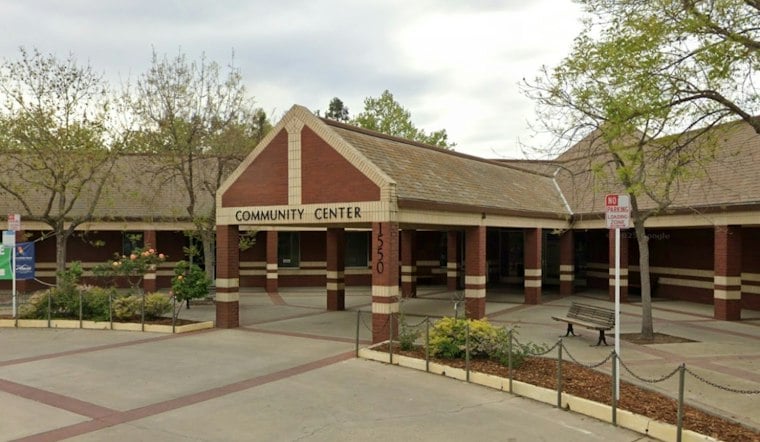
Roseville has turned down a request for a dedicated town hall on its automated license plate reader program, telling residents that council meetings already give them a chance to weigh in. So a group calling itself DeFlock Roseville is holding its own public forum at the Maidu Center, 1550 Maidu Drive, pushing for more scrutiny of the camera network that photographs passing vehicles and feeds license plate data to police.
City officials said an additional town hall is “neither necessary nor appropriate” for a topic as complex as the ALPR program, according to the Sacramento Bee. Roseville spokesperson Erin Dunlay said City Council meetings provide a public forum for residents to express their views, and that the city has received feedback through in-person conversations, meetings, phone calls, emails and social media. The city has not tracked those responses by number, but Dunlay said the majority of comments from Roseville residents on the issue have been supportive.
William Forseth, a spokesman for DeFlock Roseville, said the group’s forum is meant to gather residents’ concerns and give them a voice. The group invited City Council members and the police department to attend, but Forseth said some council members won’t be able to make it and he hadn’t heard whether police would show up. DeFlock Roseville has also filed public records requests seeking data on crimes solved with the cameras, potential misuse, department audits and data-sharing practices, the newspaper reported.
A System Built on Hundreds of Misreads
Much of the debate centers on how reliable the cameras actually are. Roseville’s Flock cameras generated 1,427 alerts between 2023 and 2024 for vehicles flagged as stolen or linked to felony crimes, and 1,011 of those alerts — 71% — involved a misread license plate, per the same Sacramento Bee analysis. Police said none of those 1,011 misread alerts led to a contact or an arrest.
The city maintains the system has still helped investigators solve hundreds of crimes, though it has not released a numerical breakdown or supporting case data to back that claim, the outlet’s reporting notes. Dunlay said the department is finalizing figures on arrests tied directly to ALPR alerts but does not track how often the cameras assist an investigation more broadly. She added that audit results are being gathered for eventual publication on the city website.
Roseville officers are required to verify plate information and confirm an alert is accurate and tied to an active investigation before taking enforcement action — a single alert alone cannot justify a stop, detention or arrest, per city officials. Historical searches require officers to log an offense type and case number, and the department’s Professional Standards Unit, which functions as Internal Affairs, audits compliance every 60 days, Dunlay said. The ALPR administrative team also performs quarterly reviews, according to city officials, who said no instances of misuse have surfaced under the current auditing practices.
How Long the Cameras Have Been Running
Accounts differ on when Roseville’s surveillance effort actually began. The Sacramento Bee reported the city has used automated license plate reader technology since 2018, while Business Insider reported Roseville has specifically used Flock Safety’s AI-powered cameras since 2021 — it’s unclear whether the two dates refer to the same system or separate technology.
Roseville’s policy limits data retention to 60 days, prohibits selling ALPR data to third parties, restricts broader data sharing and bars sharing information with federal agencies for immigration enforcement, according to city policy cited by the Bee.
Roseville Is Far From Alone
DeFlock Roseville plans to livestream its forum on TikTok, Instagram and Facebook, with the agenda setting aside 40 minutes for public comment and limiting speakers to two or three minutes each. The pushback in Roseville mirrors a wider pattern across Northern California, where, as Elk Grove News put it, concerns about automated license plate readers now extend into the Sacramento region’s more conservative suburbs. At an Elk Grove City Council meeting in August, 21 speakers spoke out against the surveillance system.
Nearby Auburn’s City Council voted 5-0 to delay a decision on whether to keep its 12 Flock Safety cameras, opting instead to gather more information and survey residents, per the Bee’s separate reporting on that city. Auburn police said the system has helped expedite roughly 230 investigations involving crimes and missing people, but the city also shares its license plate data with 274 outside law enforcement agencies and receives data from 197, according to an Oct. 1 police report.
Other cities have gone further. Folsom officials said last month the city planned to discontinue using Flock’s technology altogether, while the Grass Valley Police Department indefinitely suspended its camera use in August following resident complaints. In Marin County, Mill Valley suspended its license plate readers and live-feed cameras over privacy and civil liberties concerns, with the cameras switched off since Sept. 9, according to East Bay Times. The Central Marin Police Authority announced in August it would not renew its own Flock contract. Dozens of communities nationwide have now canceled, paused or suspended similar contracts amid concerns over privacy, misuse and data sharing with federal immigration officials, Business Insider reported.


