

























































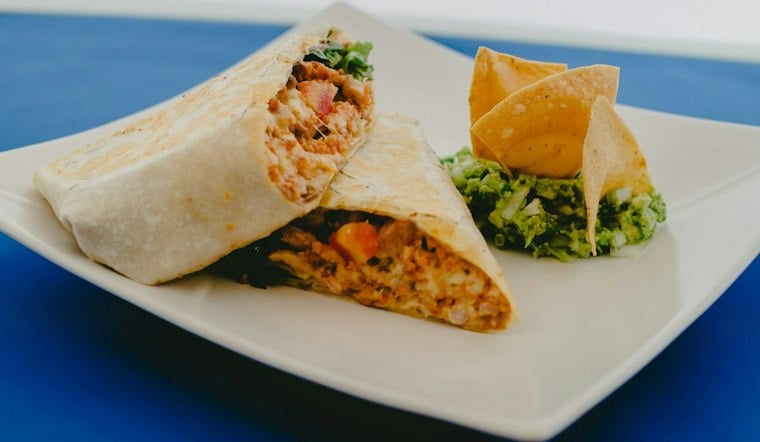
Sushiōki, the sushi-burrito restaurant near Research Triangle Park built to give refugees flexible, living-wage jobs, closed on Oct. 17 after eight years in business. The fast-casual spot announced its permanent closure on its website, ending a run that began in 2018 with a mission bigger than lunch.
The restaurant was owned by Lawrence Yoo, a full-time pastor who leads Waypoint Church in Durham, according to the News & Observer. Yoo opened Sushiōki with church member Jeff Carter in 2018, after Waypoint Church had already been doing refugee resettlement work in the community, and the restaurant was created specifically to provide employment to refugees. Four of Sushiōki's 12 employees were refugees from Rwanda, Congo and Afghanistan, according to a WRAL report on the restaurant's hiring mission.
Sushiōki's menu leaned into its burrito-style twist on sushi rather than traditional rolls. The fast-casual restaurant on N.C. Highway 55 served more than a dozen varieties of sushi burritos, from California-style to versions stuffed with bulgogi, the News & Observer reports, along with salads, rice bowls and flavored teas.
A Mission Yoo Says Was Fulfilled
Yoo said the restaurant had accomplished what it set out to do. “We believe Sushiōki was created for a purpose and a mission,” he said, per the same News & Observer account, which also reported that he felt the closure coming and that the restaurant's owners thanked customers and the community for years of support.
That mission traced back to a gap Yoo and Carter saw in the local job market. In 2019, Yoo described it as a need in the community for living-wage jobs flexible enough to work around refugees' circumstances, according to an interview rebroadcast by WUNC. The business model, as Yoo explained it at the time, relied on keeping overhead low and production high enough that the restaurant could turn a solid profit even while paying its staff well.
Rising Costs Across the Industry
The restaurant's eventual closure came amid shrinking margins across the broader restaurant industry, the News & Observer noted. Nationally, the pressure has been steep: the National Restaurant Association's 2026 State of the Industry report found 45% of operators said their businesses weren't profitable in 2025, and six in 10 reported declining customer traffic. Food costs ended 2025 up 38% since 2019, while labor costs had climbed 35% over the same stretch, according to the report from the National Restaurant Association.
Sixty percent of operators said business conditions deteriorated in 2025, versus just 15% who said things improved, the same report found. Separately, the National Restaurant Association has reported food costs running 34% above pre-pandemic levels and labor costs up 39% over that period, with elevated food costs cited as the top concern by 95% of full-service operators and 94% of limited-service operators, according to restaurant.org. Even with total industry sales projected to reach $1.55 trillion in 2026, real growth after inflation is expected at just 1.3%, and median pre-tax income has sat at only 2.8% to 4% of sales for restaurants nationally in recent years.
Against that backdrop, Yoo's framing of Sushiōki's closure reads less like a failure than a conclusion. The restaurant, he said, had met its mission. The News & Observer reported it would update its story once it heard back from Yoo with any further comment.





