

























































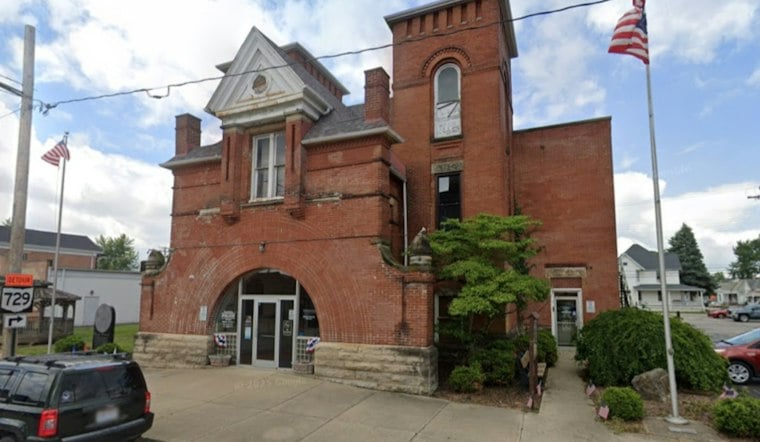
Sabina Village Council has put the brakes on a proposal that would prohibit feeding stray or feral cats within village limits, opting instead to gather more public input before casting a final vote. The council scheduled a special meeting for Nov. 12 at 6 p.m. in the municipal building's upstairs community room, giving residents on both sides of the debate another chance to make their case before lawmakers decide the fate of the measure.
Council first introduced the proposal, referred to in council records as Ordinance 19-26, on Sept. 10, and it had already passed two readings with a final vote originally set for Oct. 10, according to the Wilmington News Journal. Notably, an earlier report from the same paper referred to the measure as Ordinance 19-2026 rather than 19-26, and it is not clear from available records whether that reflects a numbering discrepancy or simply an alternate reference to the same proposal. Either way, the substance has stayed consistent: a ban on feeding stray or feral cats within the village.
Council ultimately delayed action in order to collect more public input, a move that came after a parade of residents spoke for and against the ordinance. Those residents were split, with opponents pushing trap-neuter-return strategies and advocates for the ban describing cats as a growing nuisance in their neighborhoods.
Volunteers Say They're Already Doing the Work
Bethany Grehl, who works with a Clarksville resident employed by the Cincinnati-based nonprofit clinic UCAN, told council that she, fellow volunteer Tracy Burge and others have been practicing trap-neuter-return on Sabina's strays for some time. The group raises funds for sterilization procedures and sometimes pays those costs out of pocket, in addition to rehoming cats directly. Grehl said the group's goal is straightforward: reduce the cat population through sterilization rather than removal.
UCAN, the nonprofit Grehl's network relies on, says it provides free spay/neuter surgery and vaccinations to community cats, describing trap-neuter-return as the most humane and effective method available to stop overpopulation, according to UCAN. Under that model, cats are trapped, sterilized and vaccinated, then returned to their outdoor colony rather than removed from the community. UCAN also notes that sterilization can reduce or eliminate nuisance behaviors like spraying, yowling and fighting, though the clinic limits participants to bringing in two trapped cats per person per day.
Rather than an outright prohibition, Grehl suggested designated feeding hours, proposing no food or water left on porches after 7 p.m. and after dark. She encouraged residents to reach out to her directly or through the Sabina Cats Facebook group for help with rehoming or spay/neuter services.
A Sabina Native Pushes for Collaboration
Rae Lynn Baker, a Sabina native who now works with cat rescue groups in Delaware County, Ohio, urged council members to work with residents instead of passing legislation she argued would effectively starve stray animals. She asked the village to give residents a chance to address the problem collaboratively rather than through an enforcement-first approach.
Maggie Morris offered council a tally of her own volunteer efforts, saying she has performed TNR on 88 cats and surrendered 43 cats and kittens to the Fayette Regional Humane Society. She said she relocated another 23 cats through her daughter in Virginia, and has found homes for cats as far away as Tennessee, Kentucky, Wilmington and Washington, D.C. Morris argued those efforts have reduced the number of cats able to reproduce in the community, and warned that a feeding ban could make strays harder to trap for spaying and neutering, or to rehome at all.
The Fayette Regional Humane Society, which Morris has worked with, runs a grant-funded community-cat initiative offering free or low-cost spay/neuter and vaccination services for at-risk cats, according to the Fayette Regional Humane Society. That program covers owned cats in Fayette, Highland, Ross and Clinton counties for income-qualified owners.
Residents Push Back Over Nuisance Complaints
Not every resident who spoke favored holding off. Afton Hiles submitted a letter defending the proposed feeding ban, citing property damage, fleas and recurring extermination expenses as reasons for her support. Per her letter, feline waste odor has become overwhelming, and cat feces and urine make walking through grass or simply being outdoors unpleasant.
Hiles also wrote that her daughter is allergic to cats, and questioned why residents who don't own pets should have to endure the nuisances that come with the village's stray population. Her daughter's health, home, yard, porch, vehicles and money all matter, she wrote, framing the ban as a matter of fairness for residents dealing with the fallout of outdoor cat colonies.
Volunteers Float a Bigger Sterilization Push
Amid the debate, one village resident offered $20 toward spay or neuter costs for every citizen who wants their cats fixed, and proposed collaborating with veterinary students from Ohio State University to expand capacity. Grehl told council that a property-owning resident had floated bringing three or four soon-to-graduate veterinarians to a local barn to perform procedures, an effort that could run two to three days and potentially sterilize 30 to 40 cats per day.
How Other Ohio Communities Have Handled It
Sabina isn't the first Ohio village to wrestle with this balance. The city of Franklin recently adopted Ordinance 2026-15, which regulates what it calls unauthorized feeding or attracting of animals, according to the City of Franklin, Ohio. That ordinance bars leaving food, water or shelter on public property without city authorization and requires property-owner permission on private property, but the city says it does not prohibit authorized animal-care activities or seek to stop community cats from being fed or cared for altogether.
Franklin pairs that restriction with a Trap-Neuter-Return program run through the Humane Association of Warren County, offering trapping, spay/neuter and vaccination services at no cost to residents. The Journal-News reported in August that Franklin banned feeding animals in public places as part of efforts to curb a growing feral-cat problem, with city leaders saying those trapping efforts were being undermined by people who kept feeding strays. The city had contracted with the Humane Society of Warren County that May to run its TNR program, per the Journal-News.
Louisiana's Leesville took a similar path in September, with its city council adopting an ordinance that stops people from feeding stray cats within city limits, according to KPLC-TV. Leesville officials are also looking into a trap-neuter-return approach as a longer-term fix for reducing the cat population there.
What the Research Says About TNR
Targeted TNR programs elsewhere have shown notable results, according to a compilation of studies published by HumanePro by Humane World for Animals. A comprehensive return-to-field and targeted TNR effort in Albuquerque was associated with an 84.1% decline in feline euthanasia and a 37.6% drop in intake over three years, while a targeted program in one Chicago neighborhood reduced colony populations by a mean of 82% from their peak. A University of Central Florida campus program cut its free-roaming cat population by 85% over roughly a decade, and a Texas A&M program reported a 36% reduction in cats alongside fewer nuisance complaints two years after implementation.
Not every case has followed that pattern. The same compilation notes that trap-and-remove efforts in Tasmania saw cat numbers increase by 75% at one site and 211% at another despite culling, a reminder that approaches and outcomes can vary widely depending on method and location.
For now, Sabina's ordinance remains in limbo. Council has made no determination on its final language, penalties or enforcement, and residents on both sides are expected to return for the Nov. 12 special meeting to make their case one more time before a vote is taken.





