

























































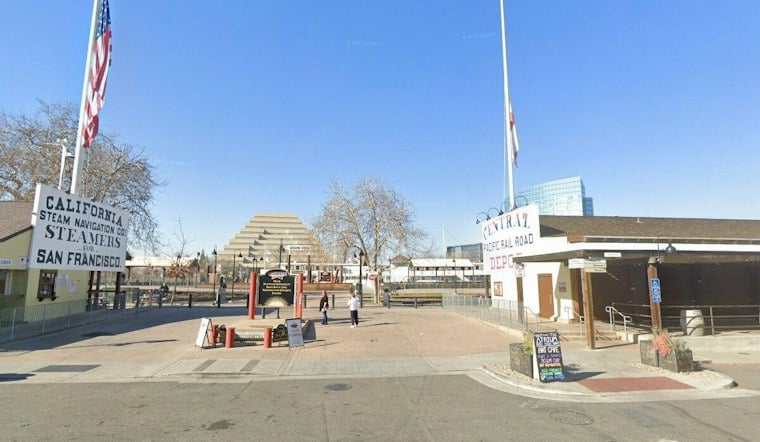
A Sacramento neighborhood that was largely wiped off the map by downtown redevelopment is being rebuilt inside a museum gallery this fall. The Sacramento History Museum in Old Sacramento is opening an immersive exhibit called “Sacramento Japantown: Destroyed by Design,” using facades evoking the old Japan Alley, family artifacts, photographs, video and sound to recreate a neighborhood that once stood at the heart of the city’s Japanese American community.
According to the Sacramento Press, the exhibit presents Japantown as a substantial neighborhood that was integral to the city, filled with businesses, families, institutions and a thriving social life before it was dismantled. The Sacramento History Museum says the show will be an immersive experience featuring Japan Alley facades, artifacts, videos, sounds and personal stories from Japantown descendants, according to the Sacramento History Museum. The exhibit draws on memories of former residents and their descendants, along with family artifacts that Sacramento’s Japanese American community members shared for display, per the Sacramento Press report.
A Neighborhood Erased in Two Waves
The exhibit covers Japantown’s prewar years, the forced removal and incarceration of Japanese Americans during World War II, and the postwar redevelopment that followed, per the Sacramento Press. The ABAS Law Foundation describes the neighborhood as having once been a vibrant cultural and economic center before the physical neighborhood was devastated by forced removal during the war and later demolished by downtown redevelopment. By the early 20th century, Sacramento had one of the largest Japantowns in the United States, according to the Sacramento City Express, before wartime displacement and redevelopment caused many of its buildings to be lost.
Exhibit designer Karen Tsugawa is leading the project, which the Sacramento History Museum has described as limited-time, running from the exhibit’s opening through May 24, 2027, in the Agriculture Gallery on the museum’s first floor, per the Sacramento Press. The ABAS Law Foundation states the exhibit opens November 6, 2026, while the Buddhist Church of Sacramento’s announcement of the related Matsuri festival says the exhibit opens November 7 — the two sources differ on the exact opening date. The museum has partnered with Reclaim Sacramento Japantown and the Asian/Pacific Bar Association Law Foundation to bring the project together, according to the Sacramento Press.
One Family’s Hotel, Lost to Redevelopment
Among the storytellers shaping the exhibit is Michelle Huey, who chairs its Program Committee, as reported by AsAmNews. Huey’s great-grandparents owned the Okayama Hotel, a large 35-room property that was later demolished as part of Sacramento’s redevelopment plans in the 1950s, the outlet reports. Huey has described the broader goal of the project in terms that go beyond preservation: “This is about creating opportunities for communities to talk about difficult histories and the experiences that shaped them,” she told AsAmNews.
The exhibit tells the story of what survived — families, memories, traditions and a community that continues to shape Sacramento today, according to the Sacramento Press. Japanese American volunteers will serve as docents on selected weekends during the exhibition’s run, the outlet adds, giving visitors direct access to community members connected to the neighborhood’s history.
Matsuri Festival and Free Museum Day
Community programming tied to the exhibit includes a Matsuri street festival, neighborhood walking tours and an event honoring civil rights figure Fred Korematsu, according to the ABAS Law Foundation. The Matsuri festival is set for November 7 at the Sacramento History Museum and Old Sacramento State Historic Park, running from 11 a.m. to 3 p.m., the Sacramento Press reports. The free, family-friendly festival will feature entertainment, cultural demonstrations, hands-on activities, vendors and a children’s zone, organized by Reclaim Sacramento Japantown and the ABAS Law Foundation alongside the museum, per the same report. The Buddhist Church of Sacramento separately describes the festival as including food, entertainment, cultural demonstrations, hands-on activities, community resources and a children’s zone.
SMUD and Bank of Marin have supported the festival, according to the Sacramento Press. The Sacramento History Museum is also holding a Community Day on November 7, offering free admission for everyone from 10 a.m. to 5 p.m., the outlet reports — a rare chance to see the new exhibit at no cost on its opening weekend.
A Citywide Push to Document Japantown’s History
The exhibit arrives alongside a separate, city-led effort to document Sacramento’s Japanese American heritage more broadly. The City of Sacramento will receive a $99,500 federal grant to document the history of its Japanese American community, collect oral histories and prepare National Register nominations for two buildings, according to the Sacramento City Express. That work will combine archival research, oral histories and public input, with the Center for Sacramento History preserving the resulting materials for future public access, the outlet reports.
The push to document and reinterpret Sacramento’s lost Japantown is not entirely new. The California Museum brought back its own exhibition, “Kokoro: The Story of Sacramento’s Lost Japantown,” which first appeared there in 2017, according to the California Museum. That exhibit uses rare family photographs drawn from community members’ personal collections, along with additional images and artifacts, to document the forced removal and redevelopment that reshaped the neighborhood.
Together, the museum exhibit, the city’s grant-funded research and the Matsuri festival reflect a broader local effort to keep the history of Sacramento’s Japantown from disappearing entirely. At the History Museum, the exhibit highlights the resilience of the Japanese American community as its central theme, according to the Sacramento Press, framing the neighborhood’s destruction not as the end of its story but as one chapter in a longer one still being told.





