

























































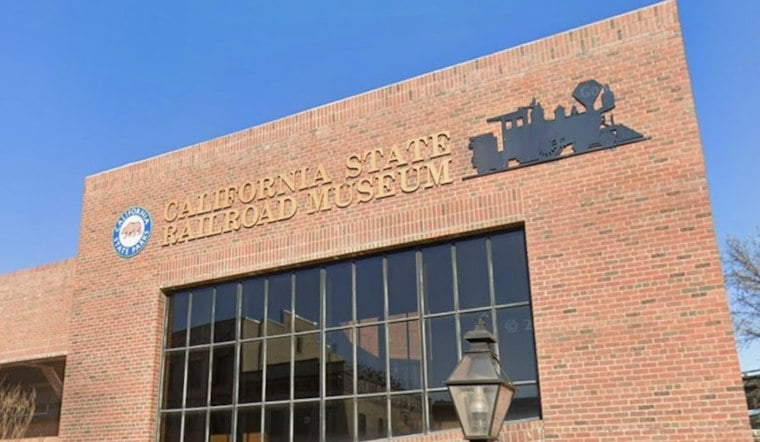
A Nov. 7 program at the California State Railroad Museum in Old Sacramento will examine Biddy Mason’s life and legacy, including her journey of roughly 3,000 miles from Georgia to California while enslaved. Mason later won her freedom in court, built a life and community in Los Angeles, and became one of the wealthiest women of color in the country before her death in 1891.
A Partnership Built Around One Remarkable Life
The California State Railroad Museum & Foundation and the Sojourner Truth African American Museum are presenting “Biddy Mason: A Community Celebration of Her Legacy” from 1 to 4 p.m. at the railroad museum, 111 I Street in Old Sacramento, according to Sacramento Press. Admission to the program is included with paid museum entry: $12 for adults, $6 for youth ages 6 to 17, and free for children five and under. The museum is open daily from 10 a.m. to 5 p.m.
Historian Dr. Kevin Waite will discuss Mason and his book The Boundless Biddy Mason, which its publisher describes as the first full-length biography of her. The book’s account notes that Mason spent five years enslaved in California before filing an emancipation suit in 1856. She later became a healer, philanthropist, church builder and real estate entrepreneur, according to UC Press.
From a Los Angeles Courtroom to Permanent Freedom
Mason arrived in California in 1851 with the Smith family, who were helping establish the Mormon colony in San Bernardino, according to LAist. Years later, she brought a group of enslaved people, including her children, before a Los Angeles judge to seek their freedom. Sources give different dates for the ruling: the Los Angeles Times says the case opened Jan. 19, 1856, and was decided the next day; the National Underground Railroad Freedom Center dates the judge’s approval to Jan. 21, 1856, according to the Freedom Center.
The ruling’s effect was clear. Judge Benjamin Hayes declared, “All of the said persons of color are entitled to their freedom and are free forever,” the Los Angeles Times reported. Lit Hub describes the January 1856 decision as freeing Mason, her three daughters and ten other women and children, and calls it one of the largest legal emancipations in U.S. history. The California State Archives’ Breaking Barriers exhibit frames the case around whether Mason and her children would remain enslaved, according to the California State Archives.
Freedom Cases and Black Organizing in California
Mason’s case took place in a state whose free-state status did not end the risks faced by people brought there in slavery. The City of Sacramento’s African American Experience Historic Context Statement says proslavery officials held positions of power in California and legislators passed laws restricting the rights of African Americans and other people of color. The report also describes a distinct Sacramento case: Charles Stovall brought Archy Lee from Mississippi in 1857, when state law allowed visiting slaveholders to enter California if they did not permanently settle there. The report documents different circumstances; it does not establish that Lee’s case followed the same course as Mason’s. Black Californians also organized around civic institutions and rights. The same report says California Colored Conventions drew representatives from 27 counties and helped establish early schools for “colored” children, including in Sacramento, and repeal the state law barring people of color from testifying in court in 1863. It also describes Black churches as sources of spiritual guidance, respite from racial injustice and community uplift.
Healer, Landowner, Community Builder
Mason put her earnings from livestock work, herbal medicine, nursing and midwifery toward property, according to the Los Angeles Times. Accounts differ on when she bought her first lot: the Times reports a $250 purchase at 331 Spring Street, while the National Underground Railroad Freedom Center dates her first land purchase, also for $250, to 1866, when she was 48.
Mason’s home became a gathering place for community life. The First African Methodist Episcopal Church, Los Angeles’s first Black congregation, was organized there in 1872, according to the Los Angeles Times. The Times also reported that during the 1884 Los Angeles flood she arranged free food for victims of any race. The National Underground Railroad Freedom Center says she provided food and shelter to poor people across racial lines throughout her life.
A Sacramento Connection Through Black Churches
Mason’s work organizing a Los Angeles congregation has a local point of comparison in Sacramento’s Black history. The City of Sacramento’s African American Experience Historic Context Statement describes Black churches as places of spiritual guidance, respite from racial injustice and community uplift. That history helps situate the community role of Mason’s church-building alongside the experiences of Black residents in Sacramento.
Estimates of Mason's wealth vary widely depending on the source. The Freedom Center states she accumulated a fortune of nearly $300,000, while Lit Hub reports that by 1890 she was one of the wealthiest Black women west of the Mississippi, with an estimated net worth as high as $100,000. UC Press states more broadly that by her 1891 death, she ranked among the richest women of color in the United States and had helped lay the foundations of Black Los Angeles. The National Underground Railroad Freedom Center states Mason accumulated a fortune of nearly $300,000 and records her death in Los Angeles on Jan. 15, 1891, at age 73, as noted by National Underground Railroad Freedom Center.
What's Planned at the Sacramento Event
The East Theater program is intended for teens and adults, according to Sacramento Press. Waite will speak about The Boundless Biddy Mason and its place in California history from 1:15 to 2 p.m., followed by questions from the audience. From 3 to 3:30 p.m., Waite and Monica Graves, known as “Chef Monica,” will discuss Mason’s financial legacy, community building and entrepreneurship. Underground Books will sell copies of Waite’s book at a signing from 2 to 2:45 p.m.
Community resource tables and a family craft activity for all ages will be available in the museum lobby throughout the 1-to-4 p.m. event, according to Sacramento Press.





