

























































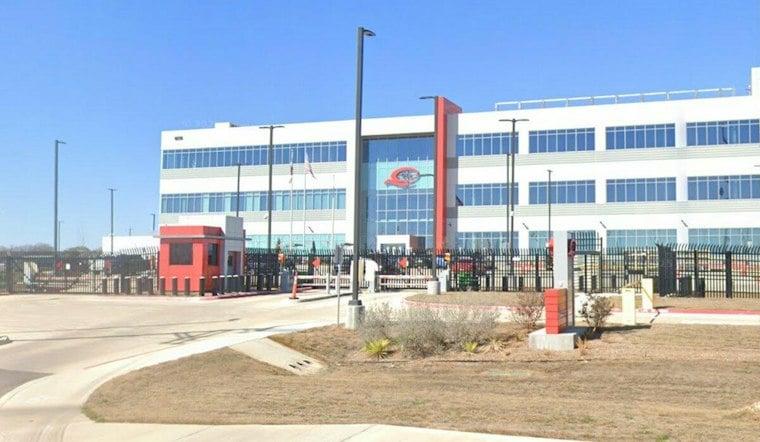
San Antonio City Council members will decide on Thursday which set of rules — if any — should govern where and how data centers get built across the city, choosing among four competing proposals that range from letting developers build almost automatically to requiring council sign-off on every single project. The stakes are real: at least 19 data centers already operate in San Antonio, and the city currently has no zoning rules written specifically for them.
Four Paths Forward, One Deadline
The options now in front of council emerged from months of work by San Antonio's Development Services Department, which held four public meetings between May and September as it studied possible changes to the Unified Development Code, according to saspeakup.com. As the San Antonio Report detailed, the effort traces back to a request from Ric Galvan last October to begin data center policymaking in earnest. Development Services ultimately presented council with by-right and case-by-case options, while the Zoning Commission separately recommended a fourth proposal of its own, and Mayor Gina Ortiz Jones introduced a third path in mid-October that blends citywide standards with case-by-case approval.
Under all four proposals, data centers could only be built in industrial, commercial or manufacturing zones, and none would be allowed over the Edwards Aquifer recharge zone. None of the options touch power or water use directly — those remain under the authority of CPS Energy and the San Antonio Water System. San Antonio's current zoning law, the Report notes, categorizes data centers under the generic label of office data processing and management, with no stand-alone use defined.
By-Right Versus Case-by-Case
The most permissive option would let data centers win by-right approval, meaning they'd be approved automatically once they meet city requirements, without needing a council vote. The most restrictive, known as Option 2, would require specific use authorization for every proposed data center, with review by both the Zoning Commission and City Council. The Zoning Commission's own recommendation splits the difference: by-right development would be allowed in general, heavy, mixed and mixed heavy industrial districts, while projects in business park, light industrial and general commercial zones would need specific use authorization.
That Zoning Commission proposal also sets specific physical standards. Developers seeking by-right approval would have to maintain 350 feet of separation from residential or neighborhood buildings, provide a 100-foot setback from their property line, and use downward-facing lighting to prevent light pollution. A separate option, labeled Option 1, goes further still, requiring 500 feet of separation from residential properties, schools, hospitals, day cares and assisted living facilities, plus an onsite landscape buffer.
The Mayor's Hybrid and the Toughest Option
Mayor Ortiz Jones's proposal, presented Oct. 14, combines citywide standards with case-by-case council approval, which she said balances national and economic security needs with community transparency. Under her plan and the related Option 3, residents would get 10 days to review proposals before council authorization. Option 3 itself layers on additional requirements: noise limits, 1,000 feet of separation from residences, enclosed backup generators, and replacement of any destroyed green space. Developers would have to notify city officials 45 days before filing for permits and hold two public engagement meetings with at least seven days' advance notice to residents. Option 3 also raises the question of whether data centers should meet air-quality monitoring and reporting requirements, share their energy and water usage data, or provide other public benefits — though even meeting those standards would not grant developers the right to build without council's specific use authorization.
At their Oct. 14 discussion, council members mostly supported some form of case-by-case approval, according to the Report. Ortiz Jones, Galvan, Jalen McKee-Rodriguez and Ivalis Meza Gonzalez signaled support for case-by-case data center approvals. Not everyone agreed: council member Marc Whyte argued for by-right development, while council member Misty Spears argued against any new data center regulations at all.
What Happens to Existing Data Centers
A lingering question is what becomes of the data centers already operating in San Antonio once new rules take effect. Development Services official Logan Sparrow said many existing data centers would become non-conforming under the new rules — meaning they could continue operating but would not be allowed to expand or undertake extensive repairs unless they came into compliance with the new policies. Zoning Commissioner John Bustamante recommended exempting older data centers so they could complete expansions or phased construction already underway, and the Zoning Commission approved that exemption as part of its recommendation. The commission's role is advisory only — it makes land-use recommendations to council but does not enact policy itself.
Sparrow also said public participation was invited throughout the process and that staff tried to include as many people as possible. Among those who weighed in: Stephanie Reyes supported by-right development, while Deedee Belmares advocated for case-by-case evaluation that gives the public a chance to ask questions and offer feedback. Data center developers broadly favor clear construction requirements paired with by-right development, which would let them move faster without seeking individual council approval for each project.
San Antonio's Rules Fit a Statewide Scramble
San Antonio isn't regulating in a vacuum. CPS Energy already provides power to 21 data centers in the region, generating $110 million in revenue from those contracts, and the utility counts 59 more future projects in various stages of planning, with projected energy needs of roughly 26,000 megawatts, according to the San Antonio Report. Statewide, the numbers are staggering: the Texas Tribune reports that ERCOT received 519 requests over the past two years from large electricity users seeking grid connections, compared with just 24 the year before, and that those proposed projects would collectively demand 438,595 megawatts. Ninety percent of that demand is tied to data centers, most aiming to come online by 2030, and at least 248 data centers are now planned across Texas — about half of them in unincorporated areas with far fewer regulatory tools than cities like San Antonio.
Nearby New Braunfels has already drafted its own data center zoning rules, which would require mandatory closed-loop cooling systems and impose a 55-decibel noise cap at residential property lines, per the San Antonio Business Journal. San Antonio's water authority has also addressed water concerns: liquid cooling is more water-efficient, and SAWS has encouraged the use of recycled water. Data centers currently account for only about 0.1% of the utility's drinking water, even as large-load electricity customers are expected to grow from 9% of CPS Energy's sales today to 19% within five years.
City Council is set to decide among the four proposals — or some combination of them — at its session on Thursday, Oct. 29. Whatever members choose will also have to address what to do with the data centers already built, a question the Zoning Commission has already weighed in on but that ultimately rests with council.





