

























































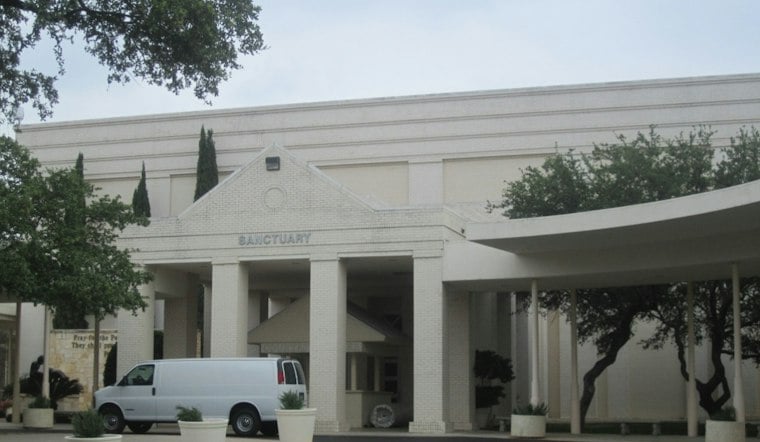
Texas Attorney General Ken Paxton, Lt. Gov. Dan Patrick and state Sen. Donna Campbell were acknowledged from the stage during Cornerstone Church's Sunday service on October 18 — the day before the North Side megachurch opened its doors as an official Bexar County early-voting location. The recognitions, delivered by Lead Pastor Matt Hagee, quickly drew online criticism and reignited long-simmering questions about whether the 5,000-seat sanctuary should be hosting voters at all.
Paxton is running for U.S. Senate against Texas Rep. James Talarico, a Democrat from Austin, and Libertarian candidate Ted Brown, as reported by MySA. Patrick, meanwhile, is defending his lieutenant governor seat against Democrat Vikki Goodwin of Austin, Libertarian Anthony Cristo and Green Party candidate Kevin McCormick. Hagee told the congregation he did not care that some might find the candidates' appearances controversial, invoking the roughly 400,000 marble monuments at Arlington National Cemetery as symbols of sacrifice made so others could vote, per the same report.
Cornerstone has a sermon series titled The Assault on Freedom. By Monday, early voting was underway at the same campus, placing a church that had just spotlighted three Republican statewide officials at the center of Bexar County's voting infrastructure.
Advocates Say the Church Isn't Neutral
Voting rights advocates Valerie Reiffert of Radical Registrars and Kathleen Vale, both members of Bexar County's Election and Voter Education Advisory Committee, issued a joint statement objecting to Cornerstone's selection as an early-voting site, arguing polling locations should be neutral and welcoming to voters of all political beliefs, according to the San Antonio Express-News. The pair pointed to the church's documented history of conservative political activism as evidence it falls short of that standard.
That history includes the November 2021 fallout after Cornerstone hosted the far-right ReAwaken America Tour inside its sanctuary, an event where attendees chanted political slogans, as the San Antonio Current reported at the time. Hagee issued a public apology afterward, saying the outside organization had not been properly vetted.
County Weighed Pulling the Site, Then Backed Off
Bexar County Elections Administrator Michele Carew considered removing Cornerstone from the approved polling list during a September 24 committee meeting, but Republican Precinct 3 Commissioner Grant Moody overruled the change, noting that Commissioners Court had already signed off on the site list, the San Antonio Current reported. Carew said that with early voting approaching, there wasn't enough time left to modify the approved locations.
Advocates had floated the Alzafar Shrine Temple on North Loop 1604 as a non-partisan alternative that could serve North Side voters without the same partisan baggage, the outlet noted. That suggestion didn't change the outcome, and Cornerstone remained on the list voters saw when early voting opened Monday.
Why Countywide Voting Changes the Calculus
Bexar County's participation in Texas's countywide polling-place program means registered voters aren't locked into a single assigned precinct and can cast ballots at any approved vote center or early-voting site across the county, according to Midpoint News. That flexibility gives voters uneasy about any particular venue the option to choose from other approved sites rather than Cornerstone specifically.
Texas law also draws a firm line around what counts as prohibited activity at a polling place. Texas Election Code Sections 61.003 and 85.036 bar electioneering — including posting signs or handing out political literature — within 100 feet of a polling entrance and within 20 feet of curbside voting spaces during active voting hours, with violations treated as Class C misdemeanors, per the Texas Secretary of State. Because Sunday's service took place before early voting began Monday, the candidate recognitions don't amount to a violation of that state electioneering restriction on their own, MySA reported.
A Murkier Federal Question
Federal tax law presents a separate and less clear-cut issue. Under the Johnson Amendment, churches and other 501(c)(3) tax-exempt organizations are generally barred from intervening in political campaigns, and IRS guidance distinguishes between appearances made in a candidate's official capacity versus neutral acknowledgments of sitting officeholders, according to MySA's reporting. Whether Sunday's service crossed that line depends on exactly what was said and the broader context of how the candidates were presented — a determination the dossier record does not resolve.
The federal landscape around that question is itself shifting. Following litigation in National Religious Broadcasters v. Bessent, the U.S. Department of the Treasury and the IRS announced in April 2026 that they plan to issue updated guidance clarifying how the 1954 Johnson Amendment applies to speech during religious services. That regulatory update was still pending as the political debate over Cornerstone played out this fall.
Parishioners Weigh In
Reactions from other San Antonio churchgoers, cited in MySA's report, reflected a divide over where the line should sit. Bob Segurson said his Catholic church discusses scripture and responsibility without endorsing or naming any candidate, while Martha Haines Janosko wrote that churches should preach the gospel and let congregants draw their own political conclusions.
Cornerstone, founded in 1987 by Senior Pastor John Hagee and co-led today by Matt Hagee, runs a 5,000-seat sanctuary on its North Side campus and reports active membership topping 22,000, according to John Hagee Ministries. The church also reaches national and international audiences through John Hagee Ministries broadcasts, extending its reach well beyond the pews that filled Sunday to hear about Paxton, Patrick and Campbell before the polls opened the next morning.





