

























































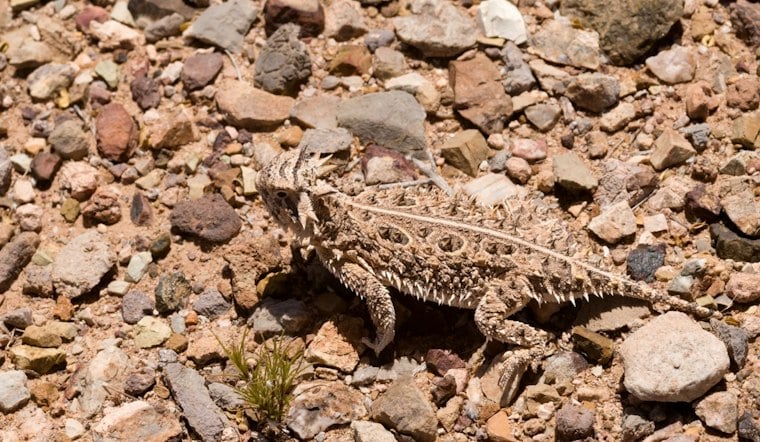
Fifty-five Texas horned lizards scampered off into ranchland this week, the latest batch of the spiky, ant-eating state reptile to get a second shot at life in the wild. The release on Monday brought together lizards raised in laboratories, rescued from a ranch, and in two cases, hatched right at the San Antonio Zoo itself.
A Mix of Backgrounds, One Shared Goal
The San Antonio Zoo and Zoo Miami carried out the October 26 release as part of the Texas Horned Lizard Reintroduction Project, according to ksat.com. Of the 55 lizards set free, 25 came from Zoo Miami, two were born and raised at the San Antonio Zoo, and 28 had been rescued from a Texas ranch earlier in 2026, the station reported.
The effort is run by the Center for Conservation & Research at San Antonio Zoo, and the station describes the project as an ongoing push to restore the species to places where its numbers have thinned out. Scientist Dante Fenolio heads the program, according to tpr.org, which reported that the team breeds the lizards in a lab and then releases their offspring onto the landscape.
Tracking Every Lizard That Goes Free
Nothing about this release is left to chance. Every baby lizard put out onto the landscape is genetically fingerprinted first, Fenolio told the same outlet, so researchers can identify individual animals later and gather data on their growth, mass and movements over time.
The San Antonio Zoo says the broader project works with private landowners to introduce zoo-hatched lizards in areas where the species has disappeared in recent decades. Before any release happens, the team assesses potential sites using remote habitat ranking and boots-on-the-ground surveys, then checks back regularly for signs of lizard activity, according to the zoo.
Signs the Lizards Are Making It on Their Own
There is evidence the approach is paying off. A female lizard hatched at the zoo in 2024 was later found on a neighboring property nearly a third of a mile from her original release site, according to aza.org. That report noted she had survived on her own for more than a year and had grown to full adult size, a sign that reintroduced lizards are both surviving and dispersing into new territory.
Researchers also flagged a third lizard that may be a wild-born offspring of previously released animals, though the same report cautioned that genetic analysis is needed and could take several months to confirm. The discovery, the report said, raises the exciting possibility that the project is producing a second generation in the wild without human help.
Why the State Reptile Needed Rescuing
The Texas horned lizard is the state reptile of Texas, per the San Antonio Zoo, but its populations have declined or disappeared across many areas since the late 1960s. The zoo attributes that decline to deterioration, fragmentation and loss of habitat, along with non-native invasive species such as exotic grasses and red imported fire ants, and pesticide use.
That shift in threats has also reshaped how conservationists respond. In recent years, the focus has moved away from relocating adult lizards in the wild and toward breeding them at partner zoos instead, according to Texas Parks & Wildlife Magazine. Fenolio has said his team's use of the scientific method has let them track which reintroduction practices actually work and which do not, a lesson built over more than a decade of trial and error in captive breeding.
Part of a Wider Statewide Push
San Antonio is not working alone. Zoos in Fort Worth and Dallas, along with researchers at Texas Christian University, maintain their own horned lizard programs, according to the San Antonio Report. Those efforts fall under the Texas Horned Lizard Coalition, which includes the Texas Parks and Wildlife Department, Texas Christian University, and zoos in Fort Worth, Dallas, San Antonio and elsewhere, per Texas Parks & Wildlife Magazine.
The coalition's record shows both promise and some inconsistency in reporting its results. Texas Parks & Wildlife Magazine reported that researchers found 25 lizards believed to be offspring of zoo-raised hatchlings released in 2019, while the Fort Worth Zoo's own account put that figure at 18 hatchlings from the same 2019 release. The two sources also diverge on the scale of a fall 2021 release, with Texas Parks & Wildlife Magazine citing 263 captive-raised hatchlings released that season, 159 of them hatched at the Fort Worth Zoo, and the Fort Worth Zoo citing 204 hatchlings released, 100 of them its own. The Fort Worth Zoo separately noted it hatched its 1,000th Texas horned lizard that same fall.
Whatever the exact tallies, Monday's release adds to a growing body of evidence that patient, science-driven breeding can put a once-common backyard creature back on the Texas landscape. For a lizard many longtime Texans still call the horny toad, the goal remains the same one San Antonio Zoo and its partners have chased for years: getting enough of them back into the wild, and keeping close enough watch, to know the comeback is real.





