

























































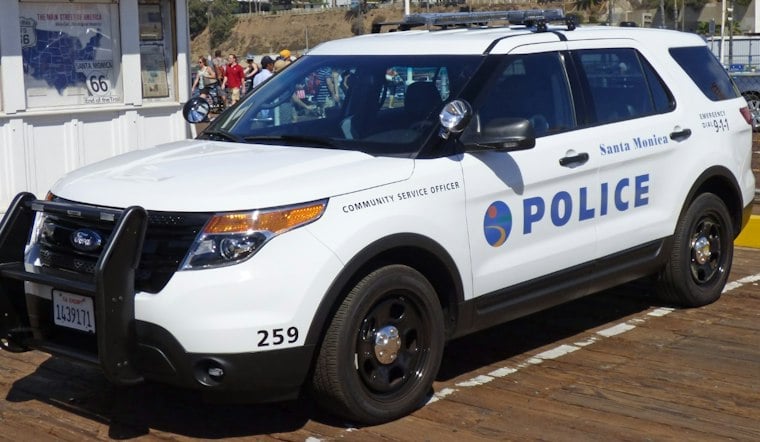
A married couple was found dead inside their Santa Monica home on Fourth Street on Wednesday morning, in what police believe was the city's third murder-suicide of the year. Officers responding to a welfare-check request at about 9:04 a.m. that day discovered two adults with apparent gunshot wounds inside a residence in the 2400 block of Fourth Street.
The Los Angeles County Department of Medical Examiner identified the pair as 44-year-old Ryan Lewis and 53-year-old Elizabeth Lewis, according to Santa Monica Daily Press. The medical examiner listed Ryan Lewis's death as a suicide and Elizabeth Lewis's death as a homicide. Detectives believe no one else was involved, and police described the deaths as an isolated incident with no ongoing threat to the public.
A Grim Pattern Across the Westside
Wednesday's deaths mark the third suspected murder-suicide recorded in Santa Monica so far in 2026, with two additional cases reported in nearby Venice and Westwood this year. All four earlier cases, the paper notes, involved a man and a woman who knew each other, and a firearm.
Just over two weeks ago, on September 26, a man fatally shot his wife and then himself at their Pico Boulevard home, as Hoodline previously reported. The Santa Monica Daily Press identified them as Hendrik Rabitzsch, 48, and Nicole Rabitzsch, 47; the medical examiner ruled her death a homicide and his a suicide. Police found no prior domestic violence calls reported at that residence.
In April, Jeremy Ferguson, who served as Director of Operations for Downtown Santa Monica Inc., shot his wife, 49-year-old Mandy Zelinka, and then himself at their Venice home. Investigators later revealed Ferguson had emailed a friend a suicide note containing instructions on entering the residence before the shooting. In July, 45-year-old Gul Erdogan was fatally shot in Westwood by her husband, 43-year-old Aytac Camdeviren, who then killed himself. And back in February, officers conducting a welfare check found a man and woman, both 54, dead in the 1900 block of Ocean Avenue; police described the pair as known to one another and called it a suspected murder-suicide.
National Numbers Behind the Local Cluster
The repeated tragedies in Santa Monica echo a pattern researchers say is playing out nationwide. The Violence Policy Center's ninth American Roulette study, which analyzed news reports from January 1 to June 30, 2025, found 237 murder-suicide events in that six-month span — an average of about nine a week — leaving 526 people dead, including 289 homicide victims and 237 people who died by suicide. By doubling the study-period total, the organization estimated 1,052 murder-suicide deaths for all of 2025.
Firearms were involved in 207 of the 237 cases studied, or 87 percent. Among people who died by suicide in those incidents, 92 percent were male, while 76 percent of homicide victims were female. Sixty-five percent of the cases involved an intimate partner, and within those intimate-partner cases, 99 percent of the victims were women killed by their partners, with a gun involved in 88 percent of incidents. Eighty percent of all murder-suicides happened inside the home. Forty-five of the homicide victims, or 16 percent, were younger than 18, and 27 children and teens survived after witnessing some part of a murder-suicide.
Researchers Point to Guns and Gaps in Oversight
Kristen Rand of the Violence Policy Center said the presence of a gun can escalate an argument to homicide and suicide in an instant, and argued that firearms' catalytic role must be considered in any prevention strategy. The organization says no comprehensive national database tracking murder-suicides is publicly available, forcing it to rely on news reports for its estimates, though it maintains its yearly projection is consistent with other research.
The Violence Policy Center recommends stronger domestic violence prevention laws, state domestic violence task forces, restricting firearm access when risk factors like domestic violence history or suicide threats are present, aggressive enforcement of gun prohibitions for people with misdemeanor domestic violence convictions or protective orders, support for older caregivers dealing with depression, and creation of a public national database to track murder-suicides.
California already imposes some of the firearm restrictions the center advocates for nationally. Under a law updated in 2018, individuals convicted on or after January 1, 2019, of willfully inflicting corporal injury resulting in a traumatic condition against an intimate partner face a lifetime ban on owning or possessing firearms, according to the Giffords Law Center. A firearm in a domestic violence situation increases the likelihood a victim will be killed fivefold compared with disputes without a gun.
Yet California's red flag law appears to be underused by the people closest to those at risk. Between 2016 and 2022, 266 Gun Violence Restraining Orders were issued across Los Angeles County, with law enforcement initiating 95 percent of those requests, while civilian petitions from family members or intimate partners remained extremely rare due to low public awareness, according to the LA County Department of Public Health. In March, the California Department of Justice's Office of Gun Violence Prevention issued model policies urging law enforcement agencies to expand and standardize use of those restraining orders in high-risk domestic scenarios.
Santa Monica's own crime statistics complicate the picture further. Police Chief Darrick Jacob reported in March that Part I major crimes in the city fell 12.5 percent in 2025, dropping from 4,793 incidents in 2024 to 4,194, a decline officials tied to department restructuring and increased officer-initiated patrols. But that broader downward trend has done little to stop the closed-door violence now marking five Westside homes in a single year.
Anyone in crisis can call or text 988. The National Domestic Violence Hotline can be reached at 800-799-7233.




