

























































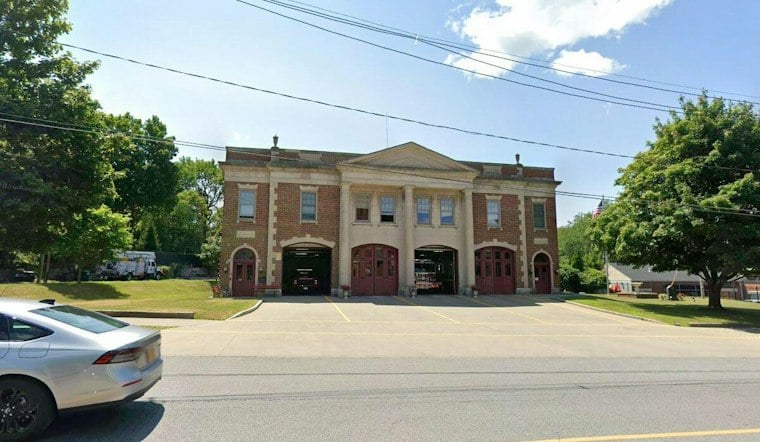
Saratoga Springs' proposed budget for fiscal year 2027 pairs an 18% property-tax increase with layoffs that would cut the city workforce by 4%, including eight firefighter positions that Fire Chief Dolan warns could force the department to lean heavily on costly overtime just to keep minimum staffing in place. Just down the Hudson in Troy, a similar federal grant is also running dry, but that city says it expects no firefighter layoffs at all.
A Tax Hike and a Thinning Fire Line
City Finance Commissioner Joanne Kiernan has proposed the austerity budget, which according to The Daily Gazette is marked by austerity measures including the 18% tax increase and workforce reduction. If adopted as proposed, the fire department would shrink from 81 members, including the chief, assistant chief and captain, down to 70 members on the front line. The department's minimum day-to-day staffing requirement sits at 17 firefighters per shift, and Dolan told budget officials the city actually needs 88 firefighters on the line to avoid relying on overtime, per the same report.
Dolan estimated the proposed layoffs would cost the city $1,022,600 on paper in overtime and unemployment insurance, the Gazette's reporting shows. Under the union contract, firefighters must be called back on overtime whenever staffing dips below the minimum because of vacation, personal time or sick leave, and overtime staffing costs significantly more than regular shifts. At a Saratoga Springs budget workshop earlier this month, Public Safety Commissioner Tim Coll said the decisions were difficult and called the layoffs frustrating and troubling.
The Grant That's Running Out
The root of the squeeze traces back to 2022, when Saratoga Springs received a $4.15 million federal SAFER grant to hire 16 new firefighters and paramedics, timed to staff a newly renovated fire station on Henning Road. That three-year grant funded the new hires, but as the Post-Journal reports, the city's proposed staffing cuts are driven in part by rising health insurance, retirement and liability insurance costs on top of the new fire station and the grant's expiration. The city's finance department proposal could eliminate eight of those 16 federally funded positions once the outside money disappears.
The numbers behind that squeeze are steep. Saratoga Springs' Department of Public Safety expenses grew by $11.4 million, or 39%, from 2022 to 2026, the Gazette found. Separately, the Saratogian reported that personnel expenses have climbed $5.6 million since 2023, with health insurance costs alone rising $2.7 million over that span, according to the Saratogian. The Post-Journal's budget breakdown describes the proposed fiscal 2027 plan as supporting $9,772,338 for a fire department it lists at 62 firefighters, a figure that does not line up neatly with the Gazette's count of 78 line firefighters under current staffing — a discrepancy the available reporting does not resolve.
Troy Took a Different Road
Troy received its own SAFER grant in 2022, worth more than $3.6 million, to hire 14 new firefighters, according to News10. Rather than scaling back when that money nears its end, Troy says it is keeping every one of those 14 positions. Troy Mayor Carmella Mantello, who took office in January 2024, said the city renegotiated its finances and invested close to $16 million — including a new $12 million Lansingburg firehouse — to fund 24-hour ambulance service without relying on crippling overtime. Mantello said adding firefighters allowed the city to run an additional ambulance with 24/7 coverage, and that while Troy still pays overtime, the increased staffing has dramatically reduced how much it needs.
Troy Fire Chief Richard Cellucci has set minimum daily staffing at 26 firefighters, well above Saratoga Springs' 17-person minimum. Troy also raised fees for its city-run ambulance service slightly to match other providers and bring in more revenue, and Mantello said the city continually reviews spending to improve efficiency. The fire department's labor contract addresses salaries, benefits, vacation, longevity and overtime. A public safety budget review is scheduled for Troy on November 9, and the city says it expects no firefighter layoffs to come out of it.
Even Troy's Ambulance Service Has Limits
Troy's financial footing isn't bulletproof, however. Its 24-hour ambulance service, Medic 3, was primarily funded by American Rescue Plan Act stimulus money and city employee overtime, and that funding model eventually hit a wall. According to a separate News10 report, Troy cut Medic 3 from round-the-clock coverage to 12 hours a day amid financial strain; 24-hour service costs $1.2 million annually. The same report noted that Troy's emergency calls have climbed from under 6,000 to more than 13,000 a year, even as staffing has held steady at 24 personnel per shift — underscoring how thin the margin can get even for a department avoiding layoffs.
Jamestown Faces the Same Cliff
Saratoga Springs and Troy aren't alone in confronting an expiring federal lifeline. Jamestown is weighing what to do about 12 grant-funded firefighter positions whose outside funding runs out at the end of this year, the Post-Journal reported. Jamestown Mayor Kim Ecklund has proposed keeping all 12 positions at a cost of $1.5 million to the city's general fund, planning to pay for four American Rescue Plan Act-funded jobs using a projected $450,000 in 2027 city EMS revenue while shifting the remaining eight SAFER-funded positions onto the general fund. Jamestown is required to maintain 62 line personnel under its grant terms and expects 59 in-line personnel on trucks in 2027, according to the outlet's follow-up reporting.
Other municipalities cited in the same comparison illustrate just how differently cities can structure fire and EMS funding. Glen Cove's EMS and ambulance operations have generated between $1.115 million and $1.380 million annually over the past three years, while its 2026 fire department spending totaled $545,000, per the Post-Journal. Newburgh, by contrast, devotes $15,467,871 of its $109,832,987 all-funds budget — nearly 20% — to its fire department. The federal SAFER grant program itself, according to the Federal Emergency Management Agency, was created to help fire departments increase or maintain the number of trained front-line firefighters available in their communities — a mission now colliding with budget realities in Saratoga Springs, Troy and beyond as that funding dries up.





