

























































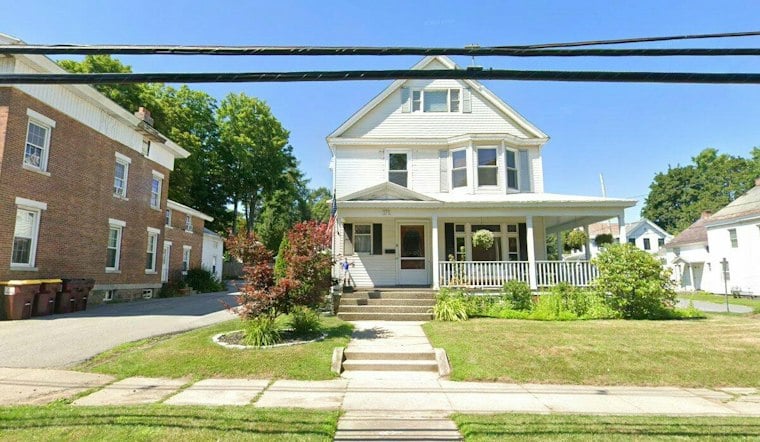
Jill and Daniel Massetti just wanted to fix a leaking roof on their house on Church Street. Instead, they found themselves locked in a monthslong standoff with Saratoga Springs’ Design Review Board over whether the deteriorating slate overhead could be replaced with anything but more slate — a question that, by their own estimate, carried a price tag of more than $100,000.
A Roof, a Board, and a Six-Figure Dispute
The couple told the Design Review Board on December 10, 2025, that replacing their roof with authentic slate would cost over $100,000, according to meeting minutes from the city of Saratoga Springs. They proposed instead to install GAF Slateline shingles — an asphalt product designed to mimic slate — on the main roof, along with a standing-seam replacement for the porch’s metal roof. They said the home’s original slate was simply at the end of its life.
The board wasn’t initially persuaded. Members concluded that the house’s slate roof needed to be replaced with slate because slate was an essential architectural feature of the property, per the same minutes. Rather than issuing a final approval, the board directed the Massettis to come up with additional solutions and return for further review — leaving the couple in limbo over a roof that was already failing.
From Standoff to Asphalt Approval
The fight eventually reached a different outcome. Homeowner Jill Massetti and contractor Matthew Fortier of Benson Contracting later returned with both a natural Vermont slate option and the GAF Slateline asphalt alternative, according to a report from citizenportal.ai. Fortier argued that cost and durability tradeoffs made full natural slate unaffordable for the homeowners. The board ultimately approved the asphalt proposal for the Church Street property, the outlet reported.
The New York Times reports that historic designation can make properties eligible for tax credits in some states.
A Mayor Pushes Back on the Rules
The roof dispute has landed amid a broader push from Saratoga Springs Mayor John Safford to loosen the city’s historic preservation rules for homeowners, with Safford taking particular aim at the architectural district, according to the Times Union. The proposal has drawn intense public interest — the follow-up meeting was moved to a larger venue after the first meeting overflowed, the paper reported. Supporters of the existing rules say they preserve the city’s historic character, per the same report.
Not every piece of Safford’s push has stuck. The mayor backed away from a proposal that would have given the city council final say over demolitions in the architectural review district, according to the same Times Union report. Any rule changes Safford does pursue still require city council approval.
Historic Districts Carry Real Money — and Real Stakes
A study found that property values in Saratoga Springs’ historic districts increased more rapidly than those outside the districts, according to a report from PlaceEconomics. The same analysis found houses within the city’s eight local historic districts — which collectively cover 6 percent of the city’s land area and 9 percent of its properties — averaged slightly more than $800,000 in value, compared with $466,000 for houses outside the districts.
Saratoga Springs’ zoning rules spell out why roof materials matter so much in these fights. Under the city’s permitting rules, exterior material changes, including changes to roofs, require historic review for properties within historic districts, according to the city of Saratoga Springs.
A Stewart's Shops Fight Shows the Stakes of Demolition
The Massettis’ roof saga is a comparatively small skirmish next to another recent Saratoga Springs preservation fight. The city approved demolition of a more-than-100-year-old Greek Revival home at 28 Lincoln Avenue to allow Stewart’s Shops to expand its neighboring store, the Times Union reported. That outcome followed a legal battle that began in June 2023: the Design Review Board had denied Stewart’s demolition request in June 2024, finding the home had architectural and historic significance, before a May 2025 settlement required the board to approve the company’s project before the house could be razed. The proposed expansion includes a 3,950-square-foot full-service Stewart’s shop and a 3,525-square-foot second-floor condominium, according to the same report.
The debate Safford has stirred up pits the economic case for flexibility against a preservation framework that, by the city’s own data, has coincided with significantly higher property values inside its historic boundaries.


