

























































Guilderland’s town board has adopted a $50.7 million budget for next year, a spending plan that climbs about 6.3 percent over this year’s budget and pushes property taxes higher across most of the town. The increase comes as employee benefits, particularly health insurance and retirement contributions, eat up a growing share of town spending, while one small fire district faces an eye-popping levy jump tied to a new firehouse project.
Spending Climbs, Levy Stays Under the Cap
The budget raises Guilderland’s property-tax levy by about 2.51 percent, from roughly $14.32 million to about $14.68 million, according to The Altamont Enterprise. That keeps the town $19,510 below the state-set tax cap, and Supervisor Peter Barber said before the Nov. 5 vote that inflation, the war in Iran, and other pressures were driving up costs for both households and town hall — but that Guilderland would stay within the cap regardless.
The town-wide tax rate inside Altamont village will rise from about $1.39 to about $1.42 per $1,000 of assessed value, an increase of roughly 2.34 percent. Outside the village, the combined town-wide and part-town highway tax rate will climb from about $1.42 to about $1.45 per $1,000, up about 2.2 percent. The town is also drawing more heavily on reserves to balance the books, with fund-balance draws for next year budgeted at $2.75 million — about $1 million more than this year’s plan — and the adopted budget uses $1.46 million in town-wide general fund savings to close its spending gap.
Benefits Drive the Biggest Cost Jump
Employee benefits account for the largest single share of added spending in the new budget. Across the general, part-town, highway, sewer, and water funds, benefit costs are set to rise about $1.11 million to roughly $11.5 million, making up about 37 percent of the overall increase in those funds. Health insurance alone is projected to climb 8.2 percent to about $5.11 million, while retirement contributions are expected to jump 14 percent to about $4.14 million, with police retirement costs rising from about $1.57 million to about $1.82 million.
That pattern builds on a trend flagged in earlier reporting from the same publication, which found that health-insurance costs for the current year had already risen 11 percent, an increase of $467,000, to $4.7 million. Elected officials are also getting a bump: the supervisor’s salary rises $4,300, from $141,200 to $145,500, while town board members, the highway superintendent and town justices each see roughly 3 percent increases; the town clerk’s salary rises from $88,800 to $91,400, an increase of $2,600.
Sales Tax and Cannabis Revenue Shift
Sales tax remains Guilderland’s dominant revenue source, with the town budgeting about $17.4 million across all funds, up roughly 3.2 percent. Of that, about $13.03 million in Albany County sales tax is earmarked for the part-town general fund, which relies on that revenue stream as its primary funding source. Adult-use cannabis tax revenue, by contrast, is expected to fall sharply — the town anticipates $200,000 next year, down about 28.6 percent from the $280,000 budgeted for this year, after Guilderland actually collected $50,450 in cannabis tax revenue in 2025.
Other revenue lines shifted too: emergency medical services fees are expected to rise to $3.33 million, up about 5.6 percent, and metered water rents are projected to climb 17.4 percent to $3.2 million. Mortgage-recording tax aid from the state is expected to rise to $900,000, while cable-franchise revenue is projected to drop about 9.1 percent. General-fund interest earnings are forecast to more than triple, from $40,000 to $130,000.
McKownville Fire District’s Levy Nearly Doubles
The steepest tax hike in the budget documents belongs to the McKownville Fire District, whose levy is set to jump from about $508,000 to about $949,000 — an increase of roughly 87 percent — pushing its rate from about $1.68 to about $3.16 per $1,000 of assessed value. The district covers about 900 households and numerous small businesses in the hamlet stretching to the Albany city line, including all of Stuyvesant Plaza and Executive Park, the Woodscape housing development, 45 percent of the University at Albany’s uptown campus, and part of the Crossgates Mall property.
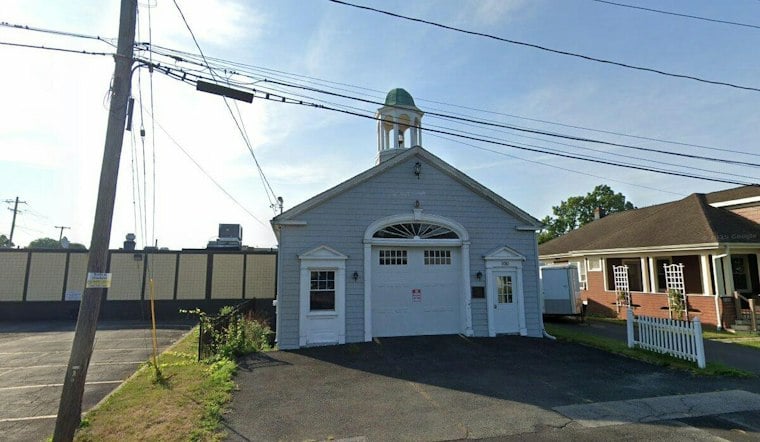
The levy increase is tied to a new $10 million firehouse the district is building on the footprint of its old station at 1250 Western Ave., a project voters approved in April 2024 with 80 percent support. It is the district’s second attempt at expanding its facility — a 2016 plan to double the firehouse to nearly 13,000 square feet with a second story fell through after construction bids came in higher than budgeted. The McKownville Fire District noted that its October budget hearing location had to change because of the ongoing construction at the site.
Other area fire districts saw more modest levy increases in the same budget cycle. Westmere Fire District’s levy rises about 3.1 percent to roughly $1.85 million, Guilderland Center’s climbs about 2.6 percent to about $797,000, and Fort Hunter’s increases about 2.3 percent to approximately $1.14 million. Guilderland Fire District’s levy rises about 2.2 percent to around $1.1 million, while smaller districts posted sharper percentage swings — Rotterdam’s levy, representing a levy on Guilderland property, climbs about 7.1 percent to roughly $76,000, and Elmwood Park’s rises about 4.3 percent to about $145,000.
State Audit Flagged Sales-Tax Allocation Issue
The budget adoption follows a state audit that found Guilderland officials did not properly budget for and allocate $14.8 million in sales-tax revenue during the audit period, according to the Office of the New York State Comptroller.
The sales-tax scrutiny comes against a statewide backdrop of rising collections: local government sales tax revenue across New York totaled $18.2 billion from January through September of last year, up 4.3 percent from the same period the year before, per the same Enterprise reporting on the town’s finances. For Guilderland residents, the combination of a growing budget, climbing benefit costs, and a steep fire-district levy increase in McKownville means next year’s tax bills will look notably different depending on where in town they live.





