

























































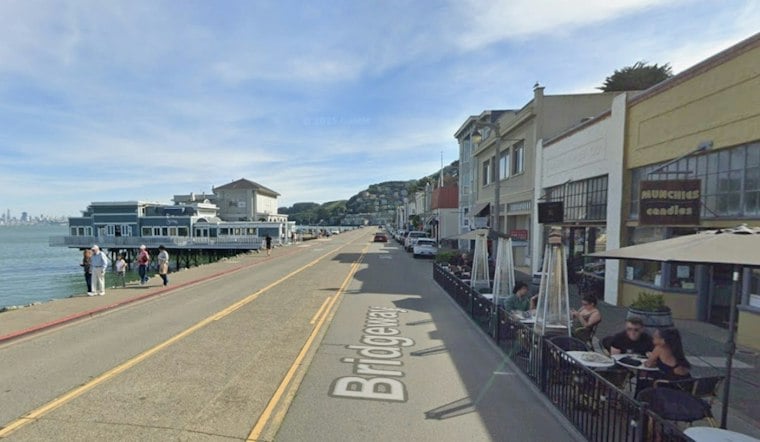
Sausalito's City Council voted 4-0 Tuesday to reject an appeal filed by developer Linda Fotsch and her company over the city's finding that her waterfront condominium application was incomplete, keeping the long-contested project in limbo. The council also rejected a separate challenge from Fotsch's team alleging the city intentionally delayed and obstructed the proposal, which at various points has been described as a 49-apartment development.
Fotsch owns two parcels at 605-613 Bridgeway and has proposed a seven-story waterfront condominium project through her development company, Willy's LLC, according to the Marin Independent Journal. She first submitted the proposal in 2023, expecting it to be automatically approved because she believed it complied with the city's housing element, the state-mandated plan that lists sites where new housing can go. City planners disagreed, concluding her application was incomplete, and Fotsch appealed that finding to the Planning Commission in 2025 and lost before bringing her case to the council.
City planners have said the project sits in a historic district and requires review under the California Environmental Quality Act. Earlier reporting from MarinIJ described the plan, called Waterstreet, as an 85-foot-tall, 50-residence building with 36 market-rate apartments and 14 affordable units, five retail sites and a public parking lot — though an earlier version reported by sfyimby.com described a 47-home project with five retail shops and six affordable units. The city said the proposal was inconsistent with historic-preservation provisions because it involves structures in the downtown historic district, which is listed on the California Register of Historic Places.
Density Dispute at the Heart of the Fight
Council member Neil Toft said the half-acre site is in the historic district and did not qualify for a CEQA exemption. The discussion also centered on the site's potential housing density.
The dispute traces back to how many homes the site can actually support. Sausalito's housing plan identified the property as able to accommodate as many as 49 units. A separate account from the San Francisco Chronicle describes the site's capacity as 49 units in the housing plan and 28 units in an August 2024 draft amended plan. The council itself has amended the housing element to downsize projects at Fotsch's site.
The Chronicle has separately reported that the state's housing department is monitoring Sausalito's responses to active project proposals and is prepared to respond with enforcement actions if state housing law is violated.
Packed Public Comment, Deep Opposition
Residents submitted more than 200 letters to the city, with most opposing the project, and a petition opposing it gathered 1,700 signatures. During Tuesday's public comment period, only two people spoke in favor of the plan, while other Sausalito residents said the project was inappropriate for the historic downtown district. Residents also objected to the project's fit with the historic district.
Council member Ian Sobieski recused himself from the appeal hearing because he lives near 605-613 Bridgeway, leaving the rest of the council to cast both votes 4-0. The appeal's rejection left the project's future unresolved.
Part of a Broader Housing Reckoning
Sausalito faces real stakes in getting this right: the state requires the city to plan for 724 new residences by 2031, per MarinIJ's earlier reporting. The city adopted its amended sixth-cycle housing element in May 2025 and received a letter of substantial compliance from the state Department of Housing and Community Development on May 22, 2025, according to the city's own records.
The Bridgeway fight isn't Sausalito's only live housing flashpoint. The City Council is also weighing a separate proposal in the Marinship district for a 294-apartment complex across from Mollie Stone's Market, with the council expected to receive a report on whether that project can be evaluated under CEQA, according to MarinIJ's recent coverage. Whether Fotsch pursues a smaller version of her Bridgeway project or heads toward litigation, the clash over how much housing the waterfront parcel can hold is far from settled.





