

























































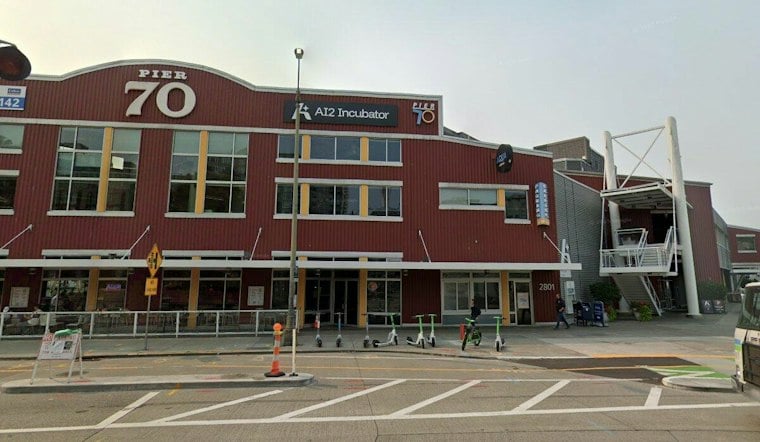
Seattle AI Week launched its third year Monday with more than 100 events planned across Greater Seattle, even as protesters showed up outside the opening festivities to push back on the data centers powering the region's artificial intelligence boom. The event, organized by the Washington Technology Industry Association, runs Oct. 26-30, 2026, and carries the theme “What do we build from here?”
Opening Panel Mixes Optimism and Pushback
The Washington Technology Industry Association kicked off the third annual Seattle AI Week on Monday, according to GeekWire. The opening panel, titled “The Abundance State: Washington's Chance to Lead the AI Future,” focused on AI and economic growth and featured OpenAI's Mattie Zazueta, Beau Perschbacher of Gov. Bob Ferguson's office, and Joe Nguyen of the Seattle Metropolitan Chamber of Commerce, per the same outlet's reporting.
Outside that panel, protesters disrupted the kickoff over concerns about data-center expansion and its potential effects on communities, jobs, energy demand and the environment, GeekWire reported. A Washington state official told the outlet that data centers use a really significant amount of electricity, a concern compounded by rising demand from electric vehicles and heat pumps.
From 45 Events to More Than 100
Seattle AI Week is now underway for its third year, and according to KOMO News, it has grown fast: the event started with more than 45 events in 2024, expanded to more than 75 in 2025, and now brings more than 100 events to Greater Seattle this year. The week aims to connect AI advances with the people and communities affected by them, and it includes events hosted and attended by founders, engineers, artists, creatives, researchers, educators, students, policymakers, and people simply curious about the technology, per KOMO's reporting.
Seattle AI Week is now underway for its third year, and according to KOMO News, it has grown fast: the event started with more than 45 events in 2024, expanded to more than 75 in 2025, and now brings more than 100 events to Greater Seattle this year. The week aims to connect AI advances with the people and communities affected by them, and it includes events hosted and attended by founders, engineers, artists, creatives, researchers, educators, students, policymakers, and people simply curious about the technology, per KOMO's reporting. “Growth like this reflects how many people and organizations want to be part of the AI conversation,” said Nick Ellingson, WTIA's vice president of innovation and entrepreneurship, according to KOMO. “You don't have to be an AI expert to be part of this conversation. Come explore, ask questions, and help decide what we build from here.” Programming this year connects AI to health and medicine, education, arts and entertainment, and work, and the community event schedule is posted at seattleaiweek.com.
WTIA Leaders Make the Case for Washington's Role
WTIA leaders said Washington state is positioned to play a major role in the AI industry, KOMO reported. Minkarah, WTIA's chief operating executive, said the state's tech ecosystem supports jobs, startups, research and local organizations, and that its AI applications extend into life sciences, aerospace, space, energy, quantum computing and maritime industries.
Minkarah pointed to specific local projects as evidence, according to KOMO: Ai2, the University of Washington and Fred Hutch Cancer Center working on AI and protein design; Helion advancing fusion energy in Malaga; and Ai2's Skylight AI supporting ocean protection organizations in roughly 70 countries. Separately, the Allen Institute, University of Washington and Fred Hutch Cancer Center have launched AI BioDesign, a collaborative accelerator supported with $95 million from the Fund for Science and Technology, according to a statement from the University of Washington. That project is designed to generate open models, datasets, assays and tools for biological solutions tied to human health, environmental challenges and advanced technologies, with AI models proposing new biological designs that scientists then build and test at scale.
By the Numbers: A Fast-Growing but Contested Picture
The scale of Washington's AI and tech sector is substantial, though the exact figures vary by source. According to Greater Seattle Partners, the region has founded 272 AI startups over the past decade, which have raised $3.9 billion, though a separate figure from the same organization's 2025 report cites AI companies securing around $4 billion in funding over that span. A broader count from Greater Seattle's 2025 industry report puts the region's AI company count at more than 400, with more than 200 of those being startups, and estimates roughly 32,965 AI-specialized workers locally, the third-largest such concentration in the country. Seattle ranked second among U.S. markets for AI job openings in 2025, trailing only New York City, the report found.
Employment and output figures also differ depending on which report is cited. Greater Seattle's 2024 industry report found the region's tech industry supported more than 193,400 jobs and contributed $148.9 billion in gross regional product that year, up from $32.6 billion in 2017. The 2025 report, however, put the figure at more than 187,900 technology jobs and $174.7 billion in gross regional product. Either way, the region has ranked second nationally in tech talent, behind the San Francisco Bay Area and ahead of New York City, Washington, D.C. and Toronto, according to the earlier report.
A Statewide Push for Access
Minkarah said the benefits of AI growth should reach people statewide through skills development, apprenticeships and pathways into AI-enabled careers, and that industry, education, government and community organizations all have a role to play in expanding that access, per KOMO's reporting. She also emphasized building public trust alongside innovation, saying community events and conversations are meant to connect AI builders with the people affected by the technology.
“Washington has the foundation to lead in the AI era,” Minkarah said, according to KOMO, while stressing that opportunities need to reach communities across the state, not just in the tech corridors driving the sector's growth.





