

























































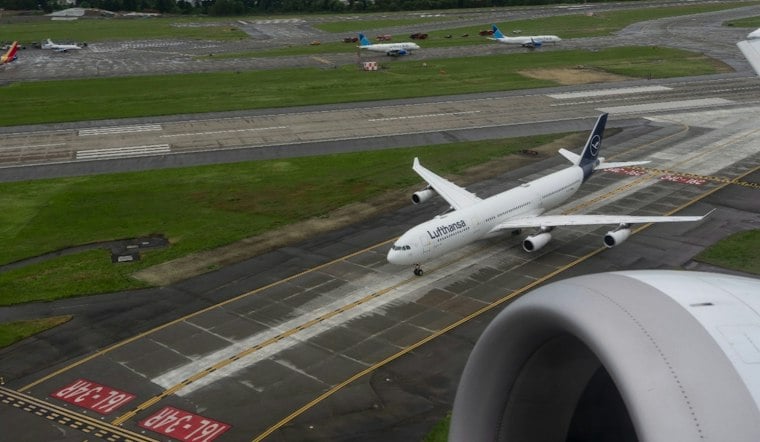
Seattle-Tacoma International Airport was among three airports the FAA identified as facing possible delays from low clouds Tuesday. By evening, FlightAware’s nationwide count had climbed to 1,886 delayed flights and 52 cancellations involving U.S. operations, according to ABC News 4. Those figures describe flights within, into or out of the country—not a count of delays at SEA.
The FAA notice also named Denver International and San Diego International airports as places where low clouds could affect operations, The National Desk reported. As of Tuesday morning, it said, there was no nationwide ground stop; the notice described potential airport-level delays. The reports do not establish how many SEA flights were delayed or canceled.
Why visibility matters at SEA
Reduced visibility can constrain how quickly aircraft arrive. For general context, the Port of Seattle says SEA can handle 50 arrivals per hour on a typical sunny day, compared with 25 or fewer in worst-case hazy, foggy or snowy conditions. That comparison illustrates a possible operational constraint; it does not document Tuesday’s visibility, arrival rate or delay impact.
Low ceilings can slow arrivals and affect airport operations, but the FlightAware totals are not a weather-cause tally. The reports did not attribute every delay or cancellation to weather. The FAA offers broader historical context: weather caused 74.26% of system-impacting delays longer than 15 minutes from June 2017 through May 2023, according to its weather FAQ. That national figure covers a past period and does not identify the cause of Tuesday’s disruptions.
A fast-changing national snapshot
The evening count was substantially higher than the morning snapshot. FlightAware showed 784 U.S.-related delays and 32 cancellations as of 11 a.m. EDT Tuesday, The National Desk reported; by 6:45 p.m. EDT, ABC News 4 reported 1,886 delays and 52 cancellations. The change shows how quickly the reported totals grew during the day, but does not by itself explain why individual flights were disrupted.
For travelers, the reports provide a time-specific picture rather than a forecast of continuing conditions. Check flight status and available rebooking options with the airline before heading to the airport.





