

























































A second federal judge has blocked President Trump's $100,000 fee on new H-1B worker visas, ruling that immigration agencies skipped the legal process required before imposing such a steep charge on employers hiring highly skilled foreign workers. The decision adds another setback for the administration even as it pushes forward with a separate plan to make a similar fee permanent through formal regulation.
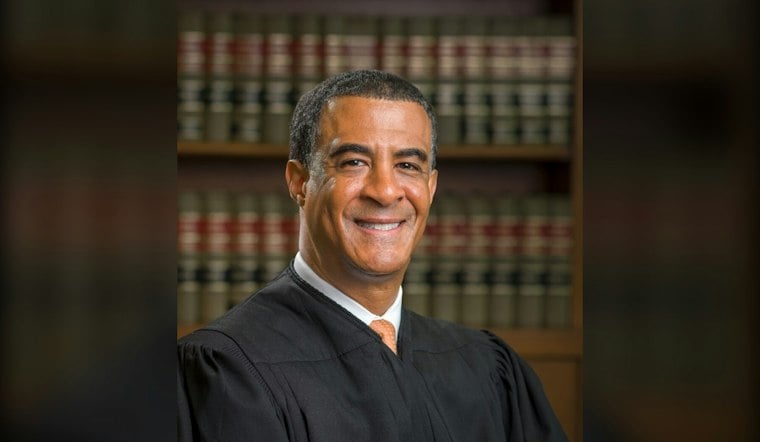
U.S. District Judge Haywood Gilliam in Oakland, California, found that U.S. Citizenship and Immigration Services and the State Department failed to follow required rule-making processes before implementing the fee, according to The Modesto Bee. Gilliam granted a request from a coalition of unions, employers and nonprofits to block the agencies from enforcing the fee while their lawsuit proceeds, a case that was originally filed in October 2025.
Steve Bressler, an attorney with Democracy Forward, which represents the plaintiffs, said the ruling protects a system that was thrown into chaos overnight, per the same report. The group's lawsuit is one of several the administration has faced over the fee, which it first imposed through a presidential proclamation last year.
A Pattern of Judicial Pushback
Gilliam's ruling is not the first time a court has intervened. A federal judge in Boston temporarily blocked the fee in June, and a Boston-based appeals court declined to pause that decision in July, according to the Modesto Bee's reporting. That earlier case, State of California v. Mullin, saw U.S. District Judge Leo T. Sorokin grant summary judgment to 20 state attorneys general, ruling that the executive proclamation functioned as an unconstitutional tax imposed without congressional delegation, according to Barnes & Thornburg. The U.S. Court of Appeals for the First Circuit later denied the government's emergency motion to stay that ruling, keeping the fee unenforceable nationwide during the appeal, per Ogletree Deakins.
Not every court has sided against the administration. In December 2025, U.S. District Judge Beryl A. Howell in Washington, D.C. ruled in the government's favor in a separate case, finding that President Trump possessed authority under INA § 212(f) to restrict noncitizen entry unless employers paid the $100,000 fee, according to Goel & Anderson, LLC. The U.S. Chamber of Commerce, which filed its own lawsuit over the fee, is now appealing that same judge's rejection of its claims that Trump lacked authority to set the fee, per the Modesto Bee.
White House Extends the Fee, DHS Pursues a Permanent Rule
Trump's $100,000 fee was originally set to expire on September 21, but the president extended it for another year, the Modesto Bee reports. On September 18, Trump issued a new proclamation extending the fee through September 21, 2027, alongside an executive order directing federal agencies to increase scrutiny on H-1B sponsors that conducted layoffs in the prior year, according to the American Hospital Association, which noted healthcare organizations had sought exemptions for foreign medical staff. The White House did not immediately respond to a request for comment, per the Modesto Bee.
Separately, the Department of Homeland Security has moved to adopt a permanent fee of about $103,000, a figure that will likely face its own court challenges, the outlet reports. DHS formally published a proposed rule in the Federal Register on August 25 establishing a permanent $103,265 filing fee for cap-subject H-1B petitions, opening a 30-day public comment period that closed September 24, as Hoodline reported earlier. Lawsuits over the fee have focused on the president's power to set such a charge unilaterally, rather than through Congress.
Economic Fallout for Small Employers
DHS's own regulatory impact analysis for the proposed $103,265 rule acknowledged that 11,051 small entities — representing 76% of all small businesses filing cap-subject H-1B petitions in fiscal year 2025 — would suffer a financial impact exceeding 1% of their annual revenue. The agency projected the permanent fee would generate $8.8 billion in annual federal revenue, allocating $3 billion to USCIS operations, $2.96 billion to immigration courts, $1.21 billion to the Department of Labor, and $1.05 billion to ICE.
The chilling effect has already shown up in hiring numbers. During the first five months under Trump's September 2025 proclamation, only 70 employers nationwide paid the $100,000 fee to sponsor new H-1B workers from abroad, according to court statements presented in Oakland federal court and reported by American Community Media. Foreign professionals from India and China account for roughly 75% of the 85,000 cap-subject H-1B visas issued each year, primarily in computer science, engineering and healthcare fields, the outlet reported.
How the H-1B Program Works
The H-1B program allows U.S. employers to hire foreign workers with specialty-field training, and technology companies rely heavily on it, according to the Modesto Bee. The program offers 65,000 visas annually plus 20,000 additional visas for workers with advanced degrees, with approved visas lasting three to six years. For Fiscal Year 2025, USCIS received 470,342 eligible electronic H-1B registrations and selected 120,603 unique beneficiaries in its lottery, representing a 38.6% drop in eligible registrations from FY 2024 following rules designed to reduce duplicate entries, according to USCIS.
Before Trump's order, H-1B visas typically carried about $2,000 to $5,000 in fees, a fraction of the six-figure charge now at the center of the legal battle, per the Modesto Bee. Trump invoked presidential power under federal immigration law to restrict the entry of certain foreign nationals, saying businesses had abused the H-1B program and replaced American workers with cheaper foreign labor. His administration has also ordered enhanced vetting of H-1B applicants and proposed a visa selection process favoring higher-skilled and better-paid workers.
With rulings split between courts in Boston, Oakland and Washington, D.C., and DHS now pressing ahead with its own permanent rule, the fight over who has the power to set H-1B costs appears headed toward further appellate review.



