
























































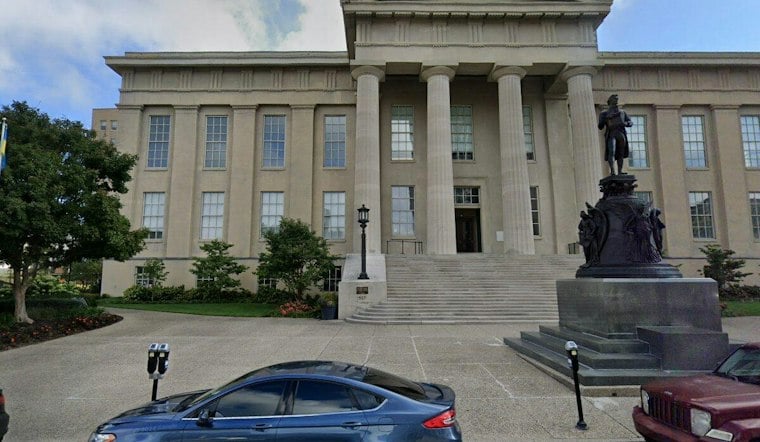
Seventy trees, each standing 12 to 14 feet tall, rolled onto the 500 block of Jefferson Street in downtown Louisville this week on heavy-duty garden carts, arranged into shifting formations in front of Metro Hall as part of a choreographed production set to music. The spectacle, dubbed The Moving Forest @ PickleY'all, was designed to let Louisvillians see, rather than just imagine, how street trees and plants could transform the heart of downtown.
The project was the brainchild of Patrick Piuma, director of the Urban Design Studio at the University of Louisville's Christina Lee Brown Envirome Institute, who conceived and organized the program, according to UofLNews. Piuma said the display demonstrates nature's ability to make urban spaces healthier and more attractive to residents, workers and visitors. Louisville Ballet dancer Leigh Anne Albrechta choreographed the movements of the trees themselves, while DJ Sylvanus Hudson supplied the soundtrack that accompanied the formations.
The event, staged as part of downtown Louisville's PickleY'all festival, drew volunteers from UPS, Humana and other corporate partners, with the Humana Foundation backing the effort. The display added an unexpected civic-planning showcase to the pickleball festival.
Trees Head to Permanent Homes After the Performance
Once the music stopped and the formations broke apart, the trees weren't headed to a dumpster. Louisville Grows and TreesLouisville will prepare them for planting at Greenprint sites and at locations tied to environmental-health research across the city, the UofL report notes. The garden carts that hauled the trees into place will also get a second life, donated to community greening organizations once the project wraps.
That afterlife matters because the display highlighted dozens of urban greening projects tied to Greenprint, a citywide partnership commissioned by the Louisville mayor's office and coordinated by the Envirome Institute. Greenprint is described by UofL's Envirome Institute as a collective-impact initiative meant to guide the greening of downtown Louisville over the next decade, offering guidance on tree plantings, landscape designs and green corridors meant to create a healthier, more connected downtown.
Downtown's Thin Canopy and a Citywide Shortfall
The numbers behind the spectacle explain why organizers went to the trouble of choreographing a forest in the first place. Downtown Louisville currently has just 7% tree canopy coverage, according to UofLNews, a stark contrast with the Urban Forest Master Plan's call for every neighborhood citywide to reach at least 30% coverage. Greenprint's broader mission, as described by the Urban Design Studio, is to pinpoint where nature can do the most good for air quality, urban heat, physical activity and community well-being, including baseline measurements of pollution, heat, noise and traffic patterns downtown.
The citywide trend isn't moving in the right direction on its own. An analysis of satellite imagery found Jefferson County's total tree-canopy coverage actually slipped from 38.74% in 2016 to 37.84% in 2022, per the Urban Design Studio's own mapping work. TreesLouisville, meanwhile, has planted or given away 25,000 trees since launching about a decade ago, according to the Kentucky Lantern, a pace organizers hope events like this week's display can accelerate.
The Health Case Behind the Greening Push
Beyond shade and scenery, UofL's Envirome Institute research is building a case that trees measurably affect human health and urban ecology, according to the Urban Design Studio's reporting. The Green Heart Louisville Project, which gathered blood, urine, hair and nail samples along with health data from 745 people across a four-square-mile stretch of South Louisville, found that residents in neighborhoods where trees and shrubs had been added showed 13% to 20% lower levels of hsCRP, a biomarker of general inflammation, than residents in areas without new plantings, per a separate UofLNews report.
That health data sits alongside warmer projections for the region. Climate Central projects Louisville's average summer temperatures could climb nearly 8 degrees over roughly the next 60 years, the Kentucky Lantern reports; experts have described Louisville by 2100 as potentially much more like present-day northeast Texas. For a downtown with just 7% canopy and a Jefferson Street stretch that briefly turned into a dance floor for trees, the stakes behind the spectacle are plain enough: organizers are betting that watching trees move through the city, even briefly, might be what finally convinces Louisville to let them stay.


