

























































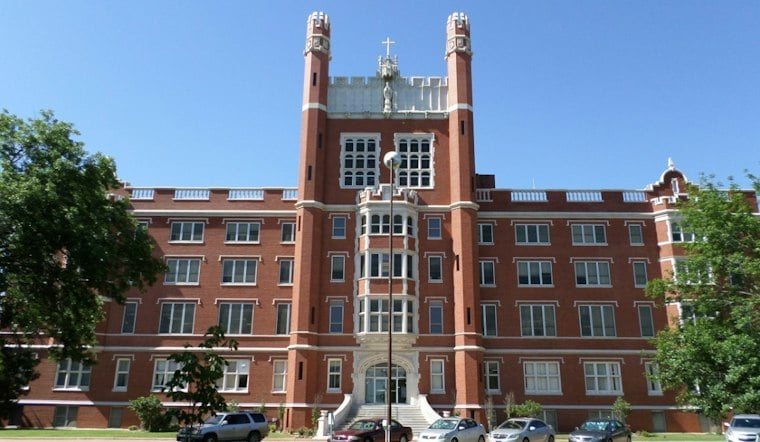
An 18-year-old named De'Andre Mason spent much of his childhood moving between homes before landing in the custody of Oklahoma's Department of Human Services. When he aged out of foster care, he found an opening at a new transitional living program housed in the former dormitories of Saint Gregory's University in Shawnee, applied, and got in.
Mason is one of the first residents of Caring Collective, a nonprofit based at St. Gregory's Abbey that serves young adults aging out of Oklahoma's foster system, according to News 9. The program aims to bridge the gap between unstable childhood circumstances and independent adulthood, and organizers say young adults aging out of foster care have faced increasing instability since 2019, which they link to higher rates of incarceration and homelessness. Kelley Metcalf is board secretary and development committee chair for the Child Advocacy Center of Central Oklahoma, and contributes her expertise to Caring Collective.
The program follows a structured model: residents start with a 30-day transition period, then can pay up to 15% of their income toward rent, per the station's report. That rent is held in escrow, and participants who successfully complete the program get 60% of it back after two years — money meant to help jumpstart their independent lives.
From Group Homes to a Room of His Own
For Mason, the stability has translated into concrete goals. He's working toward a driver's license, saving for a car, and planning to become a firefighter, with hopes of attending Gordon Cooper Technology Center for certifications, the same institution where Caring Collective board member Russell Tarpey teaches computer networking, according to the Caring Collective Board of Directors. That tie connects the nonprofit directly to local vocational training that many of its residents will need as they build independent lives.
The transitional model residents like Mason are following offers up to 24 months of housing for young adults ages 18 to 24, pairing wraparound case management with a rent subsidy that shrinks as participants take on more financial responsibility, according to Caring Collective. The program currently has capacity for 24 young men, and organizers hope to eventually expand to serve young women as well, per News 9's report.
A Campus Rebuilt for a New Purpose
The building making all of this possible has its own story. Saint Gregory's Abbey regained ownership of its former university campus in June 2024 and invested more than $500,000 to restore student housing into 108 two-bedroom suites, with Caring Collective to use part of a 32-unit wing in Duperou Hall for transitional housing, according to the Archdiocese of Oklahoma City. Saint Gregory's University closed in 2017.
That renovation got a critical boost in May when Pottawatomie County Commissioners approved a $100,000 grant from the county's Economic Development Fund to PULS Housing Initiative, funding a fire sprinkler system required before the former residence halls could legally house Caring Collective residents. PULS Housing Initiative, established as a 501(c)(3) in 2024 by Saint Gregory's Abbey, takes its name from the Latin word for “to knock,” inspired by Saint Benedict's Rule on hospitality for people in need. In September, the Knights of Columbus of Oklahoma added private philanthropic support, presenting a grant to St. Gregory's Abbey that included $100,000 for facility improvements to provide transitional housing for young people aging out of foster care and $20,000 to establish a House of Discernment, according to St. Gregory's Abbey.
A Statewide Problem Caring Collective Is Built to Address
The need is substantial. Roughly 200 young adults age out of Oklahoma's foster care system each year, according to the Annie E. Casey Foundation. About half of young people without this type of support experience homelessness or incarceration.
Oklahoma lawmakers have moved on a parallel track. New child welfare legislation that took effect in July allows eligible foster youth to voluntarily remain connected to state extended care and healthcare services through age 21 under the Pathways to Launch program, the Annie E. Casey Foundation reports, making Oklahoma one of more than half of U.S. states to adopt extended foster care protections beyond age 18. Historically, young people in foster care faced an abrupt transition at 18.
Caring Collective has woven itself into the broader regional support network as it grows. In September, the organization joined other agencies and educational institutions at the “Spark A Change” resource fair in Shawnee, an event that connected foster youth and justice-involved individuals with educational and housing services alongside groups like OK Human Services and Gordon Cooper Technology Center, according to Visit Shawnee.




