

























































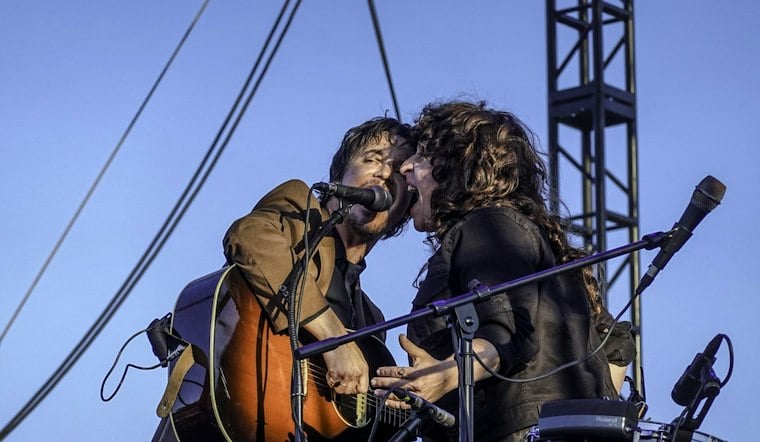
A folk duo, a former city poet laureate and a choir built around 1960s protest songs are sharing a Charleston stage next week for one cause: stopping a proposed natural gas plant on the Edisto River. The Songs to Save the Edisto concert series will hold its finale at Music Farm on November 4, with doors opening at 7 p.m., bringing together Shovels & Rope, Mechanical River, poet Marcus Amaker, the Deadleg Wobblers and the Palmetto Choral Collective Peace Choir for one last push before a wider regulatory fight plays out. Tickets run from $24 to $44.
A Series Born From a Years-Long Climate Fight
The finale caps a concert series that has used music, poetry and community gathering to oppose the proposed gas project on the Edisto River, according to the Charleston City Paper. The series is organized by the Charleston Climate Coalition, the M.A.R.S.H. Project and the Microdose Cooperative, a trio that has been working together for years to channel art into advocacy, as reported by The Post and Courier. Belvin Olasov, director and co-founder of the Charleston Climate Coalition, has described the gas plant as the most dangerous climate-activist flashpoint of his time, per the City Paper, and said he wanted to bring folk-protest music traditions into a contemporary environmental fight.
Olasov said the concert series was intended to bring people together around a shared cause, and credited its success to collaboration with the M.A.R.S.H. Project and Microdose Cooperative. He also said Marcus Amaker's environmental poetry deeply affects him. The Charleston Climate Coalition has advocated for climate action in the Lowcountry for seven years, pushing for clean energy, green buildings and public transportation, and has worked alongside the M.A.R.S.H. Project — a Charleston-based initiative combining ecological stewardship, community engagement and creative activism — for several years. The series has grown from smaller venues, including a coffee shop and a pool, to the Music Farm stage, with attendance that organizers describe as steadily growing.
Who's Playing the Finale
Shovels & Rope will open with a brief acoustic set of old and new protest songs, according to the Music Farm event listing, which describes the night as an evening of folk, indie and protest music, poetry, video art and speakers. Mechanical River, the indie-folk project of singer-songwriter and multi-instrumentalist Joel T. Hamilton, also takes the stage, alongside former Charleston poet laureate Marcus Amaker. The Palmetto Choral Collective Peace Choir will perform classic 1960s protest songs and gospel music, and the Deadleg Wobblers will close the evening with a celebratory jam, Music Farm's listing notes.
Proceeds from the night go toward opposing what Music Farm calls a $5 billion gas plant megaproject on the Edisto River, along with its pipeline through the ACE Basin and the data centers the plant could eventually power. Olasov has also pointed to potential future uses for the concert-as-protest format, including campaigns supporting solar energy and protected bike lanes in downtown Charleston, per the City Paper's reporting.
The Plant Behind the Protest
The project drawing all this musical opposition is Canadys Station, a natural gas combined-cycle plant that Santee Cooper and Dominion Energy South Carolina plan to build together in Colleton County, on the site of Dominion's former coal-fired facility along the Edisto River. Santee Cooper says the plant is planned to provide approximately 2,200 megawatts of power — enough, the utility says, for over a million homes — though the Southern Environmental Law Center has described the proposed facility as a 2,180-megawatt plant. The project also includes a new natural gas pipeline and related infrastructure; the Southern Alliance for Clean Energy has identified it as the proposed Elba Bridge pipeline, which would cross the ACE Basin to fuel the plant, according to Southern Alliance for Clean Energy.
The South Carolina Public Service Commission approved the project in May 2026, granting it a Certificate of Environmental Compatibility and Public Convenience and Necessity, but deferred all consideration of environmental matters to the state Department of Environmental Services, the law center's release states. That agency is now weighing an Air Prevention of Significant Deterioration Construction Permit application for the advanced-class combined-cycle plant, according to a public notice from the South Carolina Department of Environmental Services. Santee Cooper, for its part, says the project is moving through a regulatory process overseen by independent agencies, per its own project page.
Cost, Pollution and Legal Fights Still Unresolved
Environmental advocates have questioned the project's cost, air pollution, water quality and long-term fossil fuel infrastructure impacts, and Live 5 News reported that environmental and clean-energy groups have opposed the project for years over its potential effects on nearby communities, the ACE Basin and other natural resources. The Southern Environmental Law Center told the station the plant had already doubled in cost from $2.5 billion to $5 billion within a year, while the Southern Alliance for Clean Energy has warned the facility could generate millions of tons of new air pollution annually for fifty years. In October, the law center released a health-impacts report modeling the plant's projected air pollution, including at least 164.3 tons of particulate matter, the clean-energy group's reporting notes, and the law center's comment letter cited similar gas plants nationwide that received air permits with stricter limits than those proposed for Canadys Station.
The fight has already spilled into the courts. In May and June, the pipeline company Elba Express filed dozens of lawsuits against landowners in Hampton and Colleton counties after they declined to allow property surveys, according to the same Post and Courier investigation that first detailed the concert series. The newspaper's coverage has also tracked a related Colleton County gas plant and pipeline appeal, and the Songs to Save the Edisto campaign has grown to include a companion Stories to Save the Edisto project, which plans to turn trash collected during a Noisette Creek cleanup into art, the paper reported.





