

























































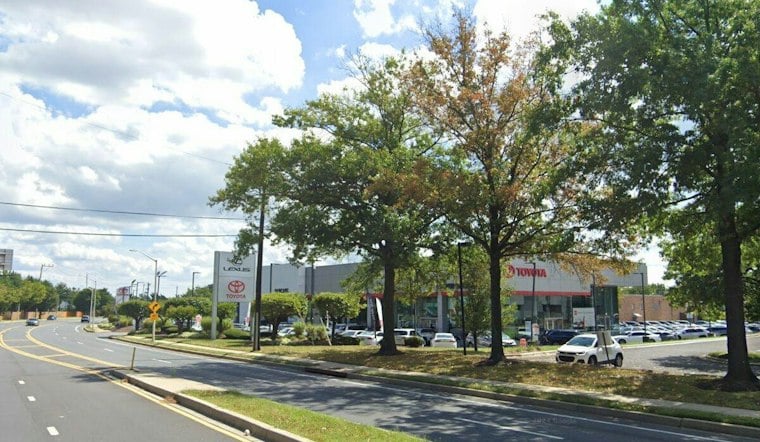
A Silver Spring Toyota dealership failed in its bid to permanently shut down a customer's slip-and-fall lawsuit after Maryland's highest court ruled that a jury should decide whether the business did enough to protect her from a freshly mopped floor. Katharine Blackwell slipped and fell on a floor near the service desk at DARCARS Toyota of Silver Spring after an employee had mopped it but before anyone put out a warning sign.
The Supreme Court of Maryland issued its opinion on September 25, affirming an earlier decision by the Appellate Court of Maryland that revived Blackwell's premises-liability claim, according to The BayNet. The case, filed as DARCARS Toyota of Silver Spring v. Blackwell and docketed as Case No. 6, September Term 2026, centers on what happened when Blackwell was called to the service desk because her vehicle was ready.
A Mop, a Missing Sign, and a Fall
According to court filings detailed by Maryland Daily Record, lot attendant Pedro Fernandez mopped the floor in front of the service desk without posting a warning sign before or during the cleaning. A dealership employee identified as Mr. Bong had requested that the floor be mopped and watched it happen, then called Blackwell to the service-desk area without warning her about the wet floor, per the same filings.
Fernandez left the area to retrieve a warning sign, which he said was kept about a minute away, as Blackwell walked toward the desk, slipped on the wet floor and fell before he returned. The area in question was one where customers could be expected to walk, making the lack of any barrier or warning central to the dispute.
Lower Courts Split on the Outcome
The Montgomery County Circuit Court initially sided with DARCARS, granting summary judgment on both of Blackwell's negligence-based claims after reasoning that the dealership did not have enough time after the floor became wet to post a warning sign. The Appellate Court of Maryland later reversed that decision specifically as it related to the premises-liability claim, while leaving the circuit court's ruling on negligent hiring and supervision untouched.
The Supreme Court of Maryland went on to affirm the Appellate Court's judgment, concluding that the circuit court erred by granting DARCARS summary judgment on the slip-and-fall claim. Per the Daily Record, the Supreme Court found that a jury could conclude a reasonable business owner would have posted a sign before mopping or warned Blackwell as she approached — and that DARCARS may have had other available steps to prevent customers from slipping.
What Maryland Law Requires of Property Owners
Maryland premises-liability law holds that a property owner is liable to an invitee for physical harm caused by a condition on the property when the owner knows or should discover an unreasonable risk of harm, expects the invitee may not discover or avoid it, and fails to exercise reasonable care — but that owner is not an insurer of a customer's safety, and an injury on the premises alone does not create a presumption of negligence, a distinction that traces back to Rehn v. Westfield America. That 2003 case, which the Court of Special Appeals of Maryland decided in favor of the defendants over spilled soda at an Annapolis Mall Chick-fil-A, holds that storekeepers are not insurers of their customers' safety and that no presumption of negligence arises merely because an injury happened on a storekeeper's premises.
Under that same body of law, a property owner generally has no duty to conduct continuous inspections or remove every hazard the moment it appears, and an invitee must typically show that an unknown hazard existed long enough for an owner exercising reasonable care to discover and remedy it. But the Supreme Court found DARCARS's reliance on Rehn misplaced in this case, reasoning that the restaurant employee in that earlier dispute had no opportunity to protect customers until learning of an existing hazard — whereas the wet-floor hazard at the Silver Spring dealership existed only after a DARCARS employee created it by mopping the area.
That distinction matters because an owner's employee knowingly creates a hazard when the employee creates it either intentionally or accidentally, and an owner can generally decide in advance how to protect invitees from a hazard that is foreseeable from an assigned task — in this case, mopping a floor customers were expected to walk across. The court's conclusion was that when the evidence permits more than one reasonable interpretation of whether an owner took adequate protective steps, that question belongs to a jury rather than a judge.
The ruling allows Blackwell's premises-liability claim to move forward, but it does not determine whether DARCARS is ultimately liable for her fall. What happens next in the case — including whether it proceeds to trial — was not addressed in the available filings.





