

























































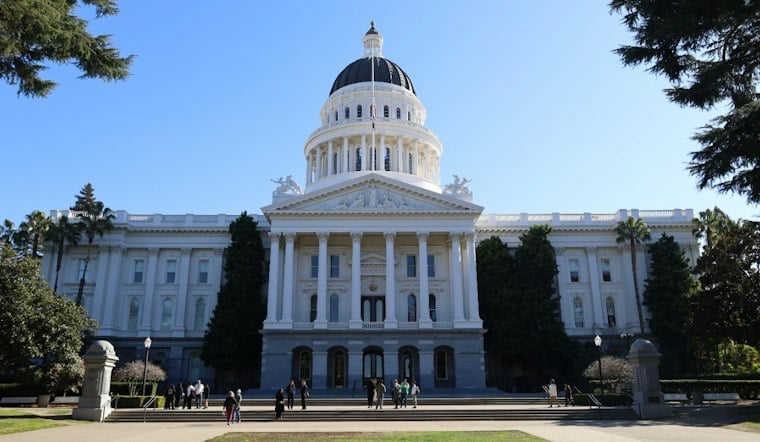
Six county Republican central committees in California voted to recommend a No vote on Proposition 45, a ballot measure meant to speed up environmental reviews for housing, water, and clean energy projects.
A Measure Meant to Tame CEQA Lawsuits
Proposition 45 would impose new deadlines for agencies to complete California Environmental Quality Act reviews and for courts to resolve related lawsuits, covering eight categories of projects including housing and public health facilities, clean energy, water infrastructure, schools, public safety work like wildfire mitigation, and transportation and broadband projects, according to the Sacramento Bee. It would also create a mandatory 45-day maximum public comment period for Environmental Impact Reports on qualifying projects, requiring a court order for any extension, per Ballotpedia. CEQA currently sets minimum, not maximum, comment windows.
Randall Jordan, chairman of the Republican Party of San Luis Obispo County, has worked in construction for over four decades and said CEQA appeals and litigation can create real hurdles and delays for builders. But he told the Bee he still views Proposition 45 as a deceptive measure, believing smaller building companies would not benefit from the law the way its backers claim. Jordan said favored projects could receive rapid CEQA processing under the measure, and he specifically cited data centers and battery storage facilities as the kind of projects he fears would benefit most.
California Forever's Solano County Plans
California Forever, the Silicon Valley billionaire-backed effort to build a new city or high-tech shipyard with worker housing along San Francisco Bay's shoreline, has drawn attention in Solano County. Suisun City finalized a $1.5 million sale of five downtown parcels to the project last month.
Michael Moritz and Patrick Collison have been reported as backers of California Forever. Separately, the PAC Building a More Affordable California contributed $10 million to the Proposition 45 campaign.
A Divide Over Who Benefits
Michael Greer, chairman of the Del Norte County Republican Party, said his committee opposed Proposition 45 despite knowing it was going against the state party and Carl DeMaio, explaining simply that the committee did not trust the state and regulators. John Turnacliff, chairman of the Marin County Republican Party, said his support would depend on the measure benefiting everyone, and asked pointedly who would get an inside track under the new rules.
Twenty-nine county Republican parties aligned with the state central committee and Reform California or made their own yes endorsement, by the Bee's analysis, putting the six dissenting counties in the minority. The state Republican central committee endorsed the measure, and Reform California — the independent political committee DeMaio built that has raised millions outside official state party channels, causing friction with party leaders — wrote that CEQA had been used to block and delay housing, adding years and millions of dollars to projects, and called Proposition 45 the first real opportunity voters have had to reform CEQA at the ballot box.
Tulare County has its own recent history with CEQA: a Tulare County Superior Court judge ruled in February 2026 that the city violated CEQA by trying to allow industrial cold-storage development near the Matheny Tract community without required environmental review.
Democrats Split Too, as Public Support Slides
The Republican rift is not the only crack in the measure's coalition. The California Democratic Party opposes Proposition 45. Assembly Speaker Robert Rivas and Senate President Pro Tem Monique Limón have criticized the Yes campaign for funding ties to Republicans and Reform California, the Bee reported.
California YIMBY, the prominent pro-housing group that helped Newsom enact last year's CEQA reforms, declined to back Proposition 45. Critics argue the measure could encourage suburban sprawl.
Democrats Split Too, as Measure Faces Debate Whether data centers would qualify for the streamlined process has been debated.
Money and the Fight Over Who Pays
Whether data centers could qualify for CEQA streamlining under the measure's language has been debated.
The state's own Legislative Analyst's Office has estimated the measure would impose initial administrative costs in the high tens of millions of dollars annually, potentially exceeding $100 million per year, though those costs would be partially offset by applicant fees.
The California Hospital Association and California Water Association are listed among Proposition 45's supporters, according to the state's voter guide. Ronald Reagan signed CEQA into law in 1970.





