

























































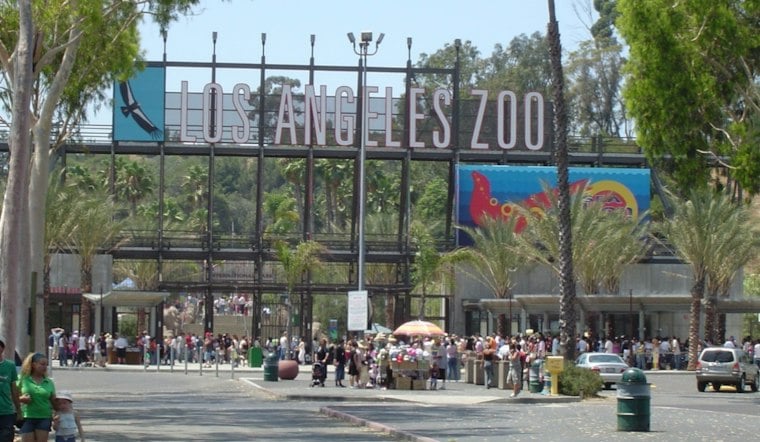
Six Magellanic penguins are splashing around a pool at the Los Angeles Zoo, marking the first time the species has lived there since 1984. The black-and-white birds can now be seen at the Rainforest of the Americas exhibit, where staff say their return after more than four decades is a milestone for the zoo's animal care team.
According to the Los Angeles Zoo, the colony's arrival ends a gap dating back to 1984, when Magellanic penguins last resided at the facility. The zoo describes the species as temperate-climate seabirds, and as reported by MyNewsLA.com, Dominick Dorsa II said bringing Magellanic penguins back after more than four decades is a milestone for the animal care team. Zoo staff also prepared the habitat to accommodate the species' social dynamics and ecological needs, per the same report.
A New Splash in the Rainforest of the Americas
Misha Body said, as relayed by MyNewsLA.com, that adding the birds to the Rainforest of the Americas will add activity and excitement and give guests a new way to connect with South American wildlife. The zoo's own announcement confirms the penguins can now be seen in their pool at that exhibit.
Magellanic penguins are native to coastal areas of Argentina, Chile and the Falkland Islands, according to the Los Angeles Times. The Aquarium of the Pacific notes the birds are typically found near the southern tip of South America on the coasts of Chile and Argentina, where they feed on small fish such as sardines and anchovies. NBC Los Angeles describes them as medium-sized and adapted to milder climates, native to the temperate coasts of Argentina and Chile.
Named for an Explorer Who Never Made It Home
The species carries the name of Ferdinand Magellan, who spotted the penguins off the tip of South America in 1520, according to the Jacksonville Zoo. Potter Park Zoo describes adult Magellanic penguins as having black backs, white stomachs, and two black bands between the head and the breast — distinctive markings visitors can look for in the new LA colony. The birds also dig burrows to protect their eggs from predators and extreme temperatures, according to SeaWorld.
Mixed Signals on the Species' Future
The picture for wild Magellanic penguins is complicated depending on which measure you look at. A 2025 study published in Nature found a moderate, though statistically nonsignificant, multi-decadal population increase of approximately 2% per year along the Argentine coast, projecting roughly 1.28 million breeding pairs there by 2024, with more than 60% of the world's breeding population found in Argentina. The same study points to a sustained increase in the total number of active colonies, including expansion into new areas and growth in several established ones.
Yet the BirdLife species factsheet separately points to a continuing decline in the number of locations where the species occurs, as well as continuing decline in mature individuals and subpopulations. The Aquarium of the Pacific lists Magellanic penguins as internationally near threatened, citing threats including oil pollution, climate change and commercial fishing, and notes interactions with commercial fisheries remain a potential conservation concern due to incidental capture and competition for prey. The aquarium also recalls that hundreds of these penguins were found stranded in Brazil in 2011, most likely because climate change altered their food sources and forced them to travel farther in search of food.
Regional Zoos Have Their Own Penguin Stories
The Los Angeles arrivals follow a similar move down the coast: the Aquarium of the Pacific in Long Beach welcomed two Magellanic penguins named Inca and Milo last year, birds that arrived from two accredited Association of Zoos and Aquariums facilities as part of the AZA's Species Survival Program, according to NBC Los Angeles. The aquarium itself joined that same Species Survival Plan when its June Keyes Penguin Habitat opened in 2012, with cooperative breeding programs aimed at increasing genetic diversity across zoo and aquarium populations.
Further north, the San Francisco Zoo's Magellanic penguin history stretches back to 1984 as well, when 52 wild Magellanic penguins were brought in to found a colony on Penguin Island, according to ABC7 News. One of that colony's penguins, Captain EO, was thought to be about 40 years old when he died, and six chicks that hatched there in May later graduated from the zoo's so-called fish school. The Los Angeles Times also reported that six new penguins from SeaWorld in San Diego once changed the swimming behavior of a 52-bird colony at the San Francisco Zoo, a reminder that new arrivals can reshape group dynamics at an established colony.




