

























































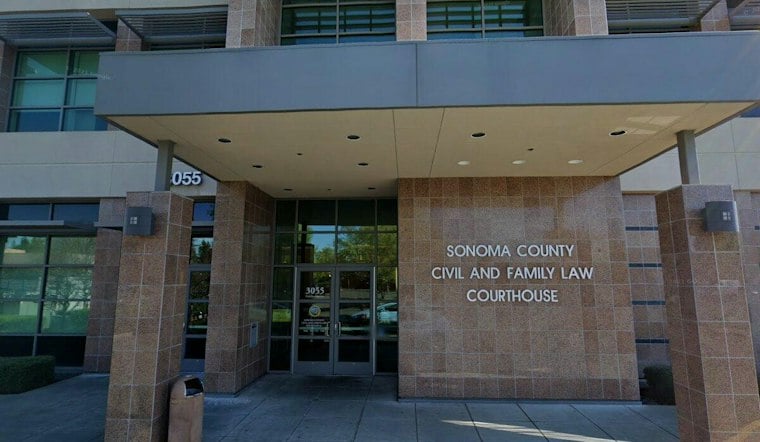
A California appeals court has revived a negligence lawsuit against Sonoma County over the 2020 killing of social worker Sylvia Bracamonte, reversing a lower-court ruling that had found there wasn't enough evidence to hold the county culpable. Bracamonte, 33, was fatally stabbed on March 20, 2020, while working as a group home program coordinator at Community Support Network's Sanctuary House in Cotati, where the man accused of killing her, Anderson Quinonez-Cabeza, was an 18-year-old resident.
The First Appellate District issued its opinion on September 30, reversing a Sonoma County judge's 2024 ruling that evidence was insufficient to support the county's culpability in Bracamonte's death, according to The Press Democrat. The appellate opinion found Sonoma County had a duty to warn Bracamonte and others that Quinonez-Cabeza might pose a threat, and that the county had superior knowledge of his prior secure placement, severe mental illness, and history of violence and threats. The county, which had contracted with Community Support Network for the placement of children and occasionally very young adults, could have warned the organization and its staff about his violent propensities, the opinion states.
Bracamonte's daughter, now 9 years old and only 3 when her mother was killed, is the plaintiff who brought the lawsuit. Her attorney, Mark Clausen, told the newspaper he was happy with the appellate ruling and said the decision keeps the case alive. Sonoma County may seek review from the California Supreme Court, and if the decision stands, the lawsuit will return to local court.
What the County and Bracamonte's Family Are Saying
Sonoma County officials expressed sympathy to Bracamonte's family but said they would not comment further because litigation remains pending. The county said it is reviewing the recent court decision and its options, and noted that it works with residential provider organizations to house vulnerable community members and provide support services.
Community Support Network itself was dismissed from the civil case in 2022 after a court found workers' compensation was the appropriate remedy for an employee's on-the-job injury. Quinonez-Cabeza was also named as a defendant in the civil lawsuit, though his criminal-court status precludes him from civil liability. A case-management conference is scheduled for November 10 before Sonoma County Judge Dana Simonds.
Allegations at the Heart of the Lawsuit
Court filings tied to the case, identified as Estate of Sylvia Bracamonte v. Community Support Network, case number SCV-266584, include a third amended complaint alleging wrongful-death damages, according to a copy posted by Trellis.Law. The complaint alleges Community Support Network failed to inform Bracamonte of a policy change regarding the admission of violent individuals with severe psychiatric histories, the station's earlier reporting noted. It also alleges that Bracamonte had told a supervisor at the organization that Quinonez-Cabeza described dreams in which he killed people, and that she was among them.
Her family filed the original civil suit against Sonoma County and Community Support Network on June 19, 2020, just months after her death. The case dragged through continuances and case-management settings for years; a June 18, 2024 hearing to review the case's status, for instance, was pushed to October 15 of that year, per the same outlet's account.
Criminal Case Resolved With Insanity Plea
While the civil case wound through the courts, the criminal case against Quinonez-Cabeza faced its own delays, including time spent evaluating his mental competency. In October 2024, he withdrew his original not-guilty plea and pleaded not guilty by reason of mental insanity. The Sonoma County District Attorney's Office said at the time that the plea meant Quinonez-Cabeza admitted he killed Bracamonte but claimed he was not sane when he did it.
He avoided a criminal conviction and was instead transferred to the California Department of State Hospitals the following month. He will remain committed there until his sanity is deemed restored, with no set timeframe for that determination, according to the Press Democrat's reporting on the plea.
Remembering Sylvia Bracamonte
Bracamonte, a Santa Rosa native, enrolled at Santa Rosa Junior College in 2010 and graduated three years later as its first Latina valedictorian with a 3.9 GPA. She went on to earn a bachelor's degree in social welfare and ethnic studies from UC Berkeley, followed by a master's degree in social work in 2019, according to the outlet's profile of her published after the plea change.
Her daughter now lives in Texas and has taken up mixed martial arts, beginning to train after learning what happened to her mother. Monte Hansen, the girl's uncle and an attorney, said she is dedicated to protecting herself and others from the same kind of crime that killed her mother.
Under California Government Code section 815.6, a public entity under a mandatory duty imposed by an enactment designed to protect against a particular kind of injury can be held liable for that injury if it is proximately caused by the entity's failure to perform that duty, unless an exception applies, according to California Legislative Information. The appellate court's ruling turned on whether Sonoma County's knowledge of Quinonez-Cabeza's background created a duty to warn the people working alongside him.





