

























































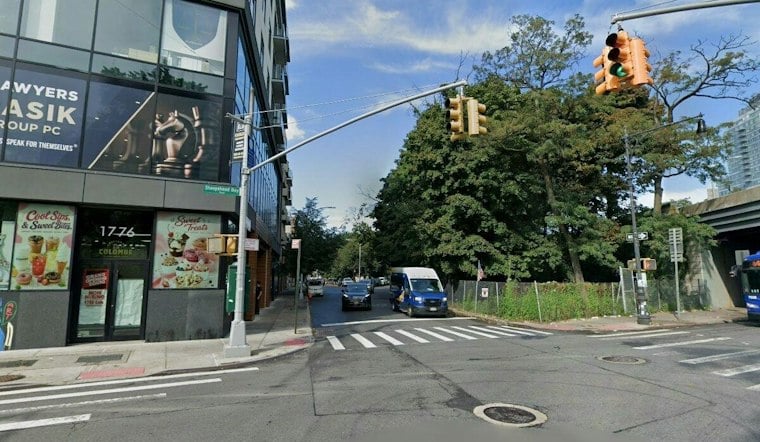
A gasoline-like smell has hung over South Brooklyn for weeks, sending residents searching for answers as a growing roster of city, state, and federal agencies tries to track down its source. Sheepshead Bay residents say the odor fills their noses and leaves a gasoline taste in their mouths, with one resident, Zack Badalov, describing simply how the smell hits. The mystery has now drawn in the FDNY, the city's Department of Environmental Protection, the state Department of Environmental Conservation, and the EPA, none of whom have pinpointed where the fumes are coming from.
The scope of the investigation has widened considerably in recent days. As reported by Boro Park 24, the multi-agency probe now covers Coney Island Hospital, Avenue Z, Neptune Avenue, Shell Road, and the surrounding streets, with the city's Department of Environmental Protection flying drones over Sheepshead Bay, repeatedly flushing sewer lines, and checking underground fuel storage tanks for leaks. That kind of aerial and underground sweep reflects just how difficult it has been to trace vapors that can migrate for blocks through the sewer grid before anyone notices them at street level.
According to News 12, the FDNY received a report of a gas smell at Avenue Z and East 26th Street and notified National Grid, after which workers drilled small holes in the ground to investigate. Neighbors have also reported gas smells near Shore Parkway and Sheepshead Bay Road and in other pockets of South Brooklyn, the outlet reports. A community tracker set up to log the odor has received more than 90 online reports in just the past week.
Elected Officials Press Agencies for Answers
Brooklyn Councilmember Inna Vernikov says her office has fielded calls about the smell for more than a month and has been in touch with the FDNY, the DEP, and other agencies trying to get to the bottom of it. Vernikov said South Brooklyn residents have complained of difficulty breathing in some areas, and her office plans to meet with the agencies involved next week to press for answers. She called the odor issue very serious and said she intends to keep advocating on residents' behalf, per the same News 12 account.
Federal involvement has also surfaced through local officials. An October 11 Instagram post from the verified michaelforny account
said Assemblyman Brook-Krasny and the account holder had sent a letter. Separately, Assemblyman Michael Novakhov wrote on Facebook on September 25 that elected officials were urging residents to log the specific times and addresses where they smell gas, to help investigators map how the vapors may be moving through the underground sewer system.
What Inspections Have Found So Far
Per News 12, the FDNY has inspected all gas stations in zip codes 11229, 11233, and 11235 as part of the search for a source. The city's Department of Environmental Protection says it has been flushing sewer lines and is assisting an investigation led by the state DEC, working alongside the EPA and FDNY. The state DEC, for its part, says there is no definitive evidence of the odor's source at this time, but has stated that it will hold accountable whatever party is found responsible for impacts on the South Brooklyn community and environment. The agency says it is coordinating with FDNY, DEP, city emergency management, the state Department of Health, and the EPA.
Why Sewer Vapors Raise Serious Safety Concerns
Fumes trapped in sewer lines aren't just unpleasant — they're legally and physically dangerous. Section 24-519 of the city's Administrative Code explicitly bars anyone from discharging volatile flammable liquids, gases, or vapors into a public or private sewer or drain connection, according to Intro.nyc. Separately, under Article 12 of New York State's Navigation Law, anyone responsible for a petroleum discharge into state waters, or onto land from which petroleum might flow or drain into state waters, must notify the state immediately and no later than two hours after the discharge or risk civil penalties of up to $25,000 per violation, according to the Wladis Law Firm. The state DEC fields roughly 16,000 such spill reports every year through its 24/7 hotline, the firm notes, and the agency's petroleum bulk storage rules were updated in 2023 to broaden mandatory leak-reporting obligations to contractors and third-party business representatives, according to reporting from Nixon Peabody.
The health stakes are well documented. The federal Agency for Toxic Substances and Disease Registry notes that breathing automotive gasoline vapors can cause acute neurological effects including headaches, dizziness, nausea, and respiratory irritation — symptoms consistent with the breathing difficulty Vernikov says residents have reported. Brooklyn has grappled with underground petroleum hazards before: a Coast Guard patrol in 1978 discovered a plume of up to 30 million gallons of oil leaking beneath Greenpoint and Newtown Creek, according to the state DEC's historical account. Decades earlier, accumulated petroleum vapors inside Brooklyn's sewer lines triggered a 1950 underground explosion in Greenpoint that launched 25 manhole covers into the air, according to a historical analysis from CounterSpill — a stark reminder of why agencies treat gasoline odors in the sewer system as urgent hazards rather than mere nuisances.
For now, the source of South Brooklyn's smell remains unconfirmed, and News 12 says it will share updates as more information becomes available. Anyone who suspects a gas leak is urged to seek safety and call 311 or 911.




