

























































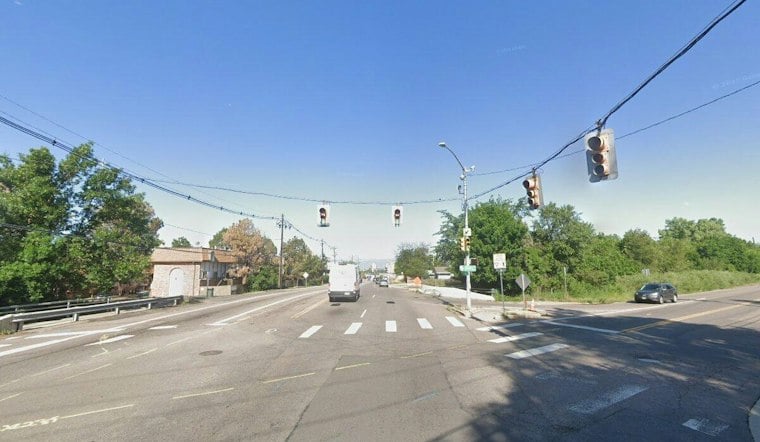
A concrete underpass beneath East Yale Avenue at Holly Street is now open to pedestrians and cyclists in southeast Denver, letting trail users on the High Line Canal pass under the roadway instead of dodging cars at street level. The crossing was completed Tuesday after more than a year of construction, closing a longstanding gap along the regional trail.
According to the Denver Gazette, the new underpass allows people to travel beneath Yale Avenue without crossing traffic, addressing a stretch where congestion had made the intersection a hazard for trail users over the years, per Denver Department of Transportation and Infrastructure executive director Amy Ford. The project is part of a broader effort to overhaul the entire Yale Avenue and Holly Street intersection, not just the trail crossing itself.
What Construction Actually Involved
Work included a concrete box underpass with retaining walls and graded concrete paths designed to create a continuous trail connection, according to Denver7. The project also added new trail connections, while separate upgrades covered curbs, sidewalks, driveways, storm drainage and signage striping, the High Line Canal Conservancy notes in its trail updates. Construction on the underpass began in September 2025, putting the project just over a year in the ground before Tuesday's completion.
Denver and Arapahoe County have been partners on improvements to this intersection since 2014, when the two jurisdictions first studied what upgrades the corridor needed. That long runway helps explain why officials are treating this week's completion as a milestone rather than the finish line — more work at Yale and Holly is still to come.
Funding Figures Vary Across Sources
The underpass project cost $17.3 million and was funded through the voter-approved 2017 Elevate Denver GO bond, along with regional and federal partners, the Gazette reports. Other city documents offer differing breakdowns of that bond contribution: the City and County of Denver's Elevate Denver annual report cites roughly $6.2 million in Elevate Denver GO Bond funding for the underpass, while the city's separate project page for the Yale improvements lists a $6 million total budget. Arapahoe County's own capital project materials put the total design-and-construction budget at an estimated $23.9 million, covering $17.3 million for the underpass itself plus $6.6 million for separate Yale Avenue improvements.
The figures range from individual funding contributions to budgets for the underpass and broader Yale Avenue improvements.
City and County Leaders React
Denver City Council President Romero Campbell said the new underpass offers a safer way to enjoy a trail valued by the community, adding that their own family grew up playing, walking, running and biking along the canal in southeast Denver. “Our goal is to create spaces where people feel safe moving through their community,” Campbell said, per the Gazette's reporting.
Arapahoe County Commissioner Leslie Summey called the underpass a significant improvement for trail users in southeast Denver. Summey said the county is pleased this project phase is finished and looks forward to continued work at Yale and Holly, according to the same account.
More Work Planned for 2027
Arapahoe County will lead the next phase of work at the intersection, scheduled to begin in 2027. That phase is expected to bring new traffic signals, additional turn lanes, wider sidewalks and underground power lines, according to Arapahoe County.
The underpass sits along the broader 71-mile High Line Canal Trail, which stretches from Waterton Canyon to northeast Aurora and crosses 11 jurisdictions, per Denver's Elevate Denver annual report. More than 60 percent of upcoming trail investment dollars across the corridor are earmarked for the 27 miles that cross Denver and Aurora, according to 5280, which also reports that the High Line Canal Conservancy and local government partners will oversee more than $100 million in trail investments over the next five years.
Safety concerns along the corridor echo broader patterns in how Denver residents think about cycling. The city has found that nearly 60% of residents are interested in bike commuting but remain concerned about safety and having a good experience, according to CBS Colorado, which also reports that cyclists rely on the High Line Canal to piece together safer routes away from vehicle traffic. The Conservancy's broader mission, the station notes, centers on improving access and safety along the canal trail system.





