

























































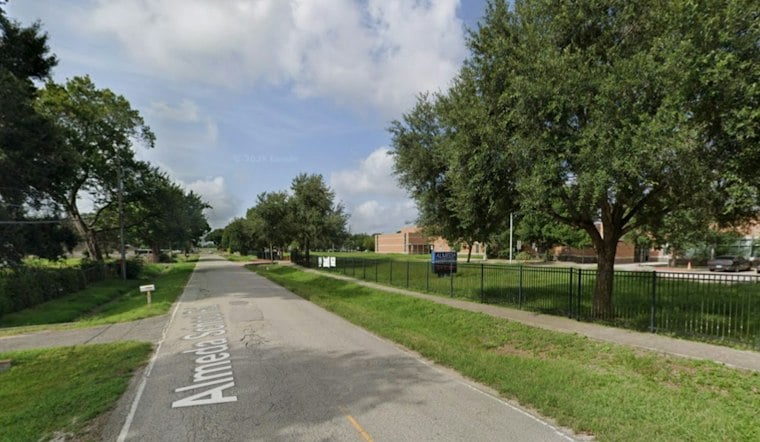
Parents who live within walking distance of Almeda Elementary on Almeda-School Road in southwest Houston say they can't let their kids actually walk there, because there's nowhere safe to put their feet. Missing and broken sidewalks around the school have become enough of a concern that some families have simply given up on walking altogether, choosing instead to drive their children a few blocks rather than risk the street.
Parent Amari Dixon put it plainly, saying the conditions feel unsafe, so his children are picked up rather than allowed to walk, according to ABC13. Fellow parent Maria Sanchez told the station the area feels unsafe because of large cars and nearby commercial activity crowding the roadway where students and families are supposed to be walking. Parents around Almeda Elementary said, per the station's reporting, that safety should be a higher priority along the corridor.
A Citywide Gap, Not Just One School
The problem isn't unique to this stretch of southwest Houston. Only about 57% of Houston streets have sidewalks at all, according to LINK Houston, and of the sidewalks that do exist, 39% are rated fair or poor. The nonprofit says that gap in the network creates safety risks for pedestrians, especially children, older adults, and people with disabilities.
Part of the issue traces back to when neighborhoods were built. Houston didn't begin requiring sidewalks in residential areas until 1990, the same year the Americans with Disabilities Act passed, the station's report notes. Neighborhoods built in the 1960s or 1970s are less likely to have sidewalks at all, leaving older sections of the city, including areas near Almeda-School Road, without the basic infrastructure that newer developments are required to include.
Under current city rules, Houston homeowners are generally responsible for building and maintaining the sidewalks in front of their own homes, and those without one can request an exemption from the city or pay a fee instead, per the same account. That patchwork, house-by-house system helps explain why sidewalk coverage can vary wildly from block to block even within the same neighborhood.
Money Is Tight, and the Math Is Daunting
Houston has only $3 million per year of dedicated sidewalk funding, according to LINK Houston. The group estimates it would cost the city $13.2 billion to provide sidewalks on both sides of every street that doesn't have one, plus repair 75% of existing sidewalks, a figure that puts the scale of the problem into stark perspective against the current budget.
There is at least one path specifically built for situations like the one near Almeda Elementary. Houston Public Works' Sidewalk Program constructs new sidewalks and ramps along streets leading to schools and major thoroughfares, and the program can fund sidewalks up to four blocks leading to an existing school, according to guidelines published by Houston Public Works. Sidewalks around a school's immediate perimeter, however, remain the school's own responsibility rather than the city's.
To qualify, a requested route must actually be used by students walking to school, must not sit on a dead-end street, and must not already have a sidewalk in place, per the same Houston Public Works guidelines. Anyone, not just a parent or resident, can submit a request, and the city says the wait between a request and actual construction depends on the type of request, available program funding, and how many other requests are already in line.
No Timeline Yet From the Councilwoman's Office
For now, families near Almeda Elementary have gotten a partial response rather than a full fix. A spokesperson for the District K councilwoman's office said Houston Public Works would go to the school to clean up overgrown grass and shrubs along the existing sidewalks, the station reported. But that same spokesperson did not provide a firm date or timeline for actually expanding the sidewalk network in the surrounding area.
The gap between acknowledgment and action isn't unusual for Houston's sidewalk funding structure. Since 2023, developers have been able to opt out of building sidewalks by paying a fee in lieu, meant to fund sidewalks elsewhere in the city, but LINK Houston says none of those collected funds have actually been spent yet. LINK Houston has also argued that the biggest returns come not from isolated fixes but from changing design standards so that safety is built into every new street project from the start.
How the Problem Looks Beyond Houston
The stakes extend well past one school's front steps. A regional pedestrian safety report found the Houston metro area ranked 34th among the most dangerous large U.S. metros for people on foot, up from 38th in the prior report, according to Click2Houston. Between 2020 and 2024, 986 people were killed while walking in the Houston area, and LINK Houston identified more than 13,000 pedestrian crashes across the city over the past decade, with an estimated cost exceeding $3 billion.
Other Texas communities have moved more decisively on similar complaints. Corpus Christi's city council voted to pursue $1.3 million in state grant funding to build 2,500 feet of new sidewalk along County Road 33, a stretch that currently forces students to take alternate routes to reach London Elementary School safely, according to a report from kristv.com. In Kyle, construction has begun on a project converting about 800 feet of Blanco Street to one-way traffic and turning the closed lane into protected space for pedestrians and cyclists near Kyle Elementary, after the corridor was flagged for its lack of sidewalks and drop-off safety concerns, per kxan.com. Farther afield, Pasco County, Florida has secured more than $22 million in combined funding, enough for 14.5 miles of new sidewalk near schools, including a stretch serving Pineview Elementary and Pineview Middle, with much of that money coming from the county's voter-approved infrastructure sales surtax, according to tampabaybeacons.com.
No similar funding commitment or construction start date has been announced for the streets around Almeda Elementary. For now, residents hoping to speed things along can submit a sidewalk request directly to the city, which accepts applications from anyone, not just nearby homeowners, under the same Houston Public Works program guidelines.





