

























































A newly enacted Virginia budget designates funding for a collaboration among four HBCUs, including the two public universities Gov. Abigail Spanberger visited Saturday, Oct. 10. Spanberger traveled between Virginia State University in Petersburg and Norfolk State University in Norfolk, dancing alongside a university president at one stop and attending a football game at the other.
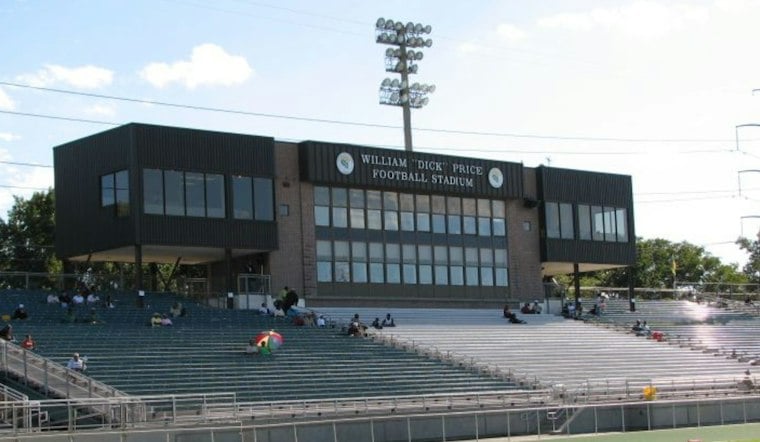
Spanberger's official schedule listed a 10 a.m. stop at Virginia State University in Petersburg followed by a 1 p.m. visit to Norfolk State University, according to HBCU Gameday, which first reported the dual appearances. At Virginia State, the governor was seen dancing alongside university president Dr. Makola M. Abdullah, and she later attended Norfolk State's homecoming football game at William “Dick” Price Stadium. The Charlotte Observer also covered the governor's back-to-back visits as part of its college sports coverage.
The homecoming swing wasn't Spanberger's first high-profile moment with Virginia State this year. She participated in the university's spring commencement celebration in May, where she danced to Cupid's “Flex” alongside graduates and university officials. That ceremony, held May 16, conferred degrees on 822 graduates, according to Virginia State University. Per Virginia State, the commencement's viral “FLEX” video had racked up nearly 600,000 views.
How the Budget Allocates Support to Four HBCUs
HBCU Gameday reported that Virginia's 2026–2028 budget designates $12.5 million annually through Virginia State University and another $12.5 million annually through Norfolk State University for a collaborative initiative that also includes private HBCUs Hampton University and Virginia Union University. The reported allocations total $50 million over two years, administered through the state's two public HBCUs.
The collaborative effort isn't new. It dates to the 2025 state budget, before Spanberger took office, and the current budget continues and expands that effort, the outlet reports. The funding supports several initiatives, including minority small-business development, healthcare workforce preparation, technology training and improved broadband access, along with workforce credentials in healthcare and skilled trades.
Technology Upgrades and Tuition Relief Add to the Total
Beyond the collaborative initiative, each university received $2 million in first-year funding for modernization of enterprise resource planning systems, which support financial and student information systems on campus. Separate tuition-affordability appropriations also landed at both schools: Norfolk State received an additional $658,100 for fiscal year 2027 and $1.316 million for fiscal year 2028, while Virginia State received $605,050 for fiscal year 2027 and $1.210 million for fiscal year 2028, per the same account.
Those tuition dollars restore support that had been included in earlier legislation but was left out of the original budget proposal, HBCU Gameday reported. Virginia's General Assembly approved the final spending plan in June 2026, and the governor's office said on June 29 that the 2026–2028 biennium budget “will now be law,” according to a statement from the Office of the Governor of Virginia. A budget amendment in the Virginia Legislative Information System identifies the partnership among Virginia State, Norfolk State, Virginia Union and Hampton, but does not itself establish the $12.5 million annual allocations reported by HBCU Gameday.
Tuition Costs Provide Additional Context
Separately from the HBCU appropriations, in-state undergraduates’ tuition and mandatory educational and general fees rose 3.2%, or $320, systemwide for 2026–27, according to the State Council of Higher Education for Virginia. Virginia State University said its own approved 2026–27 adjustment was a 2.5% increase in tuition and mandatory fees, totaling $261 for the year; the university described the adjustment as a response to operating costs. These figures provide cost context, not enrollment or degree-completion trends.
Higher Education Spending Is Part of a Larger Push
The HBCU funding fits into a broader pattern the administration has highlighted. Spanberger's administration pointed to higher education in a July 2026 report marking her first six months in office, citing $349.7 million in higher-education investments statewide, according to HBCU Gameday. That statewide figure includes funding intended to limit tuition increases and support HBCUs more broadly.
What the available budget records do not establish is how much of the collaborative funding has already been spent or what measurable results the programs have produced so far. Continued implementation by the administration and the four universities will determine how the money translates into workforce credentials, small-business support and broadband improvements on the ground.




