

























































A taco restaurant in Spring Branch says it and a liquor store have lost roughly $5,000 to credit card fraud since the businesses opened in May 2026, and the owners believe the same scammers may have hit several other local businesses too. El Taco Society MX, known for its birria, tacos and oversized tortas, now finds itself at the center of a Houston Police Department investigation into the alleged fraud.
The restaurant, located west of downtown Houston in Spring Branch, accepts a full menu of payment options — cash, cards, contactless phone payments, Apple Watch, Google Pay and Apple Pay. As reported by Spectrum News, the business also lets customers manually enter card information into its payment readers, a convenience that has left it exposed when banks later reverse stolen credit and debit transactions days after the sale. Those reversals, known as chargebacks, leave restaurants holding the bag.
Audiel Escobar, a manager at El Taco Society MX, said the restaurant and liquor store have sustained combined fraud losses of around $5,000 since the businesses opened, per the same report. The restaurant's owners also run a liquor store in the same strip, giving them a front-row seat to how often the same bad actors may be targeting neighboring businesses. Escobar said about five other businesses contacted them after a video about the fraud was posted, reporting that the same people had visited their locations as well.
Houston Police Investigating, But Staying Quiet
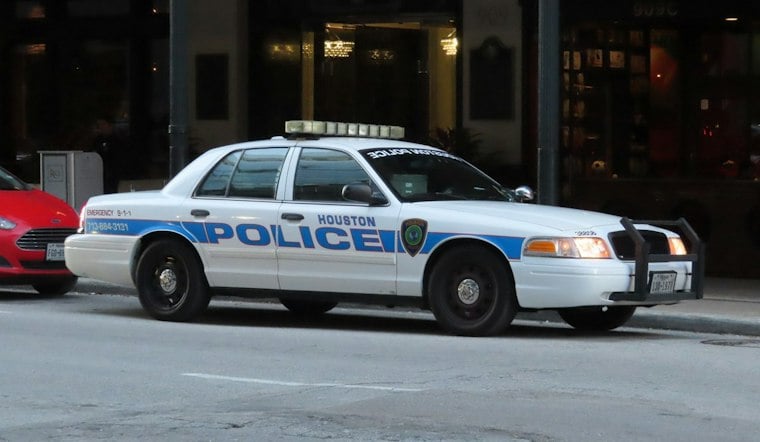
The Houston Police Department is investigating the alleged credit card fraud at El Taco Society MX, according to Spectrum News, though the department declined an interview request from the outlet. That leaves the restaurant's account — and the roughly five other businesses that reported similar visits — as the clearest public picture of the case so far.
A chargeback happens when a customer disputes a transaction with their bank and the bank reverses the charge to return the customer's money, as Moneywise explains it. For a small operation like El Taco Society MX, that single mechanism can mean lost revenue, lost product and wasted labor all at once, according to data compiled by Chargebacks911. Moneywise notes that small businesses are especially vulnerable, since chargeback losses can quickly threaten a company's livelihood.
A Statewide Squeeze on Thin Margins
El Taco Society MX's experience is playing out against a backdrop of mounting financial pressure on restaurants statewide. The Texas Restaurant Association, which represents more than 58,000 Texas restaurants according to the Express-News, says credit card fraud is affecting both restaurants and consumer spending across the state, with statewide fraud losses amounting to hundreds of thousands of dollars.
Kelsey Erickson Streufert of the association said she believes every Texas restaurant experiences a fraud loss each month, per her comments to Spectrum News. She suggested requiring ID or a signature for digital payments as one way to curb the problem, and the association is calling on lawmakers to ensure new payment technologies are more secure before they hit the market. The group is also pushing for broader credit card swipe fee reform, arguing that businesses pay seven to eight times more in swipe fees than their counterparts in Europe.
Swipe Fees Add Another Layer of Pain
Fraud losses are only part of the financial squeeze. Credit card swipe fees in the U.S. now average 2.35% per sale and total nearly $187 billion annually nationwide, according to a separate Spectrum News report. On a $100 restaurant bill, those fees can absorb more than half of a restaurant's profit, the outlet found — a brutal math problem for an industry that Streufert says already runs on margins around 5%, with roughly 90% of restaurants operating as small businesses, according to her comments to KVIA.
Estimates of exactly how much of each sale goes to card companies vary. Streufert told KVIA that swipe fees typically run about 3% to 3.5% per transaction, while the Express-News reported the Texas Restaurant Association's figure of roughly 3.5% to 4%. Either way, those costs have climbed sharply — credit card fees have risen more than 70% since the COVID-19 pandemic, according to Doug Kantor's comments reported by Payments Dive.
Some restaurants are responding by shifting part of that cost onto customers through surcharges, while others offer cash discounts instead. More restaurants nationwide are starting to pass along their credit card fees as food and labor costs rise, Payments Dive reports, pointing to Amano Bistro, a Chicago Italian restaurant that began offering separate cash and non-cash prices this past summer. In Texas, the Texas State Law Library notes that cash discounts are not considered surcharges under state law, giving restaurants a legally distinct path to offset processing costs without running into the murkier rules around credit card surcharges.
The pressure isn't unique to Houston. In South Texas, restaurateur Larry Delgado said credit card fees cost his businesses $120,000 to $130,000 a year, a figure he shared at a McAllen town hall earlier this year where about 60 local restaurateurs gathered to discuss the toll on their profits, according to the RGV Business Journal. Fraud disputes are rising too — Americans filed 158 million transaction disputes in 2025, a 29% increase from 2021, Moneywise reported, and Chargebacks911 found that 38% of merchants said chargebacks have influenced the price of their goods or services.
For now, the combination of fraud losses and swipe fees is contributing to higher prices for consumers across the state, even as the precise scope of fraud tied to El Taco Society MX's case — and any identities behind it — remains part of the Houston Police Department's ongoing and still-unresolved investigation.





