

























































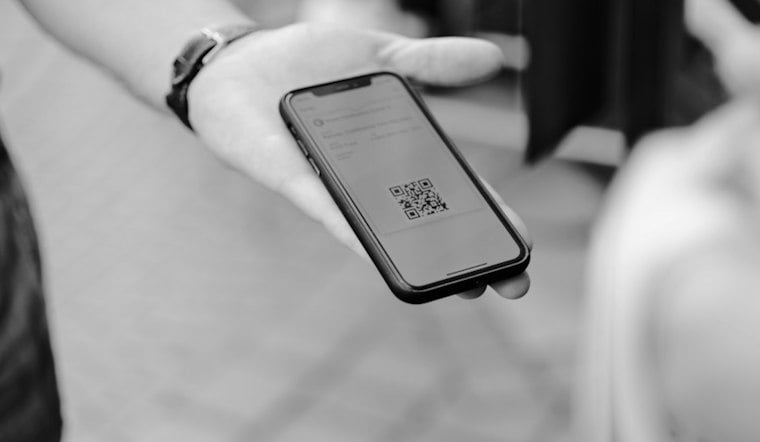
When the only server at Wok & Karahi walked off the job in August, the family-run Chinese, Indian and Pakistani restaurant in Spring didn't post a help-wanted ad. Instead, within 24 hours, owner Abbas Zoeb rolled out a virtual host named Haniya, paired with table QR codes and a pre-pay ordering system, to run the front of house in place of a human.
Zoeb, a former Google software engineer, told FOX 26 Houston the shift began out of desperation but ended up improving outcomes for both guests and staff. Customers now place orders by phone or by scanning a QR code at their table, paying in advance rather than waiting for a server to bring a check. Haniya, the station reports, speaks seven languages and keeps answering the phone even after the restaurant has closed for the night.
The change also restructured how tips get distributed. With no server on the floor, the chef and kitchen staff now receive 100 percent of customer tips, according to the same report. Guidance published by the Texas Workforce Commission notes that tips left in a jar are generally considered to belong to the employees customers believe they're tipping, rather than to ownership or management — a backdrop worth keeping in mind as more restaurants rethink who actually gets the gratuity when there's no traditional server.
Zoeb Says the Math Adds Up, Though It's Self-Reported
Zoeb claims Wok & Karahi is now saving or recovering $9,650 a month because of the changes, with about $3,500 of that coming from the eliminated server salary and the remaining $6,150 attributed to operational efficiencies and reclaimed revenue, per the station's report. Running Haniya itself costs around $300 a month, or roughly $10 a day, Zoeb told the outlet — figures that reflect the owner's own accounting rather than independently verified financials.
Separate reporting from Muslim Mirror describes Haniya as a single host that answers the phone, the website and the table, and is said to retain each guest's past orders, favorites and rewards across all three channels. Guests pay directly from their phones using Apple Pay or Google Pay before the kitchen even starts cooking, and orders arriving from seven different sources — the counter, phone, tables, website, DoorDash, Uber Eats and Grubhub — all land on a single back-of-house screen, the outlet reports.
From One Restaurant to a Side Business
Zoeb has since turned the system into a product. He now builds similar setups for other independent restaurants through his company, AZ Restaurant Partners, according to Muslim Mirror. The company's own site states that Haniya logs orders directly into the restaurant's Clover point-of-sale system, texts guests a payment link, and triggers a kitchen ticket to print only once that payment clears.
Wok & Karahi's system lets guests place orders directly.
Not Every Restaurant Can Do This the Same Way
Dietrich von Biedenfeld, a supply chain manager at the University of Houston Downtown, told FOX 26 that a system like this can work well for fast-food restaurants or quick lunch spots, but that fine dining is a different challenge entirely, since in that setting the AI is only as good as the prompts behind it. That distinction matters as independent dining spots across the country continue to struggle with staffing shortages, a pressure point the station's report ties directly to why Wok & Karahi made the leap in the first place.
Industry data suggests Zoeb's move is still ahead of the curve. The National Restaurant Association's 2026 industry report found that 26 percent of restaurant operators are using AI-related tools in some form, but only 6 percent are using AI specifically for customer orders, according to Restaurant Dive. The outlet also notes that bigger chains haven't always had smooth results with similar bets: Taco Bell rolled out drive-thru voice AI nationwide in 2024 but had to rethink the approach the following year, and McDonald's ended its own three-year drive-thru voice AI partnership with IBM in 2024.
Staffing pressure is showing up industry-wide, not just at Wok & Karahi. A mid-year report from Restaurant365 found that recruiting and retaining staff jumped from the top challenge for 18 percent of operators at the start of 2026 to 33 percent by mid-year, while 77 percent of surveyed operators said labor costs rose in the same period. Among restaurants actively using AI tools, the report found 62 percent reported reduced labor costs and 61 percent reported reduced food costs — context that helps explain why a small, family-run spot like Wok & Karahi would gamble on software instead of a new hire.




